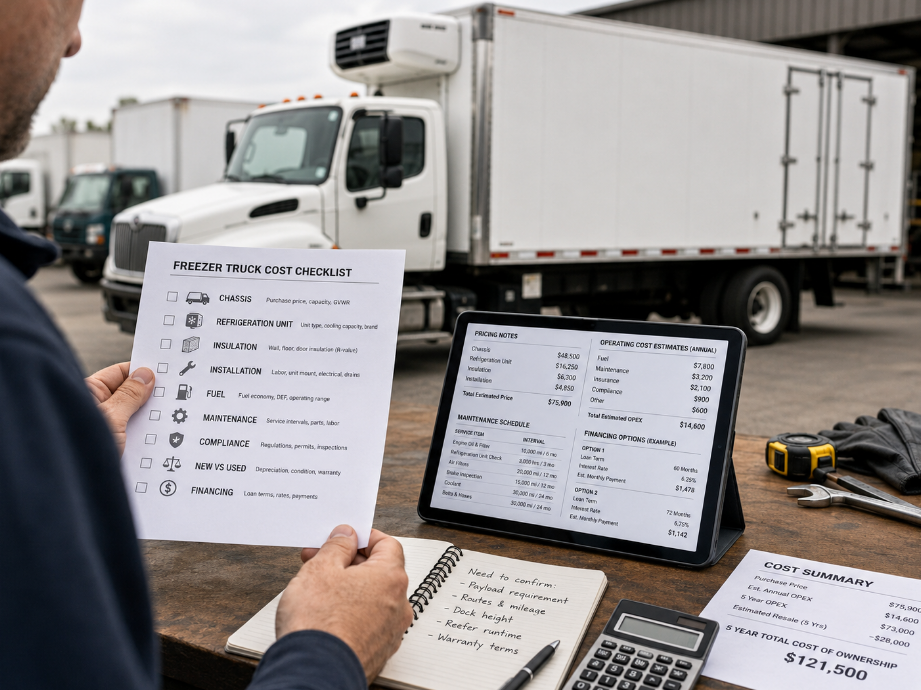
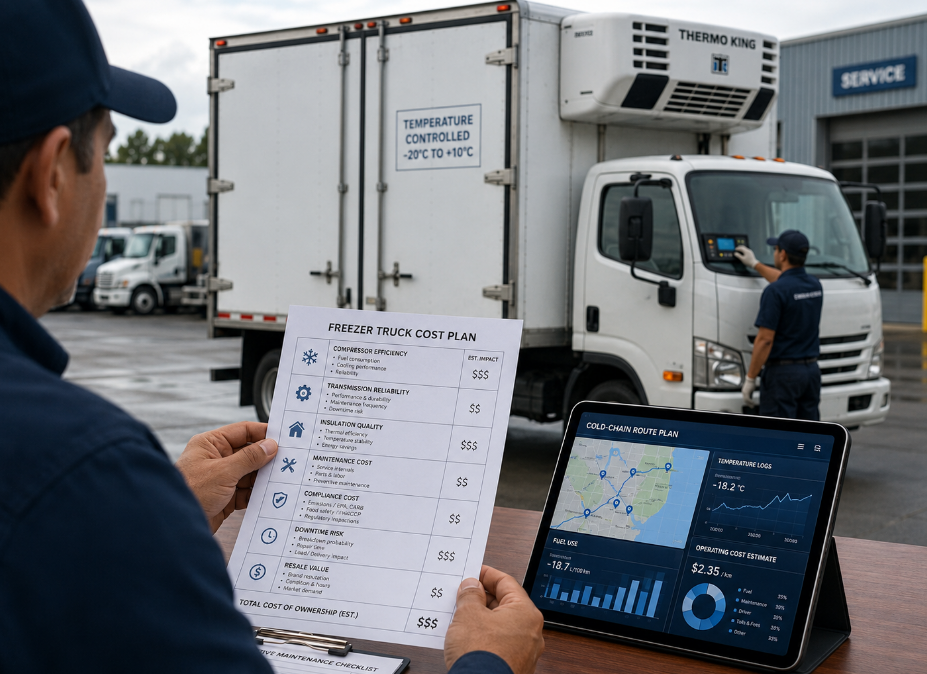
When profit melts faster than ice cream, the right refrigerated truck keeps your cargo—and your margins—cool under pressure.
A refrigerated truck isn’t just a box on wheels with a chilly attitude—it’s the difference between fresh strawberries and a sticky mess by sunrise.In cold chain logistics, one blown compressor can torch a week’s profit. Fleet managers know that gut-punch feeling when a temp alert lights up at 2 a.m. Cargo doesn’t forgive guesswork.
Grand View Research reports the global cold chain logistics market was valued at $242.39 billion in 2022, and it’s climbing fast. As one industry analyst put it, “Temperature control is profit control.”
That’s why buyers look past shiny paint and zero in on insulation thickness, compressor output, fuel draw, telematics. It’s like choosing a heart for your operation—steady pulse, no drama.
So how does it all actually work? And where does performance turn into payback?
4 Key Components Of Refrigerated Truck Systems
A refrigerated truck keeps goods fresh and chill while on the road. The system behind that smooth operation works like a compact cold-chain factory. Understanding these four critical parts helps operators manage efficiency, compliance, and maintenance more smartly—especially with brands like Reefertruckpro driving innovations forward.
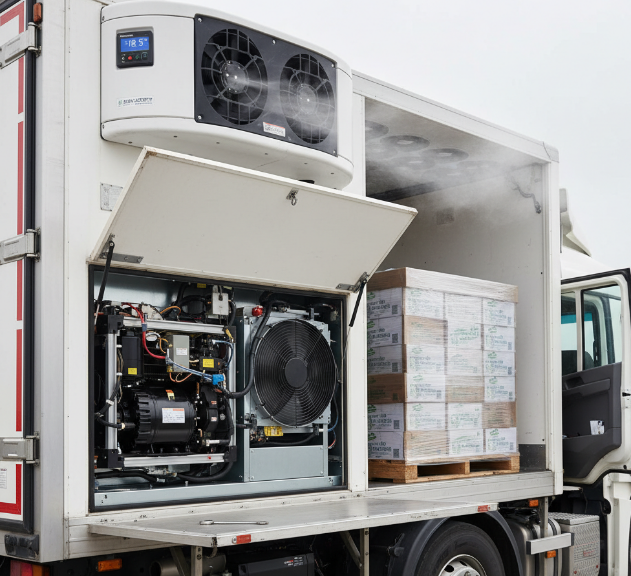
Refrigeration Unit: Compressor Type & Condenser Unit
The refrigeration setup starts with how the compressor pressurizes the refrigerant. Without that pressure cycle, cooling would stall. The condenser unit then throws heat outside, keeping the interior comfortably cold despite wild outdoor temperatures.
Grouped nested function:
Heat exchange mechanism:
Gas enters the compressor, raising temperature and pressure.
The condenser cools this hot gas back into a liquid.
Continuous cycle yields efficient cooling even during peak summer routes.
| Component | Avg Efficiency (%) | Recommended Maintenance (Days) |
|---|---|---|
| Compressor | 93 | 90 |
| Condenser | 88 | 120 |
| Refrigerant Pipework | 96 | 180 |
| Control Valve | 90 | 150 |
Evaporator Coil Heat-Exchange Function
At the other end, the evaporator coil takes in heat from inside the cargo box. Its fins channel cooled air across goods evenly. That fine temperature control keeps dairy from curdling and meds from spoiling.
Multi-step airflow process:
Liquid refrigerant turns into gas.
Heat exchange occurs around the coil.
Circulated air maintains stability through insulated pathways.
"Cooling precision improvements of 12% have been recorded in fleet tests conducted by Frost & Sullivan (2024)," emphasizing how design tweaks can pay off quickly.
Precision Temperature Controller Module
The temperature controller or module is the user’s smart link to accuracy. Setpoints, alarms, sensor readings—it’s all in one dashboard. The system updates trends and logs every regulation activity for quality audits.
Nested control hub:
Setpoint regulation: keeps small tolerance bands.
Defrost cycle automation.
Digital alerts preventing unsafe rise or fall.
Calibration linked directly to fleet data monitoring.
A quiet tech upgrade from Reefertruckpro allows better precision and faster fault reporting, handy for any monitoring team.
Auxiliary Power Unit for Extended Idling
The auxiliary power unit steps up when the truck engine shuts down. It feeds electricity through a compact generator or battery pack so the cooling doesn’t quit. Drivers like that it saves fuel, reduces engine load, and keeps idling silent on delivery stops.
When idle: power shifts automatically.
During overnight storage: refrigerated systems remain stable.
Result: emissions fall and uptime rises across fleet cycles.
This power unit represents energy-smart design—no loud motors, just steady cold cargo waiting till morning.
Why Is Insulation Vital For Refrigerated Trucks?
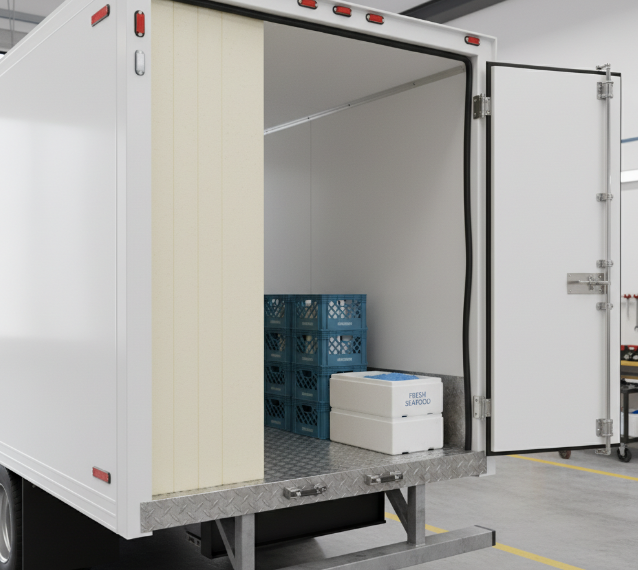
Keeping a refrigerated truck performing efficiently isn’t just about strong cooling units; it’s all in the insulation. The inner body must fight heat transfer, moisture buildup, and vibration stress, making insulation more than a comfort feature—it’s a survival necessity for cargo freshness.
Polyurethane Foam Insulation Benefits
Inside each refrigerated body, polyurethane foam insulation acts as the thermal heartbeat. Its closed-cell structure traps air, slowing down heat movement and ensuring top-notch thermal efficiency even in blazing or freezing environments.
Here’s how performance scales by insulation thickness:
| Thickness (mm) | R-Value (K·m²/W) | Avg. Temp. Stability (°C) |
|---|---|---|
| 25 | 0.6 | ±3 |
| 50 | 1.2 | ±1.5 |
| 75 | 2.1 | ±0.8 |
| 100 | 2.8 | ±0.5 |
Less compressor strain leads to better energy efficiency.
Lightweight panels help maximize payload.
Moisture resistance avoids soggy insulation or ice patches.
With setups supplied by Reefertruckpro, consistent temperature stability helps frozen foods reach buyers without that dreaded partial thaw.
Fiberglass Reinforced Plastic (FRP) Panel Performance
FRP panels raise toughness without adding bulky weight. Each reinforced plastic layer resists corrosion and abrasion, holding up through years of loading.
Multi-zone refrigerated vans rely on FRP outer shells to retain both hygiene and durability.
Impact resistance curbs internal cracks from shifting crates.
"Premium fiberglass composites now extend service life by 25% in mobile cold storage units," notes a 2025 logistics material report by Frost & Sullivan.
By keeping the panels smooth and easy to wash, compliance with food transport codes becomes effortless. Reefertruckpro integrates this feature into every insulated trailer body it produces.
Load-Bearing Floor & Seamless Interior Lining
A load-bearing floor isn’t merely strength—it’s a strategic design that anchors insulation layers under constant forklift motion. Beneath the surface, a seamless interior lining guards thermal containment.
Structural integrity keeps wall joints from separating.
Cargo protection minimizes vibration damage on delicate goods.
Anti-slip coatings make daily washdowns and easy cleaning simpler.
It’s practical engineering with real-world benefits: consistent cold holding, minimal air leakage, and quick sanitation—ideal for dairy, seafood, or pharmaceuticals. When paired with Reefertruckpro’s tight-seal systems, a properly insulated transport unit becomes both energy-smart and business-wise.
How Does A Refrigerated Truck Maintain Temperature?
Refrigerated transport isn’t just about cold air; it’s about keeping that chill consistent mile after mile. Modern refrigerated trucks rely on smart controls, connected systems, and ultra-precise data insights. Let’s break down how these trucks, like those powered by Reefertruckpro, sustain food-safe conditions every time.
Real-Time Remote Temperature Monitoring
Keeping products fresh starts with knowing the temperature at all times. Advanced temperature sensors and monitoring systems track how cold (or warm) things really are. Through continuous data transmission, operators gain remote access from anywhere.
When the temperature strays off-target, alert notifications spike instantly.
Those readings feed directly into digital data logging tools.
Managers compare them against national compliance standards with just a few clicks.
At Reefertruckpro, each refrigerated vehicle is built with real-time dashboards that heighten visibility throughout delivery routes—cutting waste, saving fuel, and earning trust with every shipment.
Automated Defrost Cycle Scheduling
Hard-working cooling units can freeze up if ignored. Automated defrost cycles act like scheduled breathers, clearing frost from evaporator coils. This automation relies on intelligent scheduling algorithms that respond to humidity, air speed, and duration of cooling demand.
Ice buildup reduction means better temperature stability and airflow.
Faster system control shortens downtime.
And sustained energy efficiency boosts long-term savings.
☑ When integrated with Reefertruckpro’s onboard system, it’s not just about melting ice—it’s about protecting consistency for every frozen load.
Telematics Integration for Predictive Maintenance Analytics
Smart telematics data does more than track; it learns. Using predictive analytics, fleets interpret sensor data from compressors, door sensors, and power lines to foresee their next service window.
Research by Frost & Sullivan (2025) shows fleets employing predictive maintenance scheduling can cut cold-chain failures by nearly 28%.
Below is a table illustrating component health trends tracked through diagnostic codes and operational insights:
| Component Type | Avg. Runtime (hrs) | Failure Prediction Accuracy (%) | Maintenance Interval (days) |
|---|---|---|---|
| Compressor | 540 | 91 | 60 |
| Evaporator Fan | 760 | 89 | 90 |
| Condenser Coil | 660 | 85 | 75 |
| Thermostat | 420 | 92 | 45 |
| Door Sensors | 800 | 88 | 120 |
Fleet managers using Reefertruckpro analytics can act early, turning minor fixes into strategic moves that sharpen uptime and reliability.
Route Optimization Software to Minimize Heat Gain
Every stop and every delay adds up to heat sneaking into the cargo. That’s why precise route planning paired with logistics software keeps the refrigerated lorry ahead of the curve.
A three-step layout helps control heat ingress:
Geospatial data calculates shortest paths by road conditions.
Algorithms monitor delivery efficiency and potential stalls.
Software balances transit time to sustain thermal management.
Shorter trips save energy, reduce door openings, and lower fuel costs. Backed by Reefertruckpro’s optimization suite, every route becomes a perfectly timed cold chain performance—keeping food cooler, longer, and safer to its final mile.
Refrigerated Truck Vs. Standard Truck: Core Differences
A refrigerated truck, sometimes called a "reefer," operates beyond being just another transport vehicle; it’s a mobile cold-storage system. The comparison with a standard truck is mostly about control — temperature, performance, and precision in delivery. As Reefertruckpro puts it, “moving perishables demands engineered consistency.” The following sub-chapters pull apart that consistency layer by layer.
Refrigeration System
When you crack open a refrigerated truck, the system inside is a fine-tuned mix of compressor, evaporator, and condenser, all working with a refrigerant that keeps goods chilled between -20°C and +5°C.
The power unit fuels those temperature shifts.
A thermostat keeps the balance in check for multi-stop routing.
According to 2024 data from Frost & Sullivan, temperature-control precision has boosted cold chain efficiency by roughly 28% over conventional hauling.
| Component | Function | Avg Energy Draw (kW) | Control Range |
|---|---|---|---|
| Compressor | Gas compression | 2.5 | Moderate |
| Evaporator | Heat absorption | 1.8 | Wide |
| Condenser | Heat release | 2.0 | Broad |
| Controller | Temperature regulation | 0.2 | Fine |
Body Construction
Every reefer body features insulated panels, reinforced thermal barriers, and tight door seals that make air leaks nearly impossible. Inside, trailer walls, roof, and flooring work as a unit, layered to resist thermal migration. Short, rigid cargo bodies use thin materials on their chassis, but a refrigerated truck uses heavy-duty composites that extend shelf life during transit. It’s the difference between a delivery shell and an active temperature cocoon, something Reefertruckpro engineers emphasize when designing their next-gen fleet.
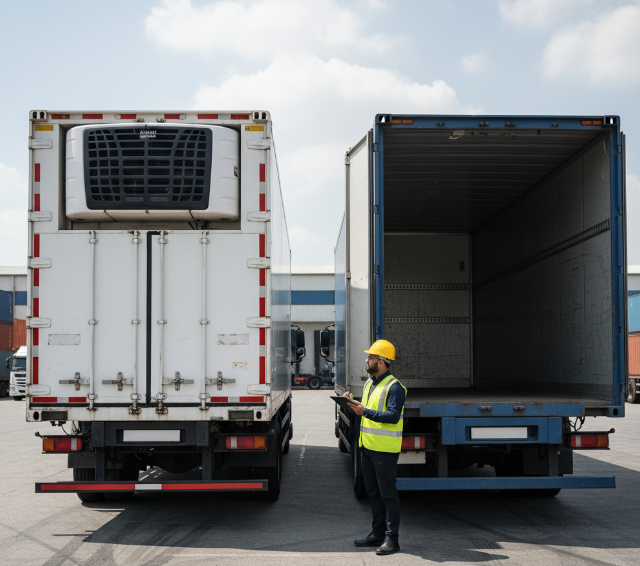
Vehicle Performance
In vehicle terms, the reefer bears extra load. Cooling demands and fuel efficiency become a tug-of-war, where engine power supports the payload capacity while maintaining steady aerodynamics.
Maintenance costs rise with extended system hours.
Operating costs depend on idle-time management and emissions control.
Recent tech adds override algorithms to enhance eco-mode, allowing a refrigerated truck to minimize emissions even when active cooling continues, balancing performance with sustainability.
Cargo Management
Cargo configuration can make or break shipment integrity. Inside a reefer, zones are divided for temperature zones, load security, and airflow. Cool air circulates through vents that keep consistent humidity control, protecting product integrity.
☑ Multi-stop loads demand flexible palletization.
☑ Separate loading procedures protect mixed cargo classes.
Goods move cleaner and fresher, while Reefertruckpro’s smart bulkhead design allows separation by temperature and load stability — a small detail making big waves in logistics quality.
Fleet Technology
Refrigerated trucks now run digital. Embedded telematics and GPS tracking team up with remote monitoring interfaces through seamless sensor technology. Operators view data logging dashboards that show live cargo readings and route forecasts.
Predictive maintenance prevents unit downtimes.
Connectivity enhances real-time decision-making.
Route optimization reduces fuel drag.
Compliance alerts pop up for temperature deviation.
These systems have become baseline for smart reefer logistics, where precision reporting equals preserved trust — the modern heartbeat of cold supply transport.
Too Much Downtime? Fast Refrigeration Repairs Explained
When a refrigerated truck unit stops cooling, every hour counts. Fast repairs protect both the load and the bottom line. Here’s how Reefertruckpro streamlines diagnostics, replacements, and warranty support to cut downtime to the bone.
Rapid Defrost Cycle Diagnostics
Technicians from Reefertruckpro follow a layered testing pattern to get chill systems back fast.
Level 1: Core Assessment
Inspect defrost cycle duration in the control unit.
Note any irregularities flagged by fault codes visible on diagnostic tools.
Level 2: Secondary Verification
Measure temperature sensor performance near the evaporator coil; imprecise readings can mimic deeper failures.
Audit airflow restrictions that might distort heat exchange.
Level 3: Root-Tuning
Cross-check the defrost timer settings and recalibrate thresholds where frost buildup repeats between cycles.
Once recalibrated, the airflow steadies and the coil temperature rebounds, restoring efficiency across the refrigeration system within minutes.
Quick Compressor Type Replacement
Downtime plummets when crews can swap units quickly. Reefertruckpro equips field teams with modular compressor units matched to common refrigeration system types. Each type connects via universal fittings, so the installation process is straightforward and clean.
| Compressor Type | Avg. Swap Time (min) | Required refrigerant charge (g) | Compressor oil Spec | Warranty (yrs) |
|---|---|---|---|---|
| Scroll Type | 45 | 750 | PAG ISO 68 | 3 |
| Reciprocating | 60 | 820 | Mineral 68 | 3 |
| Rotary | 40 | 690 | POE 100 | 2 |
After disconnecting power, techs execute a simple repair procedure:
Drain old oil and evacuate the system using safe system evacuation tools.
Bolt in the new module, add the correct refrigerant weight, and test pressures.
In under an hour, most refrigerated trucks are road-ready again.
Parts Availability & Warranty Coverage
Speed isn’t only tools—it’s the pipeline behind them. Reefertruckpro’s regional hubs keep steady stocks of spare parts, supported by a synchronized parts inventory and efficient supply chain tracking. This means fewer wait times for replacement components like sensors and relay boards.
Short notes worth knowing:
Central hubs guarantee access to stocked spare parts within 24 hours.
Extended warranty terms cover both labor and compressor replacement for the entire coverage period.
Electronic repair documentation uploads ensure every claim is validated fast, maintaining the service guarantee customers trust.
When the right part arrives on time, repairs blend seamlessly with logistics schedules—keeping every refrigerated vehicle cool, confident, and earning.
Delivery Scenario: Maintaining 2°C For Dairy Loads
Delivering dairy at exactly 2°C isn’t just a target—it’s a daily tightrope walk between precision and timing. Every refrigerated truck in this chain becomes a moving lab, where vigilance meets visibility. Let’s see how Reefertruckpro keeps its chill where it matters most.
Pre-Trip Telematics Integration Check
Before the engine hums to life, there’s groundwork to cover. Each telematics system and GPS unit ties into an integrated data logger, syncing with the communication module to confirm all signals align. The sensor calibration ensures that milk, yogurt, and cream never see an off-degree moment.
Conduct a pre-trip inspection through the onboard diagnostic screen.
Run a quick diagnostic check for alert codes and battery sync.
Cross-reference device timestamps to confirm telemetry accuracy.
When Reefertruckpro’s unit passes these checks, every refrigerated lorry goes out knowing its 2°C promise will hold firm.
Scheduled Route Optimization for Minimal Fluctuation
Stable cold delivery requires more than a good fridge—it demands smart route planning tuned to traffic conditions and weather forecasts. Each delay adds heat risk, so optimized timing helps the dairy stay safe and budgets stay tight.
Below is a real example of performance effects under varied delivery plans:
| Route Type | Avg. Transit Time (hrs) | Temp Fluctuation (°C) | Fuel Efficiency (%) | Stop Frequency |
|---|---|---|---|---|
| Urban Tight Loop | 2.3 | 0.4 | 89 | 3 |
| Rural Multi-Stop | 4.7 | 0.9 | 82 | 7 |
| Optimized Express | 3.2 | 0.3 | 94 | 4 |
| Overnight Direct | 4.1 | 0.2 | 97 | 2 |
| Mixed Load Cycle | 5.0 | 1.0 | 81 | 9 |
The optimization algorithm reveals that planning fewer stops improves temperature stability. Across each delivery schedule, Reefertruckpro units consistently maintain a narrow chill band without stressing the drivetrain or wallet.
Real-Time Remote Temperature Monitoring: Dairy Load Focus
Here’s where digital diligence pays off. Active temperature sensors feed data into a cloud platform, enabling remote monitoring with second-by-second data transmission. An alert system flags breaches in temperature thresholds immediately—often before product damage sets in.
“Since mid-2024, logistics analytics show dairy losses cut by 26% through persistent cold-chain tracking,” according to a report by the International Food Transport Data Council.
To make this practical:
The cold chain manager sets temperature thresholds.
Alerts ping through onsite dashboards and mobile apps.
Operators adjust vents or fan cycles while on the move.
With this method, Reefertruckpro ensures every refrigerated transport load—down to that last carton of milk—arrives just as cool, consistent, and compliant as when it left the dock.
FAQ
What makes a refrigerated truck different from a standard cargo vehicle?
A refrigerated truck is built around temperature control, not just transport.
1) Refrigeration core
Refrigeration unit matched to cargo volume
Compressor type selected for duty cycle and fuel efficiency
Evaporator coil + condenser unit working with a precise temperature controller
Automatic defrost cycle to prevent ice buildup
2) Insulated structure
Insulated body panels filled with polyurethane foam insulation
Fiberglass reinforced plastic (FRP) interior for hygiene
Seamless interior lining and load-bearing floor to prevent cold air loss
The result: stable cold chain performance that protects food safety compliance and meets ATP certification standards.
How does insulation improve refrigerated truck efficiency?
Insulation directly affects fuel burn, compressor strain, and temperature stability.
Polyurethane foam insulation delivers high thermal resistance, reducing refrigeration unit runtime.
FRP surfaces resist moisture, protecting durability ratings and sanitation standards.
Tight-sealed roll-up rear door and multi-temperature compartments limit thermal shock during loading.
Short impact summary:
Lower heat gain → Less compressor cycling → Better fuel efficiency + longer component lifespan.
Why is remote temperature monitoring essential for fleet operators?
For fleet managers, visibility equals control.
A modern refrigerated truck integrates:
Telematics integration with GPS tracking
Remote temperature monitoring and data logging capabilities
Driver behavior monitoring linked to route optimization software
Predictive maintenance analytics based on compressor runtime and service interval data
| Function | Operational Value |
|---|---|
| Real-time alerts | Prevent cargo spoilage |
| Data history | Support food safety compliance audits |
| Runtime tracking | Reduce unexpected breakdowns |
| Route optimization | Cut fuel waste and delays |
The tension is simple: a few degrees off can mean total cargo loss. Live data protects revenue.
What should buyers evaluate before purchasing a refrigerated truck?
Buying decisions affect years of uptime and regulatory exposure. Focus on four areas:
1. Vehicle performance
Payload capacity vs. Gross Vehicle Weight Rating (GVWR)
Axle configuration and wheelbase options
Engine displacement balanced with fuel efficiency
2. Cargo management
Load securement tracks and cargo bulkheads
Rear liftgate or side access doors
Forklift-friendly floor and drainage system
3. Maintenance & support
Service network density
Parts availability and warranty coverage
Technical support response time
4. Regulatory adherence
Emissions standards and refrigerant type regulations
DOT regulations and weight limit adherence
Noise pollution limits for urban delivery
The right refrigerated truck protects cargo, drivers, and profit—mile after mile.