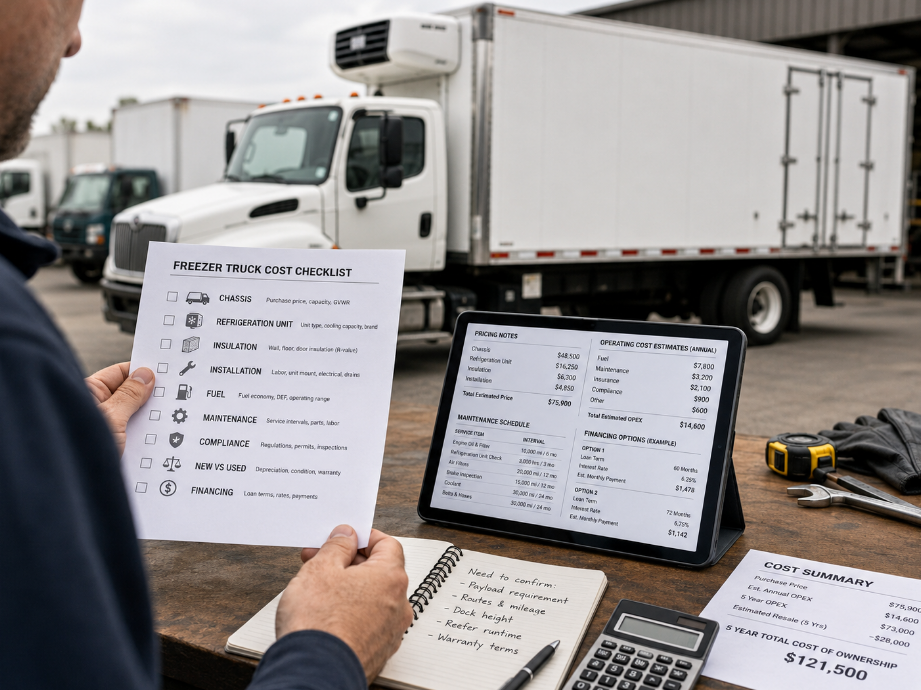
Pick the wrong freezer truck cost, and you’re chilling profits instead of cargo—see what really keeps your delivery game ice-cold and winning.
The freezer truck cost isn’t just a price tag; it’s the number that can make or break your delivery game. Buy wrong, and you’re bleeding cash on fuel, repairs, and spoiled cargo before the ink dries.
You need straight answers on chassis specs, refrigeration power, insulation quality, and long-term upkeep. Get clear on what drives the bill, and you keep profits cold and steady, growing.
Chassis & Payload
Choose a lightweight, optimized wheelbase and axle setup to balance gross vehicle weight with payload capacity and upfront cost.
Refrigeration Efficiency
Prioritize modern evaporator designs and right-sized compressor types to lower power needs, fuel use, and maintenance.
Construction & Compliance
Invest in high R-value insulation, quality panel materials, and meet cold chain, emissions, and food-safety standards to avoid hidden expenses.
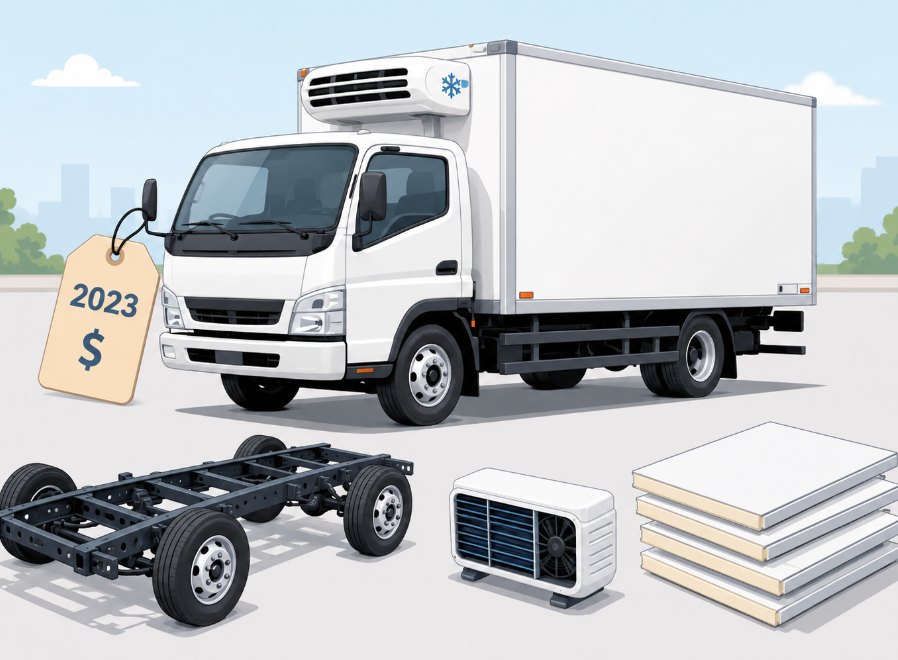
Average Freezer Truck Cost Drops By 15% In 2023
The average freezer truck cost has eased up in 2023, and buyers are finally catching a break. Lower truck cost, smarter engineering, and tighter sourcing are reshaping the real cost of freezer truck ownership. From chassis tweaks to cooling upgrades, every detail now chips away at totalfreezer truck cost and long‑term operating pressure.
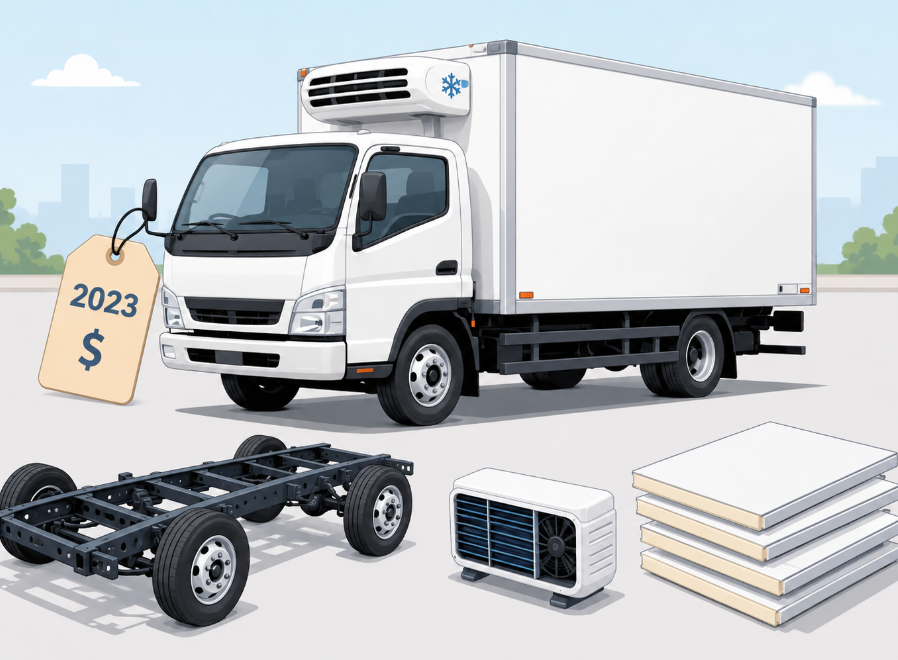
How slimmer chassis types cut average purchase prices
Lower freezer truck cost often starts with thechassis and vehicle frame design:
Structural design adjustments
Shorter wheelbase
Optimized load balance
Reduced excess steel in the vehicle frame
Material optimization in manufacturing process
High‑strength lighter alloys
Precision welding techniques
Less raw material waste
Engineering innovation for weight reduction
Compact cross‑members
Integrated mounting brackets
These changes trim production expense, which directly lowers freezer truck price tags. Reefertruckpro applies this logic across its builds, keeping freezer truck cost competitive without cutting durability.
Evaporator design upgrades driving down refrigeration unit costs
Cooling tech plays a big role in freezer truck cost. Modernevaporator systems now focus on tighter thermal design and smarter system integration.
Improved airflow across the refrigeration unit
Smaller compressor enabled by higher energy efficiency
Better component technology reducing maintenance
Higher condenser capacity
Streamlined manufacturing techniques
Lower power demand from the cooling system
“Component efficiency gains are easing production costs across cold-chain equipment in 2025,” notes the International Energy Agency’s 2025 refrigeration technology outlook.
That efficiency flows straight into reduced freezer truck cost and overall refrigeration truck cost.
Streamlined supply chains reducing body panel material expenses
Freezer truck cost also shifts when supply chain management tightens up.
Centralized raw material sourcing
Bulk material procurement
Standardized body panel materials
Under logistics optimization:
Production efficiency improves
Faster panel fabrication
Less scrap waste
Cost reduction strategies align
Stable insulation specs
Consistent liner materials
This steady flow cuts build delays and trims the cost of freezer truck assembly. Reefertruckpro benefits from these efficiencies, helping buyers lock in a lower freezer truck cost while maintaining strong cargo body durability.
Freezer Truck Cost Breakdown Components
Understanding freezer truck cost starts with breaking it into truck, refrigeration, body, tech, and compliance. When you split “freezer,” “truck,” and “cost,” you see where the money really goes. Smart buyers compare freezer truck price, refrigerated truck cost, and long‑term operating expense before signing.
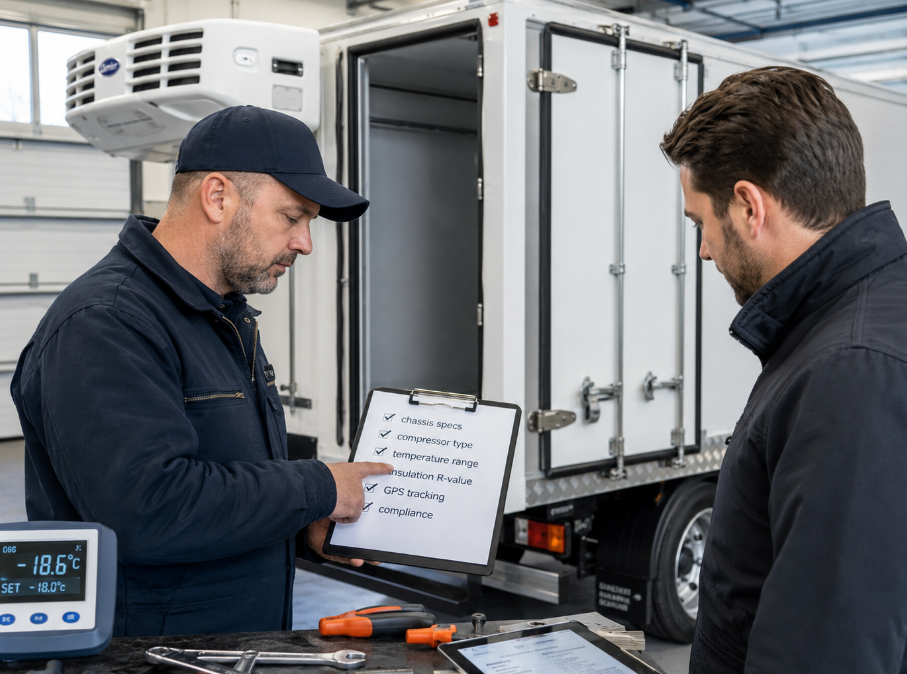
Vehicle Chassis Specifications: chassis type, engine displacement, transmission type
The base chassis sets the tone for total freezer truck cost.
Core configuration
Chassis type: light-duty, medium-duty, heavy-duty
Wheelbase length impacts cargo balance
Drivetrain layout affects traction and fuel burn
Powertrain details
Engine size and displacement(2.8L–6.7L typical)
Transmission: manual vs automatic
Rear axle ratio and suspension strength
Cost influence chain
Higher GVW → larger engine → higher truck cost
Automatic transmission → smoother shifts → added upfront price
At Reefertruckpro, buyers often compare base truck cost first, then layer cooling specs on top.
Refrigeration Unit Specifications: compressor type, temperature control range, refrigerant chemical
Cooling hardware drives freezer truck cost fast.
| Component | Spec Range | Cost Impact (USD) |
|---|---|---|
| Compressor type | Scroll / Reciprocating | 3,000–8,000 |
| Temperature control | -25°C to +10°C | 2,000–6,000 |
| Refrigerant | R404A / R452A | Compliance dependent |
| Evaporator size | Single / Multi-fan | 1,500–4,000 |
Efficient condenser design lowers fuel use
Electric standby option raises truck cost but cuts idle burn
Wider temperature range increases refrigeration system cost
“Cold-chain equipment investment continues to rise as operators upgrade to low‑GWP refrigerants and tighter temperature control,” noted the 2025 Global Cold Chain Alliance industry outlook.
That shift directly affects refrigerated truck cost today.
Cargo Body Construction: panel material, insulation R-value, door seal integrity
The cargo body protects temperature stability.
A. Structural layer
Panel material
FRP
Aluminum skin
Floor reinforcement for pallet loads
B. Thermal layer
Insulation thickness
Verified R-value performance
C. Access integrity
Rear door alignment
Magnetic seal durability
Better insulation lowers lifetime freezer truck cost by reducing compressor runtime. Cheap panels crack; good ones hold temp and resale value.
Integrated Technology: GPS tracking, telematics functionality, auxiliary power unit
Short and simple: tech saves headaches.
GPS and tracking cut route waste.
Telematics shows live temperature and fuel use.
An auxiliary power unit keeps cooling on during stops.
Lower fuel burn means lower operating truck cost. Reefertruckpro often bundles monitoring tools to balance upfront freezer truck price with long-term savings.
Regulatory and Compliance: cold chain validation, food safety standards, emissions certification
Compliance isn’t optional; it’s baked into freezer truck cost.
I. Regulatory layer
A. Cold chain documentation
B. Emissions testing
Quality layer
A. HACCP and food safety audits
B. Annual validation reports
Certification layer
A. Refrigerant handling license
B. Emissions certification records
Each approval adds paperwork and fees, yet skipping them risks fines that dwarf the original refrigerated truck cost. Smart budgeting counts every truck, freezer, and cost factor from day one.
5 Factors Influencing Freezer Truck Cost
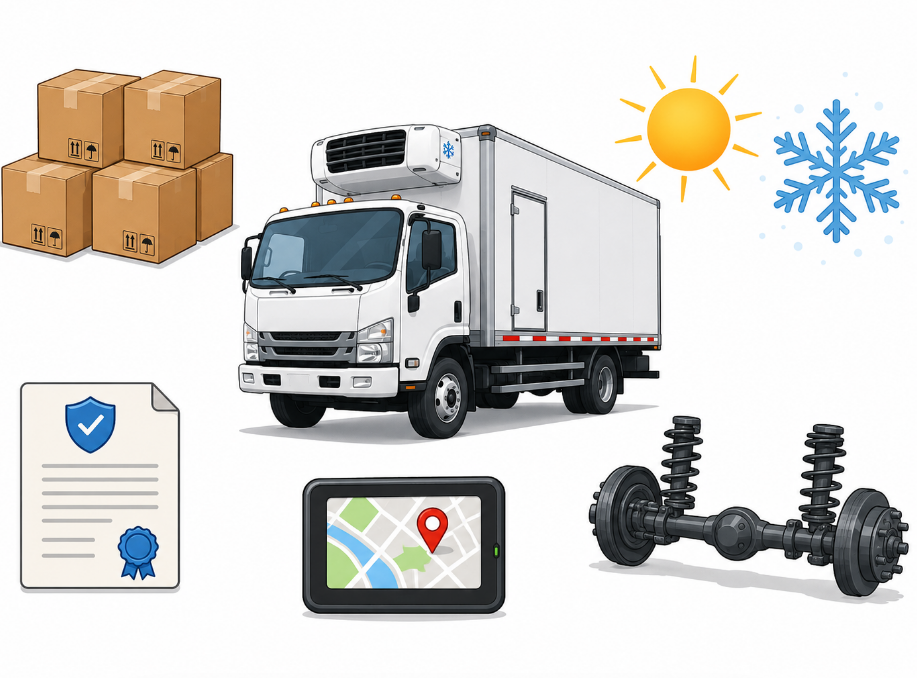
Freezer truck cost isn’t just a sticker number. It’s shaped bytruck, freezer, and overallcost drivers working together. Fromcapacity to climate and tech add-ons, every choice tweaks your freezer truck price. If you’re sizing up refrigerated truck price options, these five areas really move the needle.
Payload capacity requirements
When Weight, Volume, andLoad targets rise, freezer truck cost climbs fast.
| Payload (tons) | Body Volume (m³) | Estimated Freezer Truck Cost (USD) |
|---|---|---|
| 3 | 15 | 45,000–55,000 |
| 5 | 22 | 60,000–75,000 |
| 8 | 35 | 85,000–110,000 |
Higher Capacity → reinforced floor, strongerDimensions, thicker panels.
Heavy Goods demand upgraded chassis rails.
Bigger box means higher truck freezer cost overall.
At Reefertruckpro, engineers match body strength to real cargo data, avoiding overbuild that inflates freezer truck cost.
Ambient operating conditions
Operating Temperature and Climatematter more than most expect.
High Humidity regions require sealed insulation layers.
Hot Environment zones need larger compressors.
Mountain Altitude impacts cooling efficiency.
Under extreme Weather, refrigeration units run longer cycles, increasing both initial refrigerated truck price and long-term energy spend. Smart insulation keeps freezer truck cost under control.
Warranty period and component lifespan
Longer Warranty terms raise upfront freezer truck cost, yet improve Reliability.
Extended Lifespan compressors
High-grade electrical Components
Predictable Maintenance cycles
Better Durability reduces surprise downtime. The truck cost looks higher at purchase, but service savings stack up over years.
Fleet management software integration
Modern Software and Telematics add visibility.
Real-time Tracking
Remote Monitoring
Fuel Data analytics
This Integration improves routeEfficiency and cold-chainConnectivity. Hardware and subscription fees slightly increase freezer truck cost, yet fleet-level savings often offset that bump.
Axle configuration and suspension system choices
The Axle layout directly affectsChassis strength and freezer truck cost.
Single axle: lower truck freezer cost, lighterHandling.
Dual axle: higher Stability, supports heavyConfiguration needs.
Heavy-duty Suspension improves Ridequality on rough routes but raises manufacturing expense. Matching axle design to real-world loads keeps refrigerated truck price aligned with profit goals.
New Vs Used Freezer Trucks
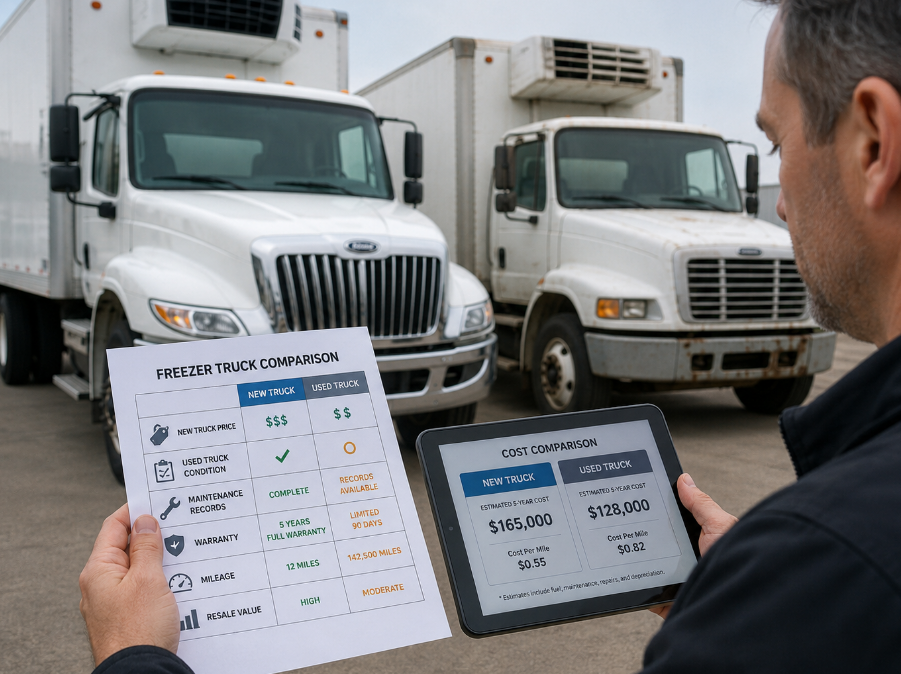
When people compare options, the big question usually circles back to freezer truck cost. Breaking down truck price, freezer unit cost, and long‑term running numbers makes the whole buying call way less stressful.
New freezer trucks
New units push freezer truck cost higher upfront, but the breakdown tells a clearer story.
Purchase Price Structure
Full warranty coverage
Stronger long-term reliability
Latest technology compressor design
Higher cooling efficiency
Meets updated emissions regulations
Built with modern manufacturingstandards
Tuned for stronger performance
Base chassis
Refrigeration system
Factory backing
Operational Impact on Freezer Truck Cost
Fuel savings from optimized systems
Lower repair frequency in early years
Better resale value due to certified build
| Cost Component | New Truck (USD) | 5-Year Impact (USD) |
|---|---|---|
| Initial truck price | 85,000–120,000 | — |
| Annual maintenance | 2,000–3,500 | 10,000–17,500 |
| Fuel efficiency savings | -1,200/year | -6,000 |
Yes, the freezer truck cost looks steep on paper. But when truck cost includes fewer breakdowns and tighter temperature control, things balance out. Brands like Reefertruckpro focus oncustomization, compliance, and stable cooling output, which helps control freezer truck cost over time instead of just slashing the sticker price.
Used freezer trucks
Used models shrink the upfront freezer truck cost, though the math deserves a closer look.
Vehicle Background Check
Mileage range and engine wear
Unit age and compressor cycles
Ownership history documentation
Technical Evaluation
Independent inspection
Detailed condition report
Verified maintenance records
Cost-Saving Angles
Lower initial truck price
Faster availability
Potential refurbishment upgrades
Freezer truck cost drops fast with used inventory, sometimes 30–50% below new truck price. Still, insulation may have reduced R‑value, and older refrigerant systems can drag down cooling output. That affects freezer unit cost in repairs and fuel.
Reefertruckpro helps buyers review maintenance logs and assess real truck cost beyond the tag. A smart check on mileage, condition, and service history keeps the freezer truck cost from creeping up later. Lower purchase price feels good. Stable operation feels better.
Can You Lower Freezer Truck Cost?
Running numbers on freezer truck cost can feel heavy, but small design and management tweaks cut truck cost, freezer cost, and overall operating cost fast. Let’s break down what really moves the needle.
Bulk purchasing for chassis and suspension systems
Lowering freezer truck cost often starts with smartprocurement of core components.
Chassis acquisition strategy
Standardize chassis model across fleet
Lock axle configuration early
Align brake and frame specs
Suspension systems consolidation
Choose one suspension type
Bulk order critical parts
Share inventory across units
Centralized systems planning
Unified supplier contracts
Reduced per-unit acquisition price
Faster parts replacement
Reefertruckpro applies this playbook to push down freezer truck cost without cutting durability.
Opting for simpler compressor types
A complex compressor with advancedtechnology sounds cool, but simpletypes often win on refrigeration cost.
Moderate cooling range
Straightforward design
Easy-to-service mechanism
Less complexity means fewer refrigeration failures. That trims repair bills and keeps freezer truck cost steady. Reefertruckpro often recommends balanced cooling setups to control long-term truck cost, not just sticker price.
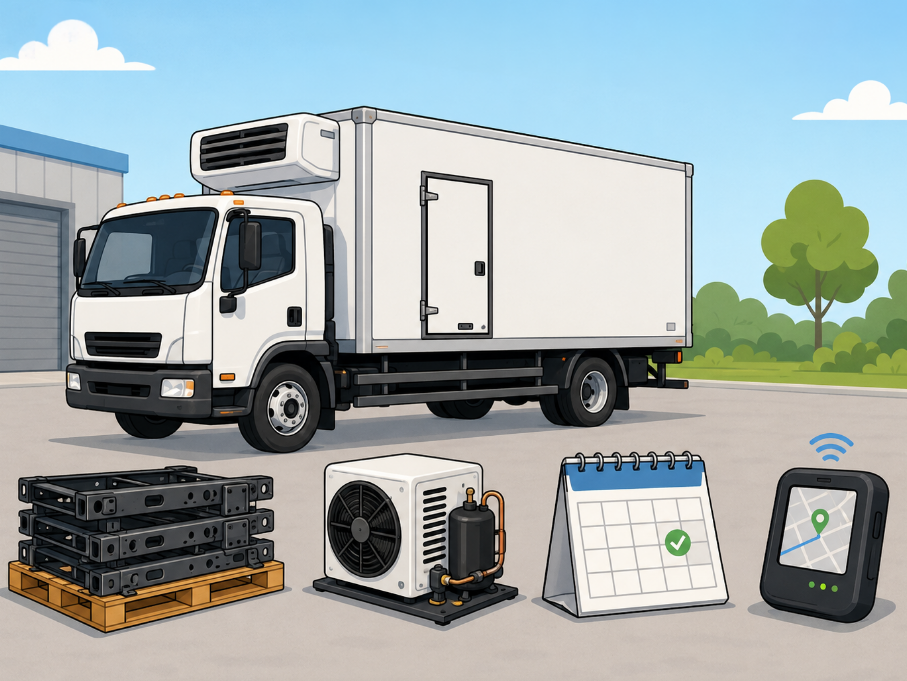
Extending service intervals with preventative maintenance
Cutting freezer truck cost doesn’t mean skippingmaintenance. It means planning it.
Build a realistic schedule.
Conduct routine inspection of cooling and chassis.
Track service intervals digitally.
Focus on preventative upkeep for longevity.
Longer component life reduces refrigeration truck cost spikes and protects resale value.
Employing telematics to boost loading/unloading efficiency
Smart telematics tightensoperations and trims freezer truck cost in daily runs.
Real-time tracking improves route optimization.
Data on loading time highlights bottlenecks.
Faster unloading boosts logistics turnover.
Inside fleet management:
Fuel monitoring → lower truck fuel cost.
Idle alerts → better cooling efficiency.
Driver scoring → safer handling of refrigeration units.
Reefertruckpro integrates telematics andoptimization tools so freezer truck cost stays predictable, not painful.
FAQ
What factors have the greatest impact on freezer truck cost?
Freezer truck cost rises and falls with three core systems working together:
Vehicle foundation: Chassis type, gross vehicle weight, and axle configuration shape the base price. Engine displacement and transmission type influence fuel consumption rate across long delivery route profiles. Suspension system and wheelbase length affect payload capacity and driver ergonomics.
Cold performance system: Compressor type, condenser capacity, and evaporator design determine temperature control range. Insulation R-value and refrigerant chemical directly affect cooling stability in harsh ambient operating conditions. Power source type, whether engine-driven or auxiliary power unit, shifts both upfront and operating cost.
Cargo body build quality: Panel material, interior lining, and floor reinforcement impact durability. Door seal integrity and aerodynamic features quietly reduce temperature loss and fuel burn.
When these elements are aligned with real operating needs, freezer truck cost feels justified rather than inflated.
How do operating conditions and compliance rules change freezer truck cost?
A truck running frozen seafood through coastal humidity faces different pressure than one delivering dairy in mild climates. That difference shows up in the bill.
Operating stress factors: Higher insulation R-value for extreme temperature setpoint demands, stronger corrosion resistance in wet or salted road regions, and larger condenser capacity for high ambient operating conditions.
Cost Driver Why It Matters Cost Effect Emissions certification Legal road operation Higher chassis specification Food safety standards Cold chain credibility Upgraded temperature data logger Refrigerant handling laws Environmental control Approved refrigerant chemical Vehicle safety ratings Fleet approval Enhanced suspension system Cold chain validation and transportation permits may feel administrative, yet failing them can halt deliveries entirely. In regulated markets, compliance protects revenue.
Which upgrades reduce long-term freezer truck cost of ownership?
Smart buyers think beyond purchase price. Long-term freezer truck cost is shaped by durability, data, and discipline.
Preventative care: A clear service schedule, attention to component lifespan, and easy spare parts availability help lower repair complexity and reduce breakdown days.
Technology that pays back: GPS tracking system, fleet management software integration, remote diagnostic capability, and a temperature data logger with security monitoring can improve loading/unloading efficiency, reduce fuel consumption rate, and protect cargo value.
Build quality choices: A strong cargo securing system, reliable door seal integrity, and a warranty period that covers key refrigeration unit components help control ownership risk.
A slightly higher upfront investment often softens maintenance shocks later. In cold transport, stability equals savings.