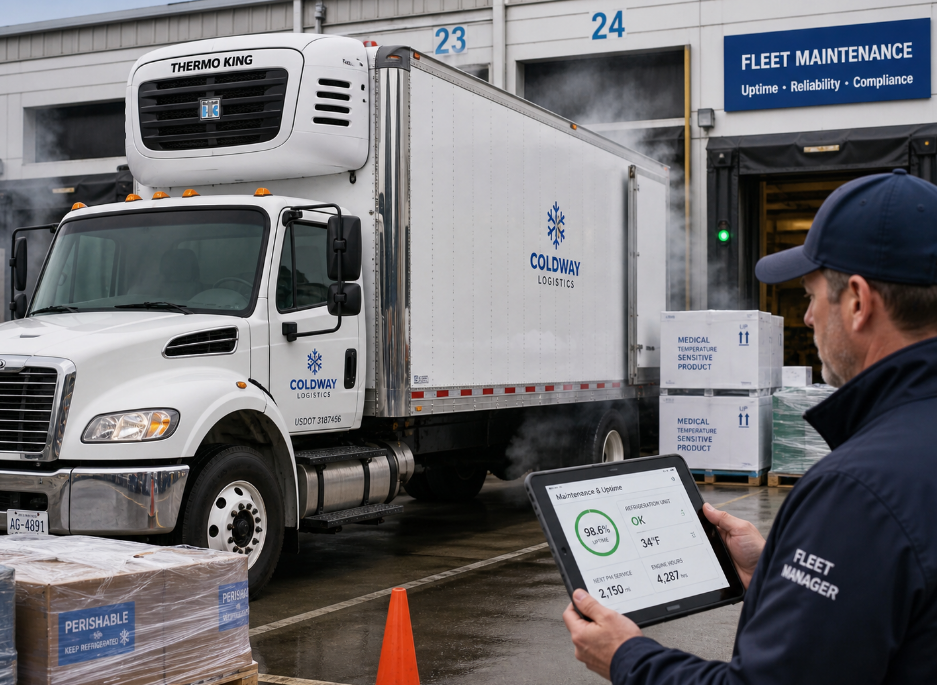
When profits need ice in their veins, a reefer truck keeps margins cool, shippers loyal, and cash flowing hotter than summer asphalt.
Here’s the deal: a reefer truck can make more money than a dry van when it’s managed right. It hauls high-value freight, protects margins, and keeps contracts sticky. For fleet owners watching fuel bills and idle time like hawks, that edge matters.
Cold chain shippers pay for reliability, not excuses. Precision cooling cuts spoilage, boosts repeat business, and turns uptime into steady cash flow. The question isn’t cost; it’s real payback speed.
Profitability
A reefer truck can make more money than a dry van when it’s managed right.
Cold Chain Value
Precision cooling cuts spoilage, boosts repeat business, and turns uptime into steady cash flow.
Payback Focus
The question isn’t cost; it’s real payback speed.
Do Reefer Trucks Really Pay Off?
A reefer truck isn’t cheap, and every fleet owner knows it. The real question is simple: does a refrigerated truck actually bring solid returns, or just higher bills? Let’s break it down in plain terms.

Calculating ROI with Payload Capacity and Fuel Efficiency
When a reefer truck rolls out, profit starts with math that makes sense.
Core drivers of return on investment
Driver wages
Insurance
Refrigeration servicing
Engine burn rate under full refrigeration load
Idle time impact on diesel reefer units
Higher cubic capacity means more pallets per trip
Better load planning within legal weight limits
Cargo volume
Fuel consumption
Operational costs
Increase payload within safe weight limits
Reduce fuel consumption through route planning
Monitor efficiency metrics weekly
More loaded miles equal stronger revenue generation. That’s where reefertruckpro helps operators compare specs before committing to a new reefer truck.
Balancing Engine Power against Maintenance Frequency
Power matters, but too much horsepower on a light-duty reefer truck can eat into margins.
Engine selection logic
Transmission
Cooling system
Refrigeration unit
Adequate torque for hill climbs
No overspec that strains fuel budget
Match engine performance to gross weight
Protect component lifespan
Preventative planning keeps service intervals predictable. Lower repair costs mean less downtime for your refrigerated truck and steadier cash flow.
Uptime Reliability’s Role in Profit Margins
A parked reefer truck earns nothing.
Profit stability depends on:
Vehicle availability
Low breakdown frequency
Short repair time
↳ Financial impact
Reduced revenue impact from missed loads
Higher fleet utilization
Long-term profitability gains
Fleet managers using reefertruckpro often track operational continuity data to protect cost savings across multiple reefer trucks.
Assessing Cold Chain Integrity and Delivery Cycle Time
Cold freight is unforgiving. One failed refrigeration unit, and margins melt fast.
Protecting temperature control
Continuous monitoring
Backup alerts
Reducing product spoilage
Strict transit checks
Documented quality assurance
Optimize routes to cut transit duration
Align dispatch with tight delivery schedule
Improve logistics efficiency through data logging
A dependable reefer truck keeps cargo safe, trims delivery cycle time, and keeps clients coming back. When cold chain integrity stays intact, a reefer isn’t just a cost—it’s a revenue engine.
Why Reefer Trucks Are Dominating Cold Chain Trends

The modern reefer truck isn’t just a cold box on wheels. It’s a rolling lab, a data hub, and a compliance tool all in one. From compressor upgrades to smarter tracking, every refrigerated truck is raising the bar for cold chain control.
Advancements in Compressor Technology
In today’s reefer truck market, compressor upgrades sit at the core of performance gains. The evolution of refrigeration systems can be broken down into layered improvements:
Design optimization
Compact design reduces vibration.
Improved airflow boosts cooling consistency.
Efficiency engineering
Variable-speed technology lowers fuel burn.
Smart load adjustment enhances efficiency during partial loads.
Innovation in refrigerants
Support for compliant gases.
Stable performance across wide temperature bands.
Below is a quick technical comparison seen in refrigerated truck fleets:
| Compressor Type | Fuel Use (L/hr) | Temp Variance (°C) |
|---|---|---|
| Fixed Speed | 3.8 | ±2.0 |
| Variable Speed | 2.9 | ±0.8 |
| Hybrid Drive | 2.4 | ±0.5 |
For any reefer truck operator, tighter temperature swing means safer cargo and fewer claims. That’s why platforms like reefertruckpro focus heavily on advanced compressor specs when matching buyers with the right truck reefer configuration.
Integration of Telematics for Remote Monitoring
A modern reefer truck runs on more than diesel. It runs on data.
Real-time tracking keeps dispatch in sync.
Embedded sensors feed constant temperature updates.
Cloud-based management dashboards simplify oversight.
Here’s how it usually plays out:
Onboard telematics units capture cargo zone readings.
Connectivity modules transmit data every few seconds.
Fleet teams access remote monitoring alerts instantly.
If a refrigerated truck drifts outside range, alerts hit phones fast. That real-time visibility keeps perishable loads safe and protects margins. A cold truck without live tracking now feels outdated.
Stricter Food Safety Standards and HACCP Compliance
Regulatory pressure is reshaping every reefer truck build. Under food safety and HACCP frameworks, control isn’t optional.
Standards and regulations
Verified compliance logs.
Audit-ready digital records.
Temperature control precision
Narrow set-point tolerance.
Continuous monitoring for perishable goods.
Quality assurance
ATP certification alignment.
Proof of quality during transit.
For a reefer truck moving dairy or seafood, missing a temperature mark by even one degree can mean rejected cargo. A properly equipped refrigerated truck locks in reliable temperature control, ensuring audits go smoothly and customers stay confident.
Data Proves: Reefer Trucks Boost Revenue by 18%
Running a reefer truck today isn’t just about keeping cargo cold. It’s about protecting margins, locking in loyal customers, and squeezing more profit from every mile. When a refrigerated truck runs smart—tight temperature control, better capacity use—revenue climbs. The numbers around reefer truck operations tell a pretty clear story.

Impact of Temperature Control System on Customer Retention
In a reefer truck, the control system does more than regulate cold air. It protects product quality, supports service reliability, and quietly drives customer retention.
Stable temperature reduces spoilage claims.
Real-time alerts improve satisfaction.
Data logs strengthen compliance trust.
Within reefer truck operations, the connection unfolds in layers:
Temperature Stability and Product Quality
a. Precise control system calibration keeps cargo within ±1°C.
b. Continuous monitoring reduces thermal fluctuation during loading.
c. Lower deviation preserves product quality, especially for pharma and fresh food.
Monitoring Transparency and Customer Trust
a. Remote dashboards allow customers to check shipment status.
b. Recorded temperature history supports audits.
c. Fewer disputes mean stronger retention.
Service Outcomes in Refrigerated Truck Fleets
Reduced claim frequency
Faster issue resolution
Higher contract renewal rates
Here’s how performance shifts when upgrading a reefer truck fleet:
| Metric | Standard Reefer Truck | Advanced Control System | % Change |
|---|---|---|---|
| Spoilage Claim Rate (%) | 4.8 | 2.1 | -56% |
| Customer Renewal Rate (%) | 68 | 82 | +20% |
| Delivery Temperature Deviations | 7 per 100 trips | 2 per 100 trips | -71% |
Fewer losses. Happier clients. Longer contracts. That’s not hype—it’s operational math. Many fleets working with reefertruckpro report that upgrading their temperature management directly improved repeat business in less than a year. A well-managed reefer truck earns trust mile after mile.
Correlation between Cargo Capacity and Delivery Cycle Time
Bigger cargo capacity in a reefer truck changes the rhythm of delivery. More pallets per trip means fewer runs. Fewer runs shrink cycle time.
Here’s what that looks like in real life:
Increase usable capacity through smarter interior layout.
Improve route optimization using load-based planning.
Reduce empty backhauls across the logistics network.
Short story? More shipment volume per trip boosts logistics efficiency.
Higher cargo density cuts fuel per unit delivered.
Fewer dispatches reduce handling delays.
Optimized route optimization trims total delivery cycle time.
A reefer truck operating at 85% payload versus 65% can reduce weekly trip frequency by up to two runs on regional lanes. That directly lowers labor hours and fuel burn.
Some fleets track it this way:
Average trips per week: down
Total shipment volume: up
Revenue per reefer truck: climbing
When reefertruckpro helps operators match box size to actual shipment volume, the gain isn’t just space—it’s speed. A refrigerated truck with balanced capacity keeps the cold chain tight while pushing more goods through each lane.
And that’s the quiet driver behind the 18% bump: smarter reefer truck configuration, tighter cycle time, and steady control over every load rolling down the highway.
4 Key Factors Driving Reefer Truck Profits
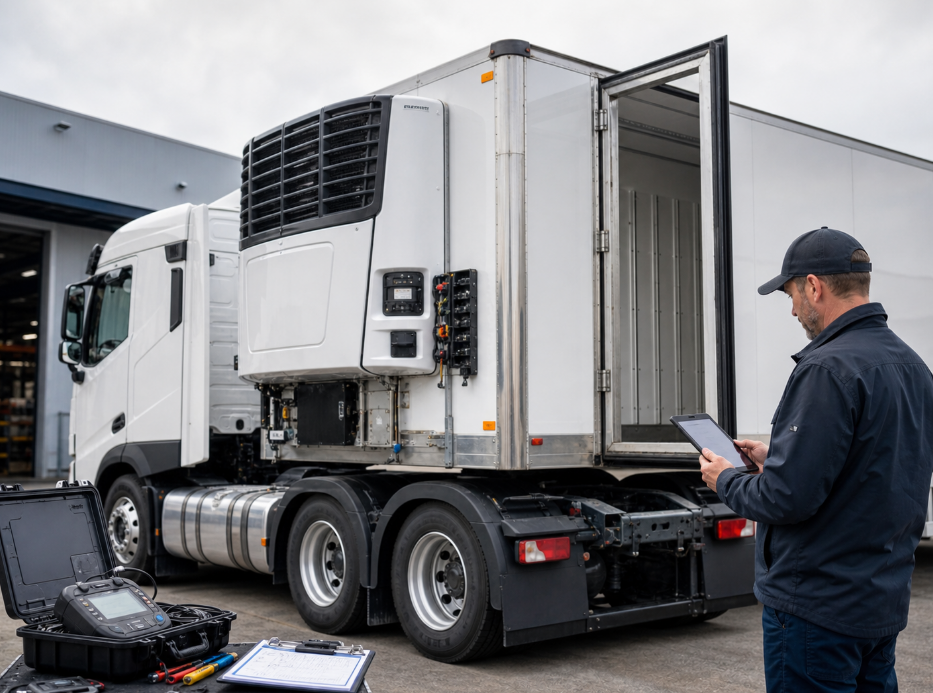
Chassis Type Selection for Optimal Payload Utilization
Choosing the right chassis shapes how your reefer truck earns.
Core configuration factors
Reinforced rails improve capacity
Balanced weight distribution reduces tire wear
Legal caps by region
Impact on cargo volume
4×2 for lighter regional routes
6×2 for higher payload balance
6×4 for heavy-duty stability
Axle configuration
Gross vehicle weight limits
Frame design
Profit impact chain
Higher legal payload → fewer trips
Smarter weight distribution → better fuel efficiency
Correct axle configuration → longer chassis life
A dialed-in setup keeps your refrigerated truck compliant while squeezing every kilogram of legal load space. That’s exactly how reefertruckpro guides fleet buyers—spec smart, not oversized.
Refrigeration Unit Type and Energy Consumption
The refrigeration unit is the heart of any reefer truck.
System architecture
Larger surface area cuts energy consumption
Multi-airflow for uniform temperature
Scroll for lower noise
Reciprocating for higher cooling capacity
Compressor type
Evaporator layout
Condenser size
Power strategy
Diesel direct drive
Electric standby
Hybrid power source for urban routes
The International Energy Agency noted in its 2025 transport outlook that improving cooling system efficiency in freight vehicles can cut fuel use by up to 15% in temperature-controlled logistics.
Lower energy consumption means tighter fuel efficiency and steadier margins for every reefer load. That’s why many reefer truck operators upgrading through reefertruckpro prioritize high-efficiency refrigeration specs.
Polyurethane Insulation Thickness for Reduced Fuel Bills
Insulation quietly protects profit inside a reefer truck body.
Material science basics
Limit heat transfer
Improve structural durability
Low thermal conductivity
High R-value
Polyurethane core
Composite outer panels
Thickness decisions
60–80 mm: urban chilled goods
80–100 mm: frozen transport
Above 100 mm: extreme climate routes
Performance results
Better temperature control
Reduced compressor cycling
Noticeable gain in fuel efficiency
A properly insulated reefer truck holds temp without overworking the refrigeration unit. Less thermal leakage, fewer fuel stops, more take-home profit.
Data Logging Capability Enhancing Cold Chain Integrity
Cold chain trust sells loads.
Monitoring hardware
High-precision sensor arrays
Redundant temperature monitoring probes
Data management layers
Onboard data logger
Cloud-linked real-time data feed
Secure record keeping archive
Compliance stack
HACCP alignment
Audit-ready traceability
Digital compliance reports
For a modern reefer truck, digital tracking isn’t optional. A connected refrigerated truck protects cargo claims, supports cold chain contracts, and proves performance when customers ask hard questions. Platforms supported by reefertruckpro make that proof easy—clear logs, clean data, zero guesswork.
High Fuel Bills? Energy-Efficient Reefer Trucks Help
Fuel prices keep bouncing around, and every mile in a reefer truck feels like it’s burning cash. If your refrigerated truck runs daily routes, small design tweaks can cut serious costs. From airflow to maintenance habits, smart upgrades turn a standard reefer truck into a lean, fuel-saving machine.
Leveraging Aerodynamic Composite Panels
Fuel loss often starts with poor truck design. For a reefer truck, airflow matters more than most drivers think.
Core design focus
aerodynamic shaping reduces turbulence along trailer edges
composite and lightweight materials trim excess body weight
sealed panels improve airflow management
Drag control improvements
Side skirt alignment
Roof fairing angle tuning
Rear door contour adjustments
When fiberglass reinforced plastic replaces heavier steel parts, the refrigerated truck sheds weight without losing strength. Less mass means better fuel efficiency and more payload room.
• Reduced drag equals lower diesel burn.
The U.S. Department of Energy noted in its 2025 heavy-duty vehicle outlook that aerodynamic upgrades on long-haul trucks can improve fuel economy by up to 7% under highway conditions.
Brands like reefertruckpro focus on optimizing these aerodynamic composite panels, giving each reefer truck smoother highway performance and steadier operating costs.
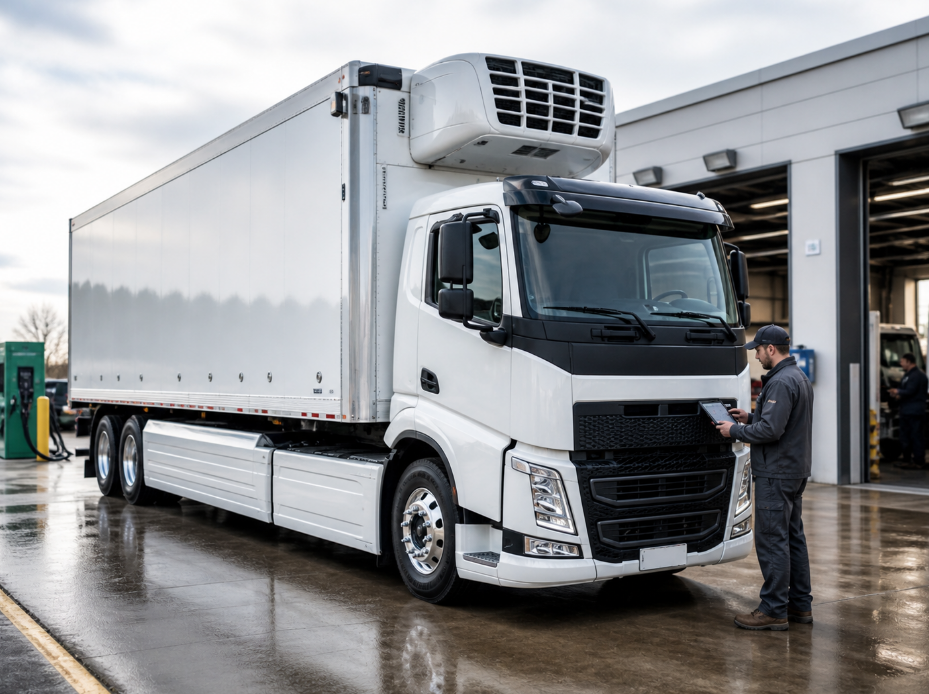
Adopting Advanced Evaporator Design
Inside the refrigeration unit, the evaporator plays the quiet hero. Bad airflow forces the compressor to work overtime.
Cooling system optimization
Balanced airflow distribution
Smarter design optimization
Stable temperature control
Performance gains
Lower energy consumption
Faster temperature pull-down
Reduced compressor cycling
Advanced technology in modern cooling systems ensures even air spread from front wall to rear door. That keeps cargo safe and the reefer truck engine from wasting fuel on constant corrections. A properly tuned refrigeration unit makes the whole reefer truck feel smoother on long hauls.
Implementing Preventative Maintenance Program
A strong preventative maintenance routine keeps your reefer truck reliable instead of stranded.
Maintenance framework
Protect compressor health
Extend component longevity
Check belts and seals
Inspect system diagnostics reports
Scheduled inspections
Component care
Operational checkpoints
Monthly performance review
Quarterly cooling system audit
Annual full refrigeration unit service
Consistent upkeep drives operational efficiency and solid truck reliability. reefertruckpro recommends tracking diagnostic data closely; small alerts often stop big repair bills. In the end, a disciplined maintenance program keeps every refrigerated truck running cooler, longer, and cheaper.
Which Reefer Truck Sizes Yield Best Margins?
Choosing the right reefer truck size can make or break your margins. From tight city runs to long highway hauls, each refrigerated truck class carries different payload, cost pressure, and revenue potential. Let’s break it down in plain terms.
Light-Duty Payload Capacity
For urban fleets running a compact reefer truck, profit often starts with understanding real payload math, not just brochure numbers.
Core Metrics
Local delivery density
Stop frequency in urban distribution
Rated weight limit
Usable cargo volume
Verified load rating
Capacity
Operating Profile
Margin Drivers
Lower fuel burn per mile
Easier parking, faster turnaround
Reduced tire and brake wear
Hidden Constraints
Limited cargo volume on peak days
Risk of exceeding weight limit with dense perishables
A small refrigerated unit works best when routes are short, docks are tight, and daily reloads are predictable. Many city operators using a reefer truck from reefertruckpro tune routes around average pallet weight, keeping the capacity sweet spot instead of chasing max loads every trip.

Medium-Duty Gross Vehicle Weight
A mid-size reefer truck sits in the practical middle ground. The GVW sets the tone. Too light, and revenue slips. Too heavy, and maintenance climbs.
Check the vehicle weight against axle ratings and axle load limits.
Match the weight class to regional permits.
Align chassis strength with refrigeration unit mass.
Ideal for regional hauling
Balanced for refrigerated transport
Fits growing distributors scaling beyond city limits
“Temperature-controlled freight demand remains resilient, particularly in regional networks tied to grocery and healthcare supply,” noted Transport Intelligence in its 2025 cold chain outlook.
That steady demand keeps a reefer truck in this class earning consistently. Operators often upgrade from light trucks once weekly pallet counts exceed safe GVW margins.
Heavy-Duty Cargo Capacity
When margins depend on volume, a heavy reefer truck changes the game.
Revenue Logic
Higher freight capacity
Expanded cargo volume
Larger trailer size for dense lanes
Operational Fit
Long-haul transport corridors
Strict cold chain compliance
Bulk perishable goods contracts
Risk Control
Monitor refrigeration fuel use
Track maintenance intervals
Protect temperature-controlled integrity
This class shines in national logistics networks moving full loads coast to coast. A properly spec’d refrigerated truck from reefertruckpro helps fleets push maximum cargo volume without crossing axle thresholds. Run right, a heavy reefer truck turns long miles into solid, repeatable profit.
FAQ
How does reefer truck fuel efficiency affect fleet profit?
Fuel efficiency shapes daily survival on the road.
Lower fuel burn reduces cost per mile.
Higher payload capacity increases payload utilization per trip.
Smart chassis type + matched engine power prevent overloading and wasted energy.
When gross vehicle weight aligns with cargo capacity, delivery cycle time shortens and cold chain integrity stays intact. A well-balanced reefer truck turns every mile into margin.
What size reefer truck is most profitable for bulk transport?
Profit depends on route pressure and load rhythm.
1) Light-duty: agile in cities, moderate cargo capacity, shorter delivery cycle time.
2) Medium-duty: balanced gross vehicle weight and insulation thickness for regional routes.
3) Heavy-duty: long-haul strength, higher payload capacity, stable temperature range control.
Match chassis type, engine power, and refrigeration unit type to route density. The wrong size drains fuel efficiency; the right one multiplies returns.
Why is advanced compressor technology critical in a reefer truck?
Inside the box, temperature control is a silent battle.
Modern compressor technology stabilizes the temperature range under harsh climates.
Refined evaporator design improves airflow across polyurethane insulation walls.
Eco-friendly refrigerant type supports emissions regulations and food safety standards.
When the temperature control system reacts fast, spoilage risk drops—and uptime reliability rises.
How does telematics integration improve reefer fleet control?
Real-time visibility changes everything.
Telematics integration connects remote monitoring, fleet tracking software, and diagnostic capabilities into one live stream.
Managers watch temperature shifts, fuel efficiency trends, and maintenance frequency from a dashboard.
Data logging capability secures HACCP compliance, ATP certification records, and pharmaceutical transport guidelines.
Fewer surprises. Faster decisions. Tighter control.
Which body materials protect cold chain integrity best?
Cold air escapes through weak structure.
| Component | Material Choice | Impact on Performance |
|---|---|---|
| Walls | Composite panels + fiberglass reinforced plastic | Strength with lower weight |
| Insulation | Polyurethane insulation (optimized insulation thickness) | Stable temperature range |
| Flooring | Aluminum flooring | Durability under heavy cargo capacity |
| Hardware | Stainless steel fittings + tight door seal material | Reduced leakage, longer uptime reliability |
Material choices directly affect fuel efficiency and compressor workload.
How do maintenance and supplier support protect long-term ROI?
A reefer truck earns only when it moves.
Follow a preventative maintenance program tied to telematics integration.
Track refrigeration unit type health through diagnostic capabilities.
Secure parts availability and wide service network coverage.
Review warranty terms, training programs, and after-sales service quality.
Strong technical support reduces downtime shocks. Stable uptime reliability guards contracts, protects food safety standards, and keeps profit steady mile after mile.