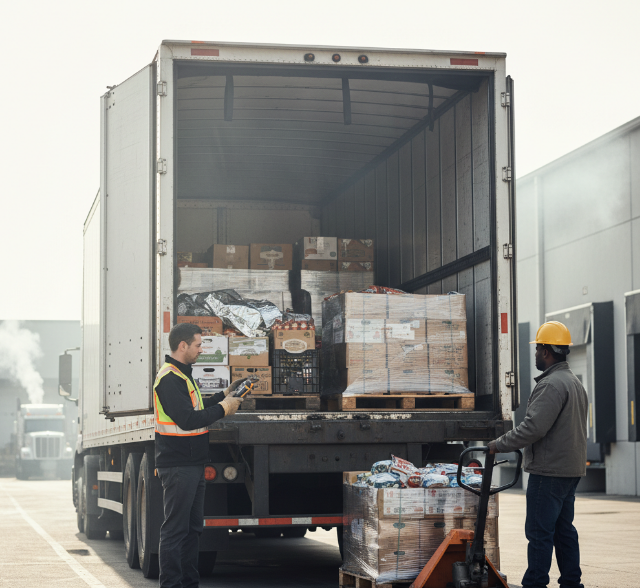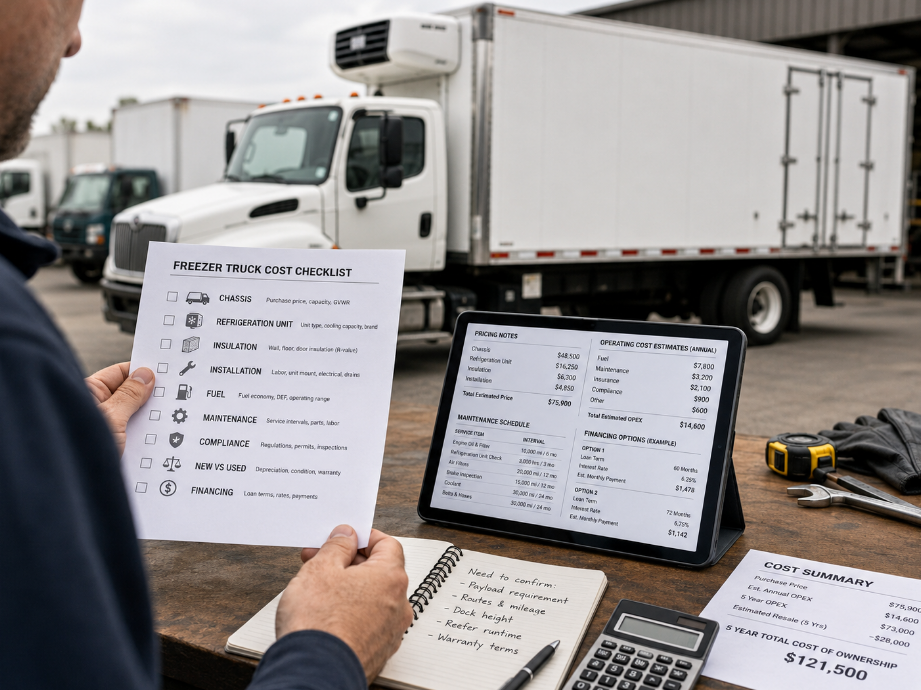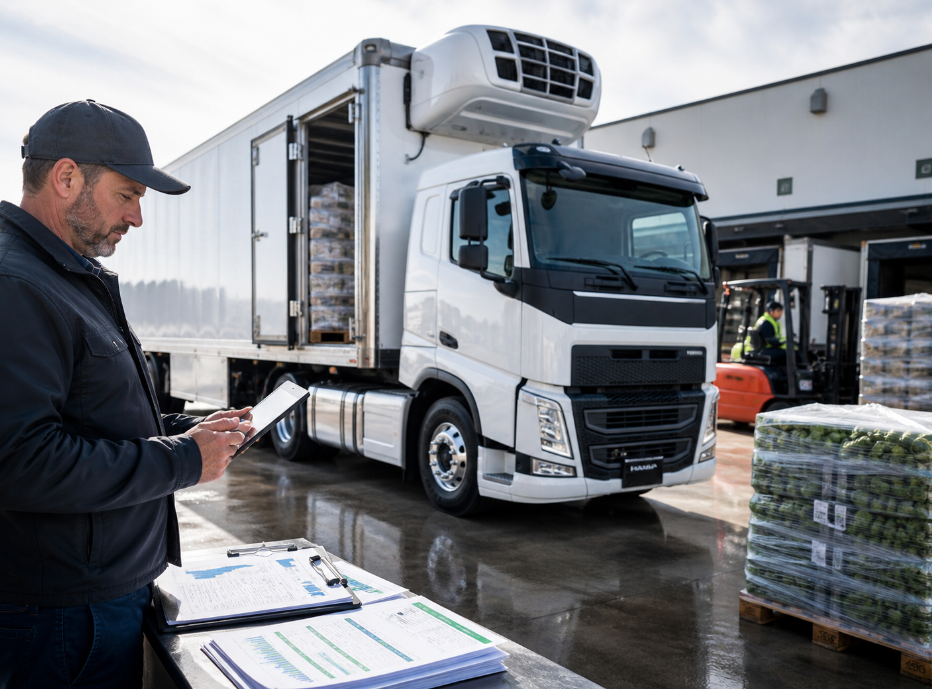
Profit doesn’t chill itself—when the cold chain bites, only a reefer truck built for precision saves your margins and keeps you rolling rich.
A reefer truck isn’t just a rig; it’s your last line between profit and spoiled cargo on wheels.
Reefertruckpro engineers stress in 2025 technical briefs that temperature stability and compliance drive fleet longevity standards.
Cut corners here, and the cold chain bites back hard. Choose smart, scale confidently.
Data Proves: 92% Of Perishables Need Reefer Trucks
Fresh food doesn’t forgive temperature swings. From seafood to vaccines, most loads riding a reefer truck depend on tight thermal control. Split the words—reefer and truck—and you get the idea: refrigeration plus mobility. That combo keeps perishable goods safe, cuts waste, and keeps the cold chain rolling without drama.
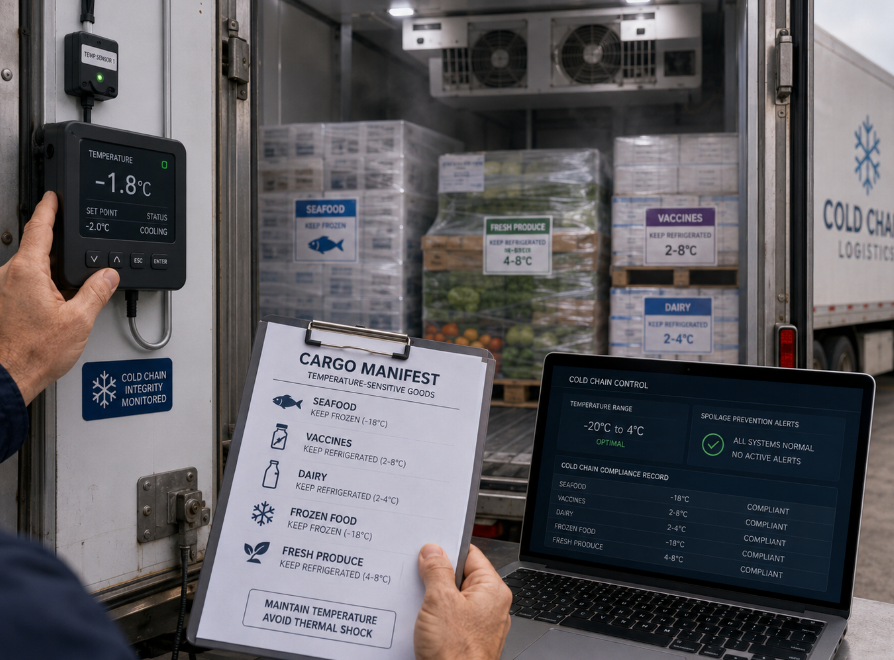
How temperature control range protects perishables
A modern reefer truck manages temperature control with precision, and that’s where real spoilage prevention starts.
Product-Specific Optimal Temperature
Target: 0–5°C
Risk below 0°C: frost damage, loss of product integrity
Target: 0–2°C
Risk above 4°C: rapid bacterial growth
Fresh meat:
Leafy greens:
Cold Chain Risk Control
Continuous airflow
Stable compressor cycling
Pre-cool cargo space
Seal doors fast
During loading
In transit
Food Safety Impact
Maintains food safety compliance
Reduces insurance claims
Protects brand reputation
With a wide operating band, a refrigerated truck avoids thermal shock and keeps the cold chain intact from dock to dock.
Microprocessor controller meets temperature data logging needs
Smart control makes a reefer truck more than a cold box. It becomes a rolling data hub powered by a microprocessor controller and advanced sensor technology.
Real-Time Oversight
Continuous temperature data logging
Instant alerts for deviation
Cloud-based real-time monitoring
Compliance & Traceability
Archived data records
Audit-ready reports
Verified cold chain compliance
Performance Benchmarks
| Cargo Type | Set Temp (°C) | Max Deviation (°C) | Logging Interval (min) | Compliance Standard |
|---|---|---|---|---|
| Fresh Beef | 1 | ±1 | 5 | FDA FSMA |
| Dairy | 3 | ±1 | 10 | HACCP |
| Seafood | 0 | ±0.5 | 5 | EU 853/2004 |
| Vaccines | 5 | ±0.5 | 2 | WHO GDP 2025 |
| Frozen Food | -18 | ±2 | 15 | ISO 22000 |
Platforms like Reefertruckpro integrate these controls, turning every reefer truck into a traceable asset instead of a guessing game.
Reliable defrost cycle for continuous cold chain
Ice happens. A smart defrost cycle keeps a refrigeration system from choking on ice buildup.
• Hot-gas or electric defrost clears coils.
• Airflow returns to spec.
• Temperature stability stays tight.
When frost blocks the evaporator, airflow drops and cargo feels it fast. A scheduled cycle restores operational efficiency, protects condenser capacity, and shields high-value loads. In plain terms, your refrigerated truck keeps humming, and your continuous cold chain doesn’t skip a beat.
For fleets that live on uptime, Reefertruckpro pairs smart defrost logic with cargo-focused design—because protection isn’t optional when a reefer and truck are carrying someone’s bottom line.
5 Food Categories Relying On Refrigerated Trucks
Cold cargo isn’t just about keeping things cool; it’s about precision. From farm pickups to pharmacy docks, every reefer truck run carries risk if airflow, insulation, or power slips. A well‑spec’d reefer truck keeps goods stable mile after mile. Below are five categories that truly depend on a dialed‑in refrigerated truck setup.
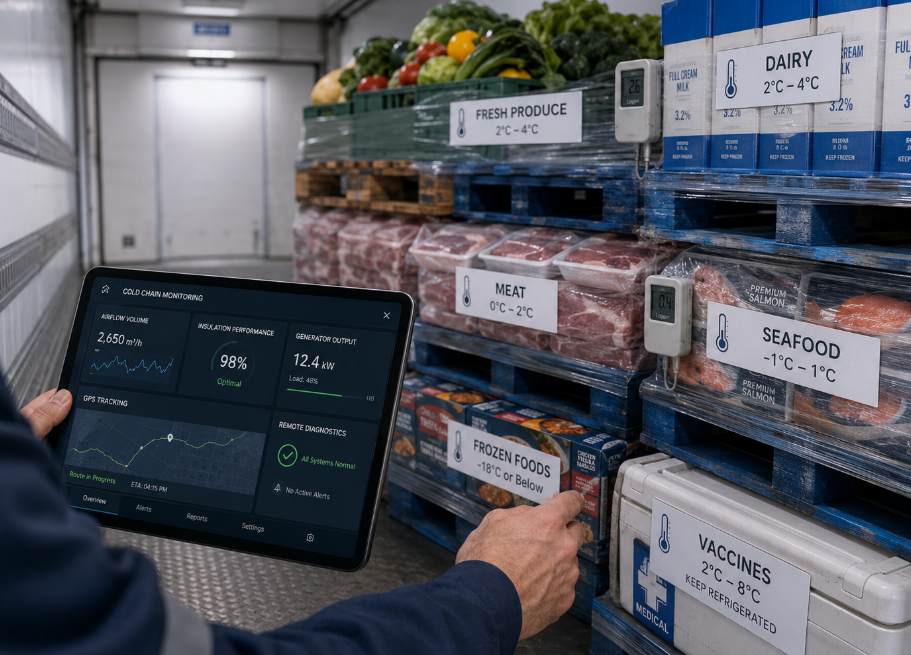
Dairy Products: Precise airflow volume management
In a reefer truck, dairy stability comes down to controlled circulation and smart layout.
Core cargo
milk, yogurt, cheese, butter, cream
Environmental priorities
tight temperature control (2–4°C typical)
steady ventilation flow rate
balanced humidity to avoid condensation
Operational flow inside a reefer:
Load pallets with rear‑to‑front spacing.
Set supply air based on product density.
Monitor return air for hot spots.
Miss airflow volume, and bacteria growth speeds up fast. That’s why Reefertruckpro units focus on calibrated evaporator output and even air throw across the trailer.
Fresh Produce: High insulation R-value trailers
For fruits, vegetables, leafy greens, and berries, insulation is the silent hero.
Trailer build
thicker wall panels
sealed door gaskets
high thermal efficiency roof
Inside the reefer truck:
Maintain narrow temperature stability bands.
Reduce compressor cycling to protect delicate cargo.
A quality reefer setup protects moisture content while limiting heat gain through the cargo shell.
Meat and Seafood: Low-temperature compressor types
Cargo such as beef, poultry, fish, and shellfish demands aggressive chilling.
Key layers:
Refrigeration core
heavy-duty refrigeration unit
low-temp evaporator
Target zones
deep freezing for storage
strict chilling during distribution
One weak compressor in a refrigerated truck can spike pathogen risk. Sub-zero reliability is non‑negotiable.
Frozen Foods: Robust generator output for long hauls
Think ice cream, frozen meals, and desserts crossing states overnight.
Power chain inside the reefer truck:
Main power supply
Backup battery
Fuel system tuned for fuel efficiency
During a long journey, continuous operation keeps the cold chain unbroken. Even short shutdowns can soften product cores.
Pharmaceuticals: GPS tracking and remote diagnostics
When hauling vaccines, medicines, or biologics, data matters as much as cooling.
System stack:
Live temperature monitoring
Integrated location services
Advanced telematics
Verified data logging with real-time alerts
Modern reefer truck fleets sync diagnostics to dispatch dashboards. If temperature drifts, teams act fast—no guesswork, no drama.
Meat Distribution: Key Steps In Reefer Transport
Moving meat in a reefer truck is serious business. One small temp swing and the whole load’s at risk. From pre-cooling to maintenance, every reefer truck move keeps product safe, legal, and ready for market.
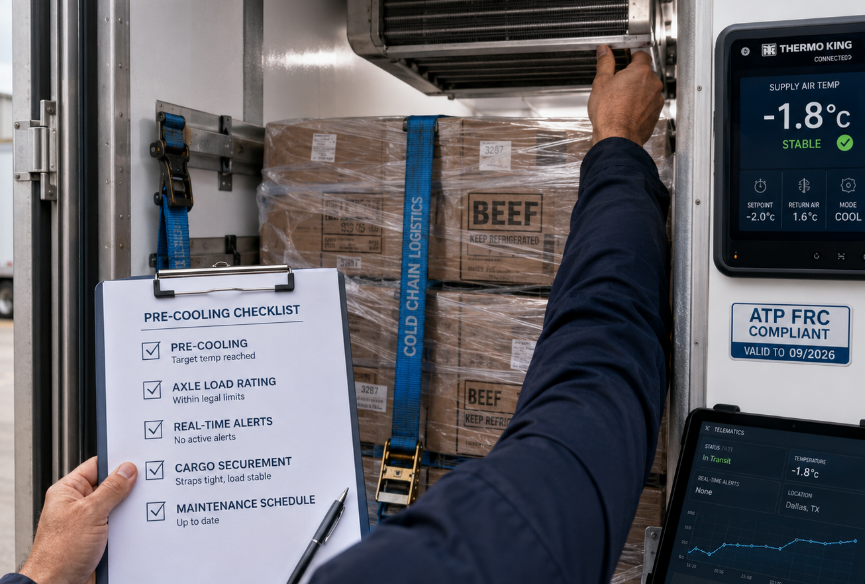
Step 1: Pre-cooling with optimal evaporator coil design
A reefer truck works best when the cooling system is stable before loading. That starts with tight control of the refrigeration unit and smart airflow planning.
Pre-cooling the reefer trailer
Clean fins
Check frost pattern
Verify temperature control range (0°F to 40°F typical for meat)
Confirm air circulation is unobstructed
Setpoint calibration
Inspect evaporator coil
Equipment check
Test refrigeration unit response time
Confirm fuel and power supply
Pre-cooling Benchmarks
| Parameter | Target Range | Check Interval | Risk if Ignored |
|---|---|---|---|
| Supply Air Temp | 28–34°F | Pre-load | Bacterial growth |
| Return Air Temp | ±2°F of setpoint | Pre-load | Uneven cooling |
| Coil Condition | Clean / No ice | Weekly | Airflow blockage |
| Unit Response | <15 min pull-down | Monthly | Temp deviation |
A well-prepped reefer truck keeps meat stable from dock to highway.
Step 2: Secure loads and verify axle load rating
Inside the reefer truck, weight and balance matter just as much as cold air.
Cargo securement
Install rated tie-downs and cargo straps
Lock pallets to prevent shift
Load stability
Front-to-rear balance
Side-to-side adjustment
Even weight distribution
Compliance check
Confirm axle load within load rating
Match suspension and tire specs
A steady refrigerated truck drives smoother, brakes cleaner, and protects both cargo and driver.
Step 3: Monitor cargo via real-time alerts
Modern reefer truck fleets don’t guess; they track.
Cargo monitoring
Install calibrated temperature sensors
Enable data logging
Connectivity
Activate GPS tracking
Sync with telematics dashboard
Risk control
Set real-time alerts
Enable remote monitoring for dispatch
Short temp spike? The system flags it fast. Door left open too long? Alert sent. That’s how refrigerated truck operations stay tight and audit-ready.
Step 4: Post-delivery checks and maintenance schedule
After delivery, the job’s not done.
Post-delivery inspection
Inspect refrigeration system
Review repair logs
Clean-up routine
Sanitize interior panels
Follow strict cleaning procedures
Ongoing care
Schedule preventative maintenance
Perform full equipment checks per maintenance schedule
Operators using Reefertruckpro often streamline inspections, tracking every service record in one place. A clean, well-documented reefer truck holds value longer, stays compliant, and keeps meat distribution running without drama.
Low-Temp Vs. Multi-Temp: Choosing A Reefer Truck
Picking the right reefer truck isn’t just about cold air. It’s about control, cargo safety, and profit margins. From frozen desserts to mixed grocery runs, your refrigerated truck setup shapes fuel costs and delivery flexibility. Let’s break down how a reefer, a freezer truck, or a multi-zone truck really performs on the road.
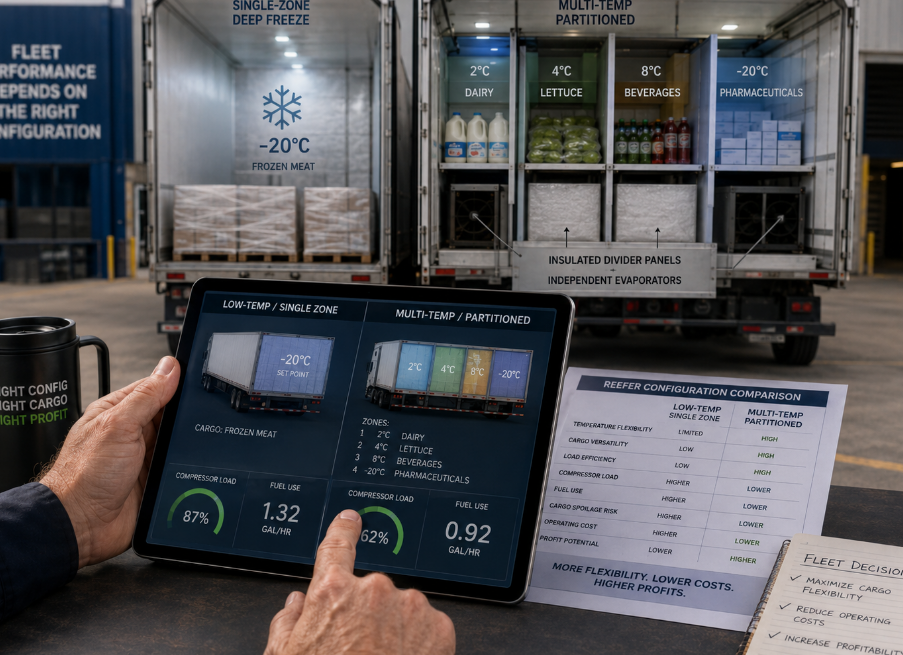
Low-Temp
A reefer truck built for low-temp hauling focuses on one mission: deep cold, no excuses.
Core Configuration
1.1 Cooling System
1.2 Body Structure
1.3 Control Logic
Maintains Constant temperature range
Optimized for Frozen goods and Ice cream
Thick insulation with high R-value
Airtight Single compartment cargo box
High-capacity compressor tuned for Deep freeze cycles
Reinforced evaporator for steady airflow
Typical Cargo Fit
2.1 Food Sector
2.2 Medical Sector
Pharmaceuticals
Vaccines requiring stable sub-zero transit
Meat products in bulk
Export-grade frozen seafood
| Cargo Type | Temp Range (°C) | Avg. Compressor Load (%) | Insulation Thickness (mm) | Fuel Use (L/hr) |
|---|---|---|---|---|
| Ice Cream | -25 to -18 | 85 | 120 | 3.8 |
| Frozen Meat | -20 to -15 | 78 | 110 | 3.5 |
| Vaccines | -25 to -20 | 82 | 120 | 3.6 |
| Seafood | -22 to -18 | 80 | 115 | 3.7 |
| Pharma | -25 to -15 | 88 | 125 | 3.9 |
If your reefer truck runs fixed frozen routes daily, a single-zone refrigerated truck keeps things simple and efficient. Brands like Reefertruckpro fine-tune these freezer truck builds for stable sub-zero hauling without temperature swings.
Multi-Temp
A multi-temp reefer truck plays a different game. Flexibility wins here.
Multiple compartments separated by insulated panels
Independent evaporators managing Varied temperatures
Smart controllers adjusting airflow in real time
One truck. Different climates.
Fresh lettuce at 4°C.
Dairy products at 2°C.
Chilled Beverages at 6°C.
Packaged Meat products slightly below zero.
That’s the power of Partitioned zones and serious Temperature flexibility.
In daily operations:
Load sequencing matters.
Partition doors must seal tight.
Controllers need calibration before dispatch.
Urban grocery chains love this setup. A refrigerated truck with zone control cuts fleet size because one reefer handles mixed drops. Reefertruckpro designs these reefer truck systems with reinforced side walls to prevent thermal bleed between zones.
If your routes mix Fresh produce and frozen stock in one run, a multi-zone reefer truck keeps cargo happy—and margins healthier.
Slow Unloading Times? Quick-Access Reefer Design
Tight delivery windows can turn any reefer truck run into a race against the clock. When drivers swing open a reefer truck door, every second counts. Smart design inside a refrigerated truck keeps cold air in and pallets moving out. Here’s how better materials upgrade your reefer, your crew’s mood, and your bottom line.

Wide door seal materials for faster access
A modern door seal setup in a reefer truck is more than rubber around a frame. It shapes how fast a wide door can open and close without killing insulation.
Core components
Wider hinge swing
Compression-balanced frame
High-flex polymer blends
Cold-resistant gasket layers
Sealing material
Reinforced door design
Performance gains
Faster quick access during multi-stop routes
Reduced warm air entry in the refrigerated truck
Stable cargo temperature inside the truck reefer body
The 2025 Global Cold Chain Logistics Report by the International Institute of Refrigeration notes that door-related thermal loss remains one of the top operational cost drivers in urban distribution fleets.
Why it matters for operators
Less strain on the reefer unit
Lower fuel burn
Fewer product claims
Brands like Reefertruckpro build reefer truck bodies with upgraded insulation around every door seal, so drivers aren’t fighting stiff edges during peak deliveries.
Low-threshold floor material enhancements
A tough floor material makes or breaks daily loading.
In a busy reefer truck yard, crews need:
Smooth pallet entry
Durable reefer floor strength
Reliable anti-slip texture
Start with a reinforced truck floor core.
Add a low threshold edge for easy loading access.
Seal insulation layers beneath the floor enhancement surface.
The result feels simple. Roll in. Roll out. No jolts.
A low threshold reduces trip risks and speeds up pallet jack movement across the refrigerated truck. At the same time, upgraded durability prevents cracking under repeated heavy loads. That balance keeps the reefer truck efficient while protecting insulation panels below the surface.
Side wall material with built-in load securement rails
Inside a reefer truck, the side wall does more than hold insulation. It stabilizes cargo.
Wall structure
Insulated wall material core
Embedded built-in rail system
Cargo control system
Adjustable securement rail tracks
Integrated cargo restraint fittings
Operational benefits
Faster load lock-in
Safer turns and braking
Cleaner reefer interior layout
In a truck reefer setup without proper rails, drivers waste time hunting for straps. With integrated load securement solutions in the truck wall, everything clicks into place. Reefertruckpro aligns these rails directly within the insulated panel, keeping the refrigerated truck light, compliant, and ready for tight urban routes.
Future Forecasts: Electric Refrigerated Truck Trends
Electric tech is reshaping the reefer truck world at a fast clip. Fleets want cleaner runs, lower fuel burn, and steady cold control. From battery upgrades to smarter truck power systems, the modern reefer truck, refrigerated truck, and cold chain truck are getting sharper and tougher. Let’s break it down.
High-capacity battery and alternator output
In today’s reefer truck, higher battery capacity and stronger alternator output keep every system alive without draining driving range.
Core power architecture
Upgraded alternator output for refrigeration cycles
Stable voltage for electric refrigeration
High-density energy packs with advanced storage chemistry
Smart battery management to balance load
Energy source
Generation support
Auxiliary demand in a truck reefer system
Telematics and lighting
Liftgates and cabin HVAC
| Configuration | Battery Capacity (kWh) | Alternator Output (kW) | Auxiliary Load Support (hrs) |
|---|---|---|---|
| Standard | 80 | 20 | 6 |
| Enhanced | 120 | 30 | 9 |
| High-Capacity | 160 | 40 | 12 |
For fleets running a reefer truck nonstop, this upgrade means fewer idle hours and smoother cold delivery.
Electric standby power with shore power connection
When a reefer truck docks, electric standby power kicks in. Plugging into a shore connection ties the truck to grid infrastructure for clean charging.
Cuts diesel burn at warehouses
Keeps cargo temperature rock steady
Lowers maintenance on the truck reefer unit
Reefertruckpro integrates smart switching so the refrigerated truck shifts from engine-driven mode to grid power automatically. Drivers just plug in and relax.
Corrosion protection and modular powertrain design
Long-haul reefer truck fleets face salt, moisture, and rough roads. That’s where corrosion protection and modular powertrain design matter.
Structural durability
Coated frame components
Sealed electrical integration points
Modular layout
Swappable cooling modules
Shared design parts across models
Reefertruckpro builds each reefer truck with service-friendly layouts, boosting durability and uptime. In real-world cold chain truck operations, that means fewer surprises and longer lifecycle value.
FAQ
What makes a reefer truck reliable for food and pharmaceutical transport?
A dependable reefer truck balances refrigeration precision with structural strength:
Refrigeration control
Wide temperature control range for dairy, meat, or vaccines
Efficient compressor type and matched condenser capacity
Smart evaporator coil design for steady airflow volume
Automated defrost cycle to prevent ice buildup
Body insulation performance
High insulation R-value and optimized panel thickness
Hygienic wall liner material and sealed floor material
Flexible door seal material to reduce cold loss
Real-time oversight
Temperature data logging with microprocessor controller
GPS tracking and real-time alerts for route transparency
The result feels simple to the driver: stable cargo, fewer surprises, and confidence at every stop.
How does insulation R-value affect operating cost and cargo safety?
Higher insulation R-value slows heat transfer through the side wall material and roof construction. That means:
Less strain on the compressor type
Lower fuel use or reduced generator output
More stable airflow volume inside the trailer
In long-distance runs, strong insulation paired with tight door seal material protects seafood or pharmaceuticals from sudden temperature spikes. It also supports Food and Drug Administration (FDA) compliance by helping maintain validated temperature data logging records.
In daily operation, better insulation feels like peace of mind—fewer emergency adjustments, fewer rejected loads.
What monitoring systems should fleet owners require in a reefer truck?
A modern unit should combine mechanical strength with digital visibility:
Microprocessor controller linked to temperature data logging
GPS tracking with geofencing capabilities
Door open/close sensors to reduce cargo risk
Remote diagnostics for refrigeration unit specifications
Fuel level monitoring tied to alternator output and battery capacity
When integrated well, these tools support Department of Transportation (DOT) standards, simplify audit checks, and allow fast response before a minor fluctuation becomes a costly loss.
How can buyers ensure safety and regulatory compliance in a reefer truck?
Compliance lives in both hardware and documentation. Key checkpoints include:
Chassis and braking: axle load rating within DOT limits, anti-lock braking system (ABS), electronic stability control (ESC), proper tire specifications.
Cold chain integrity: certified refrigerant type, refrigerant leak detection, validated temperature control range.
Load security: tested load securement systems and durable floor material.
Service discipline: clear warranty terms, accessible components, corrosion protection, and defined maintenance schedule recommendations.
A well-specified reefer truck does more than pass inspection—it protects reputation, cargo value, and the people responsible for every mile.