When contracts chill and deadlines heat up, a refrigerated truck keeps profits cool—choose the right class or pay a frosty price later.
A refrigerated truck isn’t just a box on wheels—it’s a rolling icebox with a law book riding shotgun. You’ve got contracts to fill, frozen goods on the clock, and drivers asking, “Do I need a CDL for this rig?” That question can stall a deal faster than a dead battery in January. Miss the weight cutoff, and you’re staring at fines, downtime, and a whole lot of explaining.
The Federal Motor Carrier Safety Administration reports more than 3.5 million CDL holders nationwide, underscoring how tightly regulated heavy commercial vehicles are. As FMCSA states, “Drivers of commercial motor vehicles must have a valid CDL.” Short, clear, no wiggle room.
Pick the wrong class of truck, and your hiring pool shrinks overnight. Get it right, and your fleet hums like a well-tuned compressor—cold cargo steady, routes covered, margins intact.
CDL Requirements
Ensure GVW over 26,001 lbs triggers a CDL Class B/A; ATP certification may apply for cross-border cold chain runs.
Temperature Control
Leverage telematics, data loggers, and temperature alarms to maintain precise ranges and swift cool-downs.
Compliance Checklist
Balance axle configuration and payload capacity, adhere to food safety regulations, and document preventive maintenance for seamless audits.
Do You Really Need a CDL?
Running a refrigerated truck isn’t just about keeping things cold. Once weight, routes, and food rules stack up, your license class can make or break the job. Let’s break it down in plain terms.

When Gross Vehicle Weight (GVW) Tops 26,001 lbs
When your refrigerated truck crosses the 26,001 lbs Gross Vehicle Weight line, the rules shift fast.
Weight Basics
Truck chassis
Insulated box
Fuel
Cargo load
Gross Vehicle Weight (GVW) includes:
If GVW ≥ 26,001 lbs → CDL required
Below that → may qualify under lighter vehicle classification
Why It Matters
Fines
Out-of-service orders
Insurance headaches
Exceeding the weight limit without a commercial driver's license can mean:
Heavy Truck Factors
Axle rating
Frame strength
Payload balance
A loaded cold truck hauling frozen beef can tip into heavy truck territory quickly. Always verify the sticker on the door jamb and manufacturer specs before dispatch.
Navigating Weight Limits and ATP Certification
Operating a refrigerated truck across borders adds another layer.
Confirm regional weight limits for each state or country.
Check if ATP certification is required for international transport.
Verify insulated body performance meets vehicle standards.
Under refrigerated transport rules, inspectors may review:
Temperature range capability
Insulation thickness
Reefer unit calibration records
For perishable goods, steady temperature control isn’t optional. A cold truck without proper certification can be turned around at inspection points, costing time and product.
Ensuring Food Safety Regulations Are Met
A refrigerated truck hauling dairy or meat must align with food safety laws.
Regulations & Compliance
Follow HACCP plans
Maintain sanitation logs
Meet federal and state health standards
Cold Chain Controls
Continuous temperature monitoring
Calibrated sensors
Clean cargo surfaces
Short version? The cold chain can’t break. Keep records tight. Keep the truck clean. Keep temperatures steady. That’s how a reefer truck stays legal and the load arrives safe.
Types of CDL Classes Explained
Getting behind the wheel of a refrigerated truck isn’t just about driving—it’s about holding the right CDL for the load, weight, and setup. From long-haul refrigerated truck fleets to compact cold truck routes in the city, each license class shapes what you can legally operate and how far your reefer truck career can go.
Class A: Combination Vehicles with High Payload Capacity
Holding a Class A CDL opens the door to operating heavy combination vehicles built for scale and distance. Most long-haul refrigerated truck operations fall into this category, especially when freight demands high cube space and stable temperature control.
Vehicle Configuration
Tractor-trailer systems with detachable refrigerated trailers
Designed as articulated vehicles for flexible loading docks
Rated above strict gross vehicle weight rating thresholds
Load and Capacity
Built for heavy loads such as frozen meat, seafood, and bulk dairy
Maximized payload capacity to reduce cost per mile
Optimized axle distribution for legal highway compliance
Operational Requirements
Advanced commercial driving skills for long-distance hauls
Monitoring telematics and trailer temperature in transit
Understanding suspension balance when pulling a loaded refrigerated truck
Within this license tier, drivers often operate high-output diesel rigs paired with insulated trailers. The refrigerated truck unit must maintain tight temperature ranges across multi-state routes, sometimes running for days without a break in cold chain control.
For fleet operators scaling nationwide distribution, Reefertruckpro provides guidance on matching the right tractor and reefer trailer specs to gross vehicle weight rating rules. That match matters. An overloaded refrigerated truck isn’t just illegal—it’s a risk to cargo and safety.
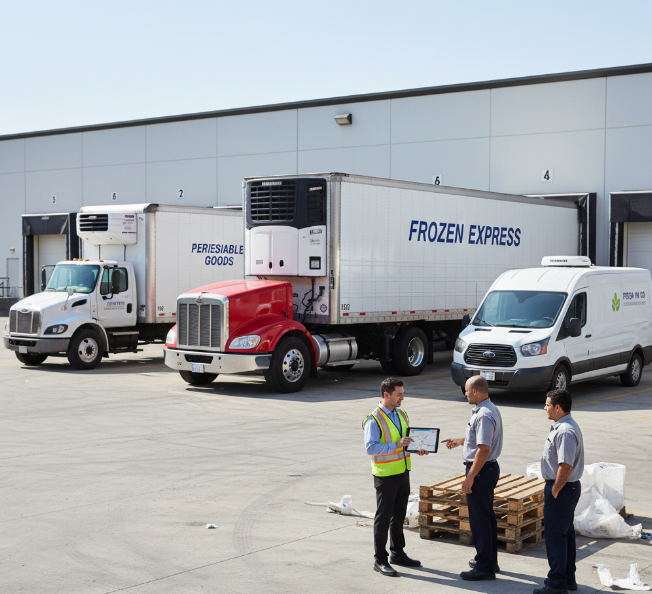
Class B: Single Refrigerated Trucks up to 26,000 lbs
A Class B CDL fits drivers running single vehicles rather than trailer combinations. This is the bread-and-butter license for urban and regional refrigerated trucks handling steady food routes.
Typical setups include:
Straight trucks with integrated cooling units
Medium wheelbase medium-duty trucks
Fully insulated cargo bodies for daily perishable goods transport
Here’s how it usually plays out in real work:
The truck leaves a distribution hub early morning.
The driver confirms gross vehicle weight compliance before departure.
The refrigeration system is pre-cooled to protect dairy, produce, or frozen meals.
Multi-stop delivery begins across city zones.
Unlike a long-haul refrigerated truck, this setup is tighter, easier to maneuver, and ideal for grocery chains and restaurants. Drivers still operate under commercial motor vehicles regulations, but without the articulation challenges of a tractor-trailer.
A single-unit refrigerated truck thrives in dense areas where backing into alley docks and tight retail spaces is part of the daily grind. Reefertruckpro often highlights how matching the right insulation thickness and cooling capacity to route distance can reduce fuel burn while keeping cargo safe.
Short city hops.
Quick unloads.
Back on the road.
That’s the rhythm of Class B reefer work.
Class C: Specialized Transport of Perishable Goods
A Class C CDL supports more specialized transport needs, especially when cargo demands extra compliance or endorsements.
Vehicle Scope
Smaller small commercial vehicles equipped for targeted deliveries
Some passenger vehicles modified for controlled medical supply transport
Compact refrigerated truck builds with precision cooling systems
Cargo Type
High-risk perishable goods like vaccines or lab samples
Regulated hazardous materials requiring endorsements
Temperature-sensitive pharmaceuticals
Compliance and Endorsements
Mandatory endorsements for hazardous or passenger-related transport
Strict logging of cargo temperature
Alignment with federal and state safety standards
This class isn’t about scale. It’s about precision. A specialized refrigerated truck in this category may carry smaller loads, yet the stakes are high. A few degrees off can ruin an entire shipment.
Operators in this space rely on detailed alarms, backup power systems, and documented inspection routines. The vehicle might look modest compared to a cross-country refrigerated truck, but its compliance burden can be heavier.
For businesses entering pharmaceutical cold chain logistics, Reefertruckpro outlines how to align equipment choice, refrigeration unit specs, and required endorsements under the Class C CDL framework. The goal is simple: keep cargo stable, keep paperwork clean, and keep wheels turning.
From heavy combination vehicles to agile city straight trucks and specialized cold units, every refrigerated truck job starts with the right CDL class. Choose smart, drive safe, and let the load pay you back mile after mile.
3 Reasons CDL Matters for Perishable Loads
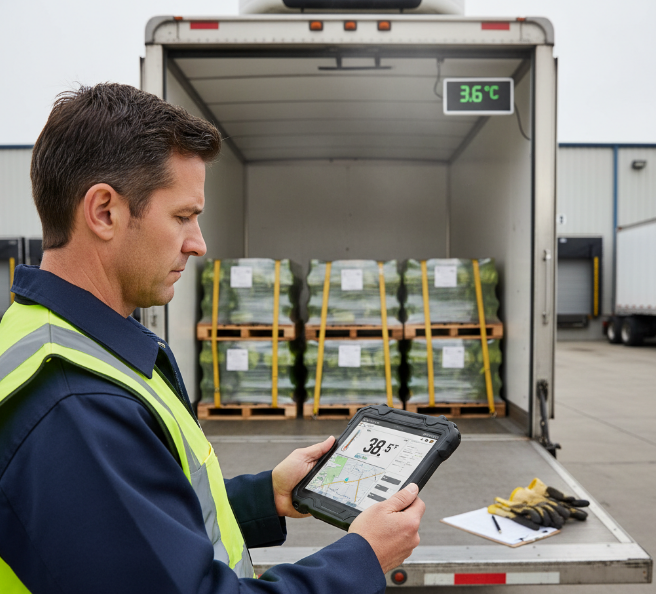
Running a refrigerated truck isn’t just about driving from A to B. When you haul produce, dairy, or frozen meals in a refrigerated truck, every mile affects quality. A skilled driver keeps the truck refrigerated, stable, and compliant, so the cold chain doesn’t fall apart halfway down the highway.
Maintaining Precise Temperature Range with Telematics
A modern refrigerated truck depends on tight temperature control and smart tech. CDL training connects driving habits with climate management results inside the box.
Telematics system oversight
Monitor compressor cycles
Track evaporator efficiency
Live checks of the refrigeration unit
Review real-time data from each sensor
Precise range management
Set a precise range for frozen vs. chilled loads
Adjust airflow to avoid hot spots
Corrective response
Detect spikes early
Reduce fuel waste while protecting cargo
Temperature performance snapshot from fleet testing:
| Load Type | Set Temp (°F) | Avg Variance (°F) | Cool-Down Time (min) |
|---|---|---|---|
| Frozen Meat | -10 | ±1.2 | 38 |
| Dairy | 36 | ±0.8 | 24 |
| Fresh Produce | 40 | ±1.5 | 27 |
A refrigerated truck without telematics is guesswork. With tools used by Reefertruckpro, drivers see issues before customers ever do.
Protecting Cargo in an Insulated Body and Load Floor
Cargo protection starts with the build of the insulated trailer and how freight sits on the load floor. A careless shift can damage the thermal barrier and hurt temperature stability inside the refrigerated truck.
Balanced weight across the body construction keeps airflow steady.
Smart pallet spacing supports even refrigeration circulation.
Clean floor channels prevent trapped moisture under perishable goods.
Short check-ins matter:
Tight seals.
No cracked panels.
Even suspension response.
A solid refrigerated truck with proper load planning keeps perishable goods fresh, not funky.
Streamlining Compliance via Remote Monitoring and GPS Tracking
Compliance in a refrigerated truck is tracked, stored, and verified through layered tech.
Remote monitoring
Internal temperature history
Door open alerts
Continuous data logging
GPS tracking
Real-time location checks
Smarter route optimization
Audit readiness
Secure electronic records
Clear audit trail for inspectors
Proof of regulatory compliance
“Cold-chain visibility remains a top investment priority for food carriers in 2025, with digital monitoring reducing spoilage claims by double digits,” noted the 2025 Food Logistics State of the Cold Chain report.
When every refrigerated truck in your fleet reports clean data, audits feel routine. That’s why many fleets trust refrigerated truck systems backed by Reefertruckpro to keep trucks refrigerated, tracked, and ready for the next load.
FAQ
Do I need a CDL to operate a refrigerated truck?
A CDL depends on the Gross Vehicle Weight (GVW) and how the refrigerated truck is built.
GVW over 26,001 lbs → CDL required under weight limits and vehicle safety standards.
Single-unit under 26,000 lbs → Often Class B, common for meat delivery or dairy products.
Tractor-trailer combinations with higher payload capacity and axle configuration → Class A.
Beyond licensing, drivers must handle a reinforced chassis frame, tuned suspension system, and longer braking distances caused by insulated body weight.
Compliance also connects to emissions standards and refrigerant regulations, not just driving skill.
What makes a refrigerated truck suitable for long-haul frozen food distribution?
Long-distance food distribution demands more than cold air. A capable unit blends performance and control.
Refrigeration core: compressor, condenser, evaporator, stable refrigerant flow, and a precise temperature controller with temperature alarm.
Body integrity: high-density insulated body, sealed rear doors and side doors, and a protected load floor to prevent thermal loss.
Power & monitoring: diesel engine or hybrid powertrain, auxiliary power unit for standby cooling, plus telematics system and GPS tracking for remote monitoring.
For frozen food and pharmaceutical transport, a stable temperature range and reliable cool-down time protect cargo and brand reputation.
What maintenance routines keep a refrigerated truck dependable?
Breakdowns in cold chain logistics are costly because lost perishable goods often mean lost trust.
Refrigeration system check: inspect compressor wear, clean condenser coils, test defrost system cycles, and calibrate the temperature controller and data logger.
Vehicle structure review: examine insulated body seals, check suspension system stress points, and confirm axle configuration alignment.
Support planning: follow service intervals strictly, secure spare parts availability, and confirm warranty coverage plus repair network access.
Preventive maintenance protects fuel efficiency, preserves payload capacity, and helps avoid food safety compliance issues.