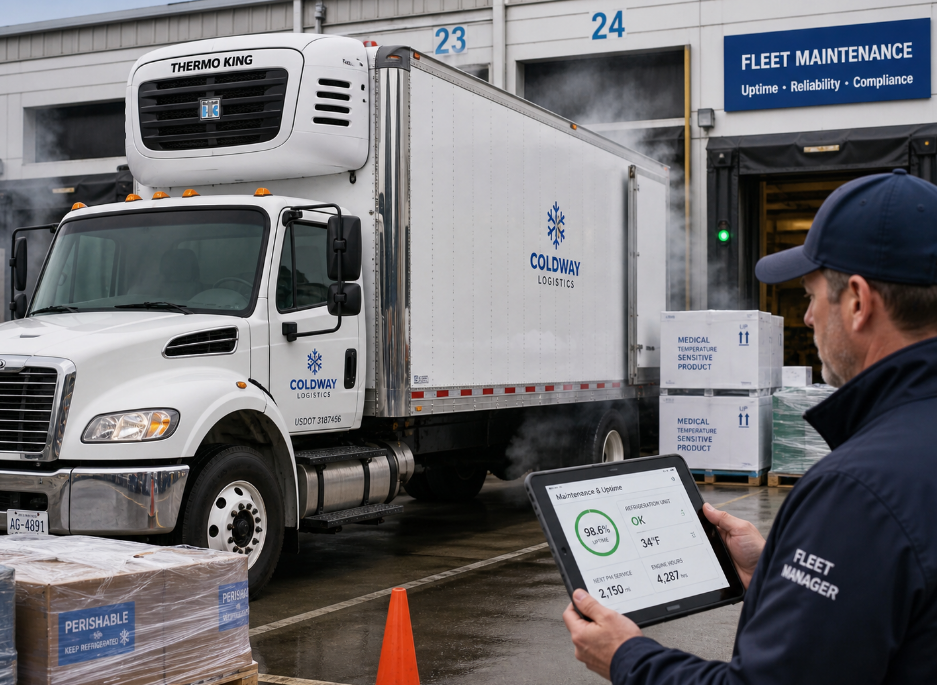
When profit melts faster than ice cream, the refrigerated truck becomes your coolest investment—engineered costs, market heat, and all.
A refrigerated truck can drain your budget faster than a cross-country haul in July, and that’s the point—price isn’t random, it’s engineered.
From insulation thickness to telematics add-ons, every spec nudges the invoice north or south. Fleet managers feel the squeeze when fuel, compliance, and maintenance stack up.
Recent reports from Allied Market Research and Grand View Research show sustained growth in cold chain logistics, signaling demand and price pressure.
Key Highlights: Your Refrigerated Truck Guide
Optimize Expansion Valves: Choose high-efficiency valves to cut fuel use and stabilize temperatures.
Select Composite Panels: Use lightweight, polyurethane-cored panels for superior insulation and lower upkeep.
Leverage IoT Telematics: Deploy sensors and data loggers for predictive maintenance and avoid refrigeration breakdowns.
Plan Certification Early: Secure ATP and refrigeration unit approvals upfront to dodge fines, delays, and reputational risks.
5 Surprising Factors Affecting Refrigerated Truck Costs—And How to Save
Running a refrigerated truck isn’t just about keeping cargo cold. Every truck, trailer, and cooling unit choice affects fuel burn, compliance risk, and long-term upkeep. From hidden refrigeration system tweaks to smarter monitoring on your reefer truck fleet, small upgrades can seriously trim costs. Let’s break it down in plain talk.

Unexpected Expansion Valve Upgrades That Cut Fuel Bills
Upgrading the expansion valve inside a refrigeration unit changes how refrigerant moves through the refrigeration system.
Core Impact
Fuel efficiency improves as compressor strain drops
Better refrigerant control boosts energy savings
Stable cooling reduces emergency maintenance
Replace outdated valves with smart-controlled units.
Calibrate for peak performance under real delivery loads.
Monitor post-upgrade fuel data for clear cost reduction.
A well-tuned refrigerated truck simply burns less diesel. Over time, that adds up fast.
Composite Material Panels to Slash Insulated Body Expenses
The body of a refrigerated truck plays a bigger role than most operators think.
Material Choices
Heavier, weaker structural integrity
Polyurethane core for stronger insulation
Better thermal efficiency
Composite materials
Traditional sheets
Cost Drivers
Lower weight = real weight reduction savings
Smarter body construction improves manufacturing speed
Long-term cost savings from fewer repairs
Reefertruckpro uses advanced composite builds so each cold truck stays lighter and cheaper to run.
CNC Machine Precision Driving Down Manufacturing Overheads
Inside the factory, CNC machining reshapes the manufacturing process.
Production Flow
Digital design → automated fabrication
Tight precision engineering → better quality control
Reduced scrap → lower overhead costs
Efficiency Gains
Faster cuts improve production efficiency
Automation trims labor waste
For any refrigerated truck build, cleaner cuts mean fewer headaches later. Reefertruckpro integrates CNC systems to keep pricing sharp without cutting corners.
IoT Sensors and Telematics for Proactive Maintenance Savings
Modern reefer truck fleets run on data.
Monitoring Stack
Early fault alerts
Smarter predictive maintenance
Smart sensors on compressors
Real-time telematics tracking
IoT technology
Cloud-based data analytics
The International Energy Agency noted in its 2024 transport efficiency outlook that digital monitoring in freight refrigeration can significantly cut avoidable energy losses.
With remote monitoring, operators boost operational efficiency and real cost optimization. A refrigerated truck that warns you early avoids breakdown drama.
Skipping ATP Certification? How to Avoid Hidden Penalties
Ignoring ATP certification can wreck margins.
Compliance Essentials
Meet international standards
Align with transport regulations
Satisfy strict legal requirements
Risk Control
Reduce operational risks
Focus on penalty avoidance
Maintain strong quality assurance
A non-certified refrigerated truck can face shipment rejection and insurance trouble. Reefertruckpro supports clients through certification planning, keeping every refrigerated truck road-legal and reputation-safe.
4 Major Cost Drivers for Refrigerated Trucks
Buying a refrigerated truck isn’t just about the sticker price. Every cooling truck on the road hides layers of cost inside its hardware and tech. From core mechanical parts to smart tracking tools, each choice shapes how your refrigerated truck performs, lasts, and earns back its keep.

Refrigeration Unit Compressors
At the heart of any refrigerated truck sits the compressor, the engine of the refrigeration cycle.
Core mechanical cost drivers
Heavy-duty bearings and sealed housings increase service intervals.
Premium refrigerant circulation systems reduce strain on the evaporator and condenser.
Larger unit capacity means stronger cooling, but higher acquisition cost.
Cooling output capacity
Refrigerant efficiency
Component durability
Operational impact on a refrigerated truck
Fuel draw from the engine
Maintenance frequency
Temperature stability inside the truck body
A 2025 report from the International Institute of Refrigeration noted:
“Energy efficiency improvements in transport refrigeration units are now the primary factor influencing lifecycle cost across global cold-chain fleets.”
That hits home for any reefer truck owner. Less downtime. Fewer callbacks. More stable cargo temps.
Diesel Engines and Transmissions
Powering a truck with refrigeration demands serious muscle.
Powertrain configuration
Reinforced gear sets handle continuous PTO stress.
Higher torque supports both drivetrain load and refrigeration unit demand.
Diesel engine torque rating
Heavy-duty transmission
Compliance and fuel economics
Poor fuel mapping raises per-mile expense.
Advanced exhaust treatment adds upfront cost.
Emissions systems
Fuel consumption
For a modern refrigerated truck, the motor, drivetrain, and refrigeration load must stay balanced. That balance keeps your truck from burning cash along with diesel.
Polyurethane Foam Insulation
The body of a refrigerated truck works like a giant thermal bottle.
Structural insulation layers
Inner liner panel
High-density polyurethane foam core
Outer protective skin
Material cost variables
Thicker insulation panel lowers compressor workload.
Poor fill creates hidden hot spots.
Higher density improves thermal resistance.
Foam density
Injection uniformity
Wall thickness
Good insulation reduces how hard the compressor works. Less strain means lower fuel burn and longer equipment life. Many operators choosing Reefertruckpro focus heavily on insulation specs for that reason.
Telematics Systems and IoT Sensors
Smart tech now shapes refrigerated truck pricing almost as much as hardware.
Connectivity framework
GPS-based tracking
Real-time data connectivity
Monitoring hardware
Multi-point temperature sensors
Door status detection
Fuel usage monitoring
Software layer
Cloud-based monitoring dashboards
Automated alerts
Fleet analytics integration
A cooling truck without telematics is basically running blind. With IoT-enabled visibility, fleet managers track every refrigerated truck, every load, every mile. Reefertruckpro integrates these IoT sensors and monitoring systems to help operators cut spoilage risk while staying in control of the full cold chain.
When all four cost drivers line up—mechanical strength, efficient refrigeration, solid insulation, and smart connectivity—a refrigerated truck turns from a big expense into a steady money maker.
What Affects Refrigerated Truck Pricing?
Buying a refrigerated truck isn’t just about the sticker price. The final cost depends on insulation, the refrigeration unit, and even the supply chain behind delivery. From the truck body build to cold control systems, every choice shapes how your refrigerated truck performs, lasts, and earns back its investment.

Insulated Body Materials: Fiberglass Panels vs. Aluminum Sheets
The body build of a refrigerated truck starts with insulation and outer material choices.
Structural Layer
1.1 Outer Skin
1.2 Core Insulation
High-density foam between panels
Thermal sealing at joints
Lighter weight
Easier surface repair
Strong insulation bonding
Corrosion resistance in humid routes
Fiberglass panels
Aluminum sheets
Cost Impact Factors
2.1 Initial Build Cost
2.2 Long-term Maintenance
2.3 Repair Frequency
| Material Type | Avg. Weight (kg/m²) | Thermal Conductivity (W/m·K) | Avg. Repair Cost ($/m²) | Lifespan (Years) |
|---|---|---|---|---|
| Fiberglass Panels | 12 | 0.022 | 45 | 10 |
| Aluminum Sheets | 8 | 0.035 | 60 | 8 |
| Steel Composite | 15 | 0.040 | 55 | 7 |
| FRP + PU Core | 11 | 0.020 | 50 | 12 |
| Aluminum + XPS | 9 | 0.028 | 52 | 9 |
Lower thermal conductivity means less strain on the refrigeration unit, which trims fuel use in a cold truck over time.
Refrigeration Unit Components and Control Panel Choices
The heart of any refrigerated truck is its refrigeration unit.
Key components include:
Compressor
Condenser
Evaporator
Digital control panel
A high-grade compressor stabilizes temperature swings. An efficient condenser improves heat release. A properly sized evaporator ensures even airflow across cargo.
Control matters too.
Basic analog control panels cost less. Smart panels with remote diagnostics raise the price but reduce spoilage risk.
“Global demand for advanced refrigerated transport systems continues to rise, driven by stricter food safety standards and cold chain expansion,” notes the 2025 Global Cold Chain Report by the International Institute of Refrigeration.
That trend pushes buyers toward higher-spec truck refrigeration systems. Brands like Reefertruckpro focus on matched components, cutting mismatch losses that quietly drain profits.
Supply Chain and Logistics Services Impacting Costs
The price of a refrigerated truck also reflects backend logistics.
Production to Port
1.1 Factory assembly
1.2 Inland transportation
1.3 Export handling
International Movement
Ocean freight rates
Customs brokerage
Insurance
Domestic distribution Network
Final-mile delivery
Regional service support
Efficient supply chain coordination reduces idle time and warehousing fees. A tight network means fewer delays and lower total acquisition cost.
Reefertruckpro works closely with global services partners to streamline shipping for every refrigerated truck order. When the cold chain runs smooth, your truck works sooner—and starts paying you back faster.
Used vs. New Refrigerated Trucks

Choosing between a used or new refrigerated truck is not just about price. It shapes daily routes, repair schedules, and long-term margins. From local food delivery to pharma transport, every refrigerated truck decision affects uptime, fuel burn, and customer trust. Let’s break it down in plain terms.
Used Refrigerated Trucks
When buying a pre-owned refrigerated truck, smart fleets look beyond the sticker price.
Vehicle Background
1.1 Mileage
1.2 Previous owners
Single-owner units usually show cleaner Maintenance records.
Multi-owner units may have gaps in service logs.
Under 250,000 km: Often suitable for regional refrigerated transport.
250,000–500,000 km: Requires deeper Inspection of cooling unit.
Over 500,000 km: Expect shorter lifecycle.
Mechanical and Cooling System
2.1 Condition
2.2 Maintenance Risk Snapshot
Compressor cycling frequency
Door seal integrity
Insulation panel wear
| Component | Avg. Repair Cost (USD) | Failure Risk (5yr) | Downtime (Days) |
|---|---|---|---|
| Compressor | 3,500–6,000 | 40% | 3–7 |
| Evaporator Coil | 1,200–2,000 | 25% | 2–4 |
| Door Gaskets | 300–800 | 50% | 1 |
| Control Module | 900–1,500 | 20% | 1–2 |
Financial Considerations
3.1 Depreciation slows after year five, which can help resale value.
3.2 Availability in the used refrigerated truck market fluctuates with freight demand.
For small operators testing a new cold chain route, a used reefer truck can make sense. Many buyers source inspected units through Reefertruckpro to reduce guesswork and verify service history before signing.
New Refrigerated Trucks
A new refrigerated truck feels different from day one. Tighter insulation. Cleaner data flow. Lower stress.
Build and Configuration
1.1 Customization
1.2 Factory Specifications
Engine compliant with latest emissions rules
Integrated telematics
Smart defrost cycles
Box length
Multi-temp zones
Liftgate options
Technology and Protection
2.1 Technology upgrades
2.2 Warranty coverage
2–5 years on refrigeration unit
Extended plans available
Real-time cargo temperature alerts
ERP-linked route tracking
Fuel optimization systems
Purchase Planning
3.1 Flexible Financing programs ease upfront cost.
3.2 Scheduled Delivery timelines align with fleet expansion.
3.3 Premium Features improve driver comfort and retention.
For high-volume food distributors or pharma carriers, a new refrigerated truck cuts compliance risk and keeps audits smooth. Platforms like Reefertruckpro help compare specs side by side, making the refrigerated transport decision less of a gamble and more of a strategy.
National Fleet Purchase: Bulk Pricing Scenario
Scaling up a refrigerated truck fleet is exciting, but it can get messy fast. When dozens of refrigerated trucks, truck refrigeration units, and cold chain truck bodies arrive at once, coordination matters. Smart planning keeps costs tight and operations smooth.
Maximizing Freight Forwarding Discounts for Large Fleets
Bulk buying a refrigerated truck fleet changes the tone of negotiations with carriers. Rates shift when volume climbs, especially across repeat shipping routes.
Lock in multi-year contracts tied to fleet size
Align delivery windows with peak logistics capacity
Request performance-based incentives for on-time arrivals
For large imports of refrigerated trucks and reefer truck units, savings usually stack like this:
| Fleet Size (Units) | Avg. Freight Cost per Truck (USD) | Discount Rate (%) | Annual Savings (USD) |
|---|---|---|---|
| 10 | 4,800 | 0 | 0 |
| 25 | 4,350 | 9 | 11,250 |
| 50 | 3,900 | 19 | 45,000 |
| 100 | 3,550 | 26 | 125,000 |
Under one master agreement:
Partnerships
Overflow capacity
Emergency rerouting options
Dedicated loading slots
Fixed seasonal pricing
Preferred carriers
Backup shipping providers
Brands like Reefertruckpro often support buyers with bundled freight planning, helping refrigerated truck orders move as one coordinated shipment instead of scattered loads.
Streamlining Customs Brokerage in High-Volume Orders
High-volume imports of refrigerated trucks bring heavy customs work. Small errors in declarations or missing documentation can spike duties and storage fees.
To stay sharp:
Pre-submit digital compliance files for each truck refrigeration system.
Standardize product codes across all clearance processes.
Assign a single broker to manage all regulations and port clearance steps.
Within the brokerage workflow:
Documentation control
Bill of lading checks
Serial number validation for each refrigerated truck
Regulatory alignment
Emissions certificates
Insulation material compliance
Financial handling
Advance duty estimation
Consolidated payment processing
This setup cuts port delays and keeps every cold chain truck rolling on schedule.
Optimizing Inventory Management Systems at Scale
Once shipments land, the real juggling act begins. A refrigerated truck fleet includes chassis frames, reefer units, insulated panels, and wiring kits. That’s serious inventory.
Short bursts of action help:
Tight tracking.
Clear forecasting.
Smart distribution across regional warehousing hubs.
Inside an integrated supply chain system:
Core Control Layer
Stock alerts
Reorder triggers
Automated part matching
Serial-based unit mapping
ERP software
Real-time automation
Operational Layer
Assembly scheduling
Cross-dock coordination
Reefertruckpro supports fleet buyers with synced data tools that connect refrigerated truck components to live dashboards. The result? Fewer idle units, faster builds, and a refrigerated truck operation that feels organized instead of chaotic.
FAQ
What drives the real cost of a refrigerated truck?
The price of a refrigerated truck is shaped by tension between performance and durability:
1) Refrigeration unit components
Compressors and condensers define cooling strength.
Expansion valves and evaporators fine-tune temperature flow.
Thermostats and control panels protect cargo from sudden swings.
2) Insulated body materials
Polyurethane foam and composite materials hold cold longer.
Fiberglass panels, aluminum sheets, and tight door gaskets reduce energy loss.
3) Manufacturing precision
CNC machines guided by CAD software cut panels accurately.
Welding robots and testing chambers reduce hidden defects.
Cut corners in any layer, and fuel use rises, repairs follow, and fleet downtime grows.
How can bulk purchasing reduce refrigerated truck expenses?
Large orders calm the chaos of supply chains.
Freight forwarding contracts lower per-unit shipping costs.
Customs brokerage speeds border clearance and avoids storage penalties.
Coordinated inbound logistics and warehousing solutions prevent production gaps.
ERP systems and inventory management systems keep parts—axles, engines, braking systems—ready when assembly lines need them.
When logistics software connects suppliers to the factory floor, delays shrink and margins breathe again.
Why are certifications critical for refrigerated truck exporters?
Skipping compliance can stop a shipment overnight.
Key requirements include:
ATP certification for cross-border cold transport
Transport refrigeration unit certifications
Food safety standards and vehicle safety standards
Emissions regulations and environmental compliance
Quality control backs this up: temperature sensors, leak detection systems, thermal imaging cameras, and data loggers confirm that compressors, refrigerant lines, and evaporators perform under stress. Certification is not paperwork—it is market access.
How does technology prevent costly refrigeration failures?
Breakdowns rarely start loud; they begin quietly inside the system.
IoT sensors and telematics systems track temperature, engine load, and compressor cycles in real time. Data flows into ERP systems or PLM software, warning managers before:
Expansion valves clog
Refrigerant lines leak
Suspension systems or transmissions strain under extra load
Add calibration tools and durability testers during production, and the truck leaves the factory ready for long routes.
In cold-chain transport, seconds matter. Smart monitoring keeps cargo safe—and reputations intact.