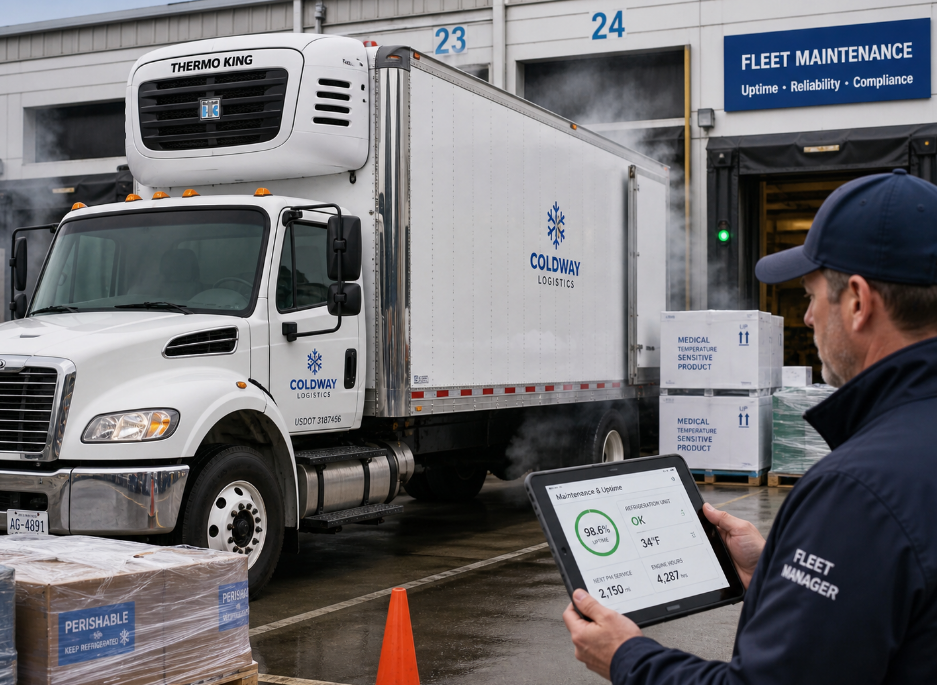
When profits melt faster than ice cream, only a rock-solid refrigerated truck keeps your cargo—and contracts—from dripping away.
A refrigerated truck isn’t just a big box on wheels; it’s your last line of defense against spoiled cargo and blown contracts.
When produce sweats or vaccines drift off spec, profits melt fast, and customers don’t hand out second chances.
Grand View Research reports steady cold chain market expansion through 2025 globally.
Key Points for Refrigerated Truck Mastery
Core Features
Integrates compressor, evaporator, condenser and thermostat to control temperature, backed by insulated panels and polyurethane foam.
System Types
Choose between diesel-driven, electric motor, hybrid or shore-power units for route length and emissions needs.
Operation Steps
Pre-trip inspect components, set temperature, secure cargo, monitor energy use and clean post-run.
Compliance Essentials
Ensure ATP certification, HACCP mapping, DOT/EPA standards and telematics data logging.
What Is A Refrigerated Truck?
A refrigerated truck is more than a cold box on wheels. It’s a smart, moving temperature system built to protect food, pharma, and fresh cargo. From small reefer vans to heavy-duty cold chain trucks, every refrigerated truck keeps goods steady, safe, and ready for delivery.
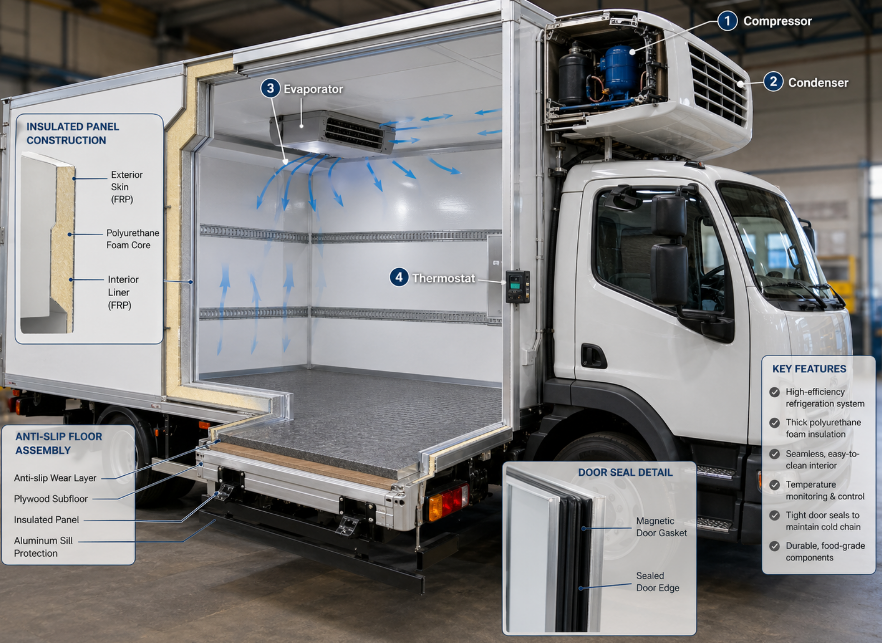
Core Features and Refrigeration System Components
A working refrigerated truck depends on an integrated refrigeration unit designed around coordinated subsystems:
Cooling Core Assembly
1.1 Compressor
1.2 Condenser
1.3 Evaporator
Absorbs heat inside the cargo box.
Distributes cold air evenly across the refrigerated truck body.
Releases heat to ambient air.
Works with airflow fans to stabilize condensing temperature.
Pressurizes refrigerant gas and drives the cooling cycle.
Directly affects cooling capacity and pull-down speed.
Control and Regulation System
2.1 Thermostat
2.2 Digital control panel
Displays setpoint, alarms, and runtime.
Stores trip data for cold chain compliance.
Monitors return-air temperature.
Sends signals for precise temperature control.
Energy and Drive Configuration
3.1 Independent diesel power source
3.2 Electric standby plug-in
3.3 Vehicle engine-driven option
This setup turns a basic truck into a reliable reefer truck that holds -20°C for frozen goods or 2–8°C for fresh produce. Brands like Reefertruckpro fine-tune each refrigeration unit to match cargo type and route length, keeping every cold truck steady on long hauls.
Insulated Panels, Side Walls, and Floor Assembly Explained
The body of a refrigerated truck acts as a thermal shield. Its strength comes from layered insulated panels and sealed construction:
Panel Construction System
1.1 Outer skin
1.2 Core thermal insulation layer
1.3 Inner liner
Food-grade surface for hygiene.
High-density foam to block heat flow.
FRP or coated steel for durability.
Structural Integrity Framework
2.1 Reinforced side walls
2.2 Roof bow supports
2.3 Impact-resistant rear frame
Maintain structural integrity during vibration.
Floor Assembly Design
3.1 Anti-slip floor assembly
3.2 Integrated drainage channels
3.3 Tight sealing at door edges
Aluminum T-floor or flat plate.
Thermal Risk Control
Minimized thermal bridge at joints.
Continuous bonding between panels.
When insulation and sealing are done right, a refrigerated truck holds temperature with less fuel burn. That means better performance for every reefer body and more stable delivery across the cold chain.
Why Polyurethane Foam and Vacuum Panels Matter
Not all insulation materials perform the same inside a refrigerated truck. Two stand out: polyurethane foam and vacuum insulated panels.
Key insulation comparison:
| Insulation Material | Typical R-value (m²·K/W) | Density (kg/m³) | Thickness (mm) | Energy Saving Impact (%) |
|---|---|---|---|---|
| Polyurethane foam | 6.0–7.5 | 35–45 | 75–100 | 15–25 |
| Vacuum insulated panels | 20–25 | 180–230 | 20–30 | 25–40 |
| XPS Foam | 4.5–5.0 | 30–40 | 80–120 | 10–18 |
Why this matters for a cold truck:
Higher R-value means stronger thermal efficiency.
Lower thickness supports lightweight body design.
Better insulation properties reduce compressor runtime.
In daily use:
1) Faster cool-down after door opening.
2) Lower fuel or electric draw from the power source.
3) More stable air distribution across the refrigerated truck cargo zone.
For fleets running multiple refrigerated trucks, even a 15% energy saving adds up fast. Reefertruckpro often pairs polyurethane foam cores with edge-sealed vacuum insulated panels in high-demand pharma builds, balancing weight, strength, and long-term energy saving performance.
Types Of Refrigeration Systems
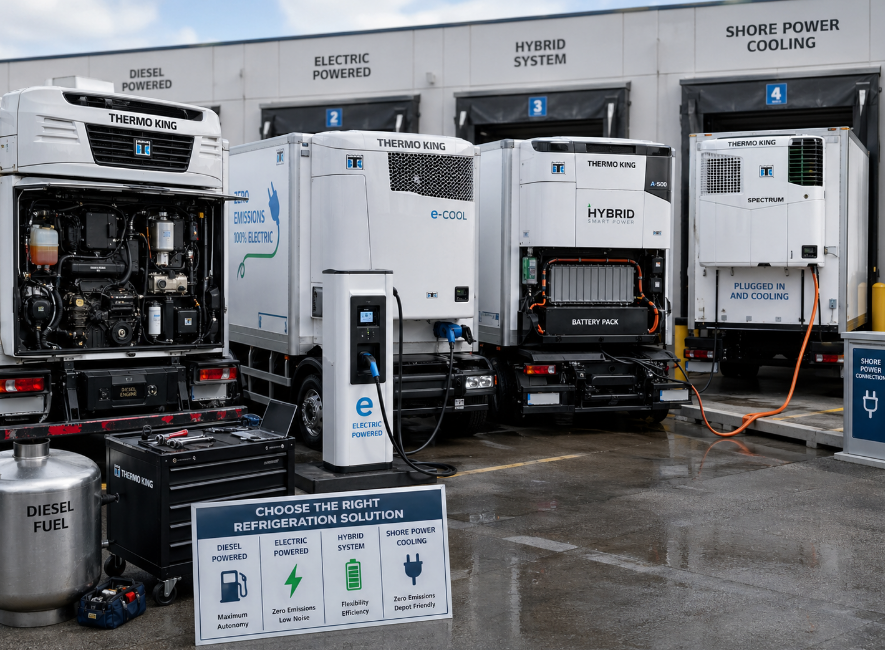
A refrigerated truck isn’t just a box with cold air. The cooling system behind that truck decides fuel cost, noise level, uptime, and how smoothly your refrigerated delivery runs day after day.
Diesel-Engine Driven Cooling Units
In long-haul refrigerated truck operations, diesel systems still dominate. Built around a dedicated diesel engine, these units power a mechanical compressor through direct drive, pushing refrigerant across the evaporator for steady temperature regulation during heavy-duty transport refrigeration.
Core Power Assembly
Independent fuel tank
High-torque diesel engine
Direct mechanical linkage
Cooling Mechanism
Compressor compression cycle
Refrigerant circulation
Continuous airflow management
Operational Strengths
Suited for heavy-duty routes
Stable output during long idle periods
Reliable for cross-country refrigerated truck fleets
A diesel-driven refrigeration truck handles extreme climates without blinking. For fleets running produce coast to coast, this setup keeps every refrigerated truck consistent, even when fuel consumption becomes part of the cost conversation.
Electric Motor Refrigeration Modules
Electric systems are gaining traction fast in urban logistics, especially for a refrigerated truck doing short drops.
Powered by an electric motor
Supported by battery power
Controlled through inverter technology
Designed for quiet operation
Built for zero emissions zones
Plug into grid or depot charger.
Store energy in battery pack.
Run the compressor unit during city routes.
Short hops. Tight streets. Late-night grocery runs. An electric fridge truck keeps noise low and neighbors happy.
The International Energy Agency’s Global EV Outlook 2025 notes that electrified commercial vehicles in urban logistics are accelerating due to stricter city emission rules and falling battery costs.
For a refrigerated truck working downtown, energy efficiency and clean compliance matter more than raw horsepower.
Hybrid Generator and Battery Pack Solutions
Hybrid power blends grit with brains in a modern refrigerated truck.
Step 1: A generator set supplies primary hybrid power during highway driving.
Step 2: Excess energy flows into battery storage.
Step 3: Urban entry switches to stored power, cutting noise and supporting emission reduction.
Step 4: Smart power management balances the dual power source to boost fuel savings.
This setup fits fleets wanting flexibility without fully ditching diesel. Many reefer truck operators turn to Reefertruckpro for hybrid configurations that keep uptime strong while trimming fuel burn across every refrigeration truck in the fleet.
Shore Power and Auxiliary Power Unit Options
When a refrigerated truck is parked, cooling still matters.
Shore Power Integration
Direct grid connection
Stable electric supply
True standby cooling without engine idle
Auxiliary Power Unit (APU) Setup
Compact auxiliary power unit (APU)
Designed for stationary operation
Reduces diesel idle hours
Plug-In Capability
External dock access
Seamless plug-in capability
Lower fuel waste for each cold truck
For warehouse loading docks, this keeps every refrigerated truck cold without burning extra fuel. Fleets using Reefertruckpro shore-ready systems often see smoother compliance checks and less engine wear.
From diesel muscle to plug-in refrigeration truck tech, the right cooling system keeps your truck, your cargo, and your bottom line in good shape.
5 Steps To Operate A Refrigerated Truck
Running a refrigerated truck isn’t just turning a key and rolling out. A good refrigerated truck routine keeps cargo safe, fuel bills under control, and your truck refrigeration unit working like it should. Here’s how pros handle a cold chain truck day without the drama.
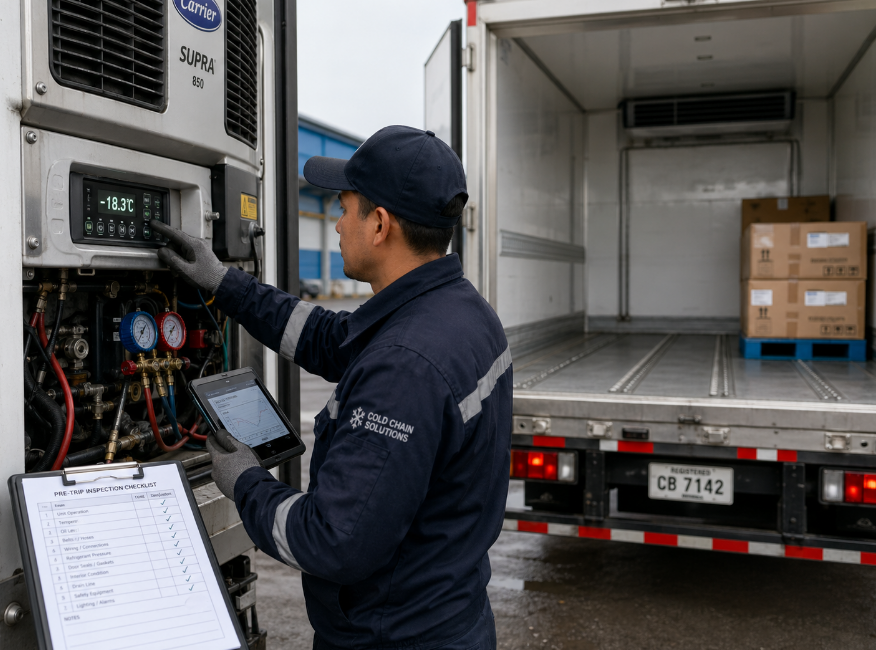
Step 1: Pre-Trip Inspection of Compressor and Condenser
Before moving any refrigerated truck, get hands-on with the cooling core.
Check visible components
Scan for loose wiring
Listen for odd compressor noise
Then go deeper:
Open the engine bay of the refrigerated truck.
Inspect the compressor belt tension.
Look for oil traces around fittings.
Move to the condenser area.
Clear debris from coils.
Confirm airflow is not blocked.
Finish the pre-trip inspection.
Verify refrigerant pressure.
Confirm electrical connections are tight.
Routine maintenance here keeps the refrigeration truck cooling fast and steady. Skip it, and you’re asking for mid-route trouble.
Step 2: Setting Temperature Range via Control Panel
Inside the cab of your refrigerated truck, the control panel is your command center.
Start with the basics:
Power on system
Review current temperature reading
Confirm cargo requirement sheet
Then adjust smartly:
Select correct setting on the digital display.
Use the thermostat for precise adjustment within the approved range.
Wait for pull-down cycle to stabilize before loading.
For mixed loads in a refrigerated box truck, double-check airflow patterns. Consistent temperature control protects food, pharma, and flowers alike. Operators using Reefertruckpro units often note smoother calibration and faster response time when dialing in target ranges.
Step 3: Securing Cargo with Door Seals and Drainage System Checks
Cold air loss kills efficiency in any refrigerated truck.
Focus on two zones:
Rear access points
Inspect door seals for cracks.
Press along edges to confirm sealing pressure.
Check latch tension.
Floor and base
Inspect drainage system openings.
Ensure no standing water.
Confirm insulation integrity beneath panels.
A 2025 cold-chain logistics outlook from Deloitte noted:
“Thermal leakage at loading doors remains one of the top avoidable cost drivers in refrigerated transport operations.”
That hits home. Even a small seal gap in a refrigerated vehicle adds fuel burn and risks spoiled cargo. Tight insulation and clean drains keep the refrigeration unit from overworking.
Step 4: Monitoring Energy Consumption and Thermal Efficiency
Once rolling, performance tracking keeps your refrigerated truck profitable.
Break monitoring into layers:
Power input
Track fuel or electric power draw
Compare against route distance
Cooling output
Review thermal efficiency logs
Watch supply vs return air delta
System health
Analyze telematics monitoring alerts
Evaluate overall performance
Modern truck refrigeration systems with IoT sensors help with optimization. Reefertruckpro integrates live data so operators can catch rising energy consumption before it becomes a repair bill. In plain terms, you save cash and avoid cargo loss.
Step 5: Post-Run Cleanup of Evaporator and Floor Assembly
After delivery, don’t just park the refrigerated truck and walk away.
Handle cleanup in layers:
Upper cooling zone
Wipe down the evaporator housing.
Remove dust from fins.
Check for mold risk.
Lower cargo area
Sweep debris from floor assembly tracks.
Flush and dry drain channels.
Apply approved sanitation solution.
Quick reminders:
Consistent cleaning protects airflow
Good hygiene supports HACCP goals
Scheduled post-run maintenance extends equipment life
A clean refrigeration truck isn’t about looks. It keeps your next load safe and your refrigerated truck ready to roll without surprise downtime.
Temperature Control Methods Explained
Keeping a refrigerated truck steady on temperature isn’t luck—it’s tight coordination between hardware and smart monitoring. From the refrigeration cycle to sensor feedback, every truck, reefer unit, and cold box works in sync to protect cargo mile after mile.
How the Thermostat and Expansion Valve Work Together
In a working refrigerated truck, temperature control depends on layered coordination inside the cooling unit:
Core Control Loop
Adjusts refrigerant flow into the evaporator
Responds to pressure and superheat changes
Reads return-air temperature inside the truck body
Sends signals when readings drift from the set point
Thermostat
Expansion valve
Refrigeration Cycle Interaction
Absorbs heat from cargo space
Releases heat outside the refrigeration truck
Pressurizes refrigerant vapor
Compressor
Condenser
Evaporator
Stabilization Outcome
Balanced temperature control
Reduced compressor strain
Smoother pull-down inside the reefer truck
When tuned correctly, the system avoids temperature swings that can wreck sensitive loads.
Refrigerant Flow and Cool-Down Time Optimization
Fast cool-down in a refrigerated truck comes down to smart refrigerant flow and steady airflow.
Check system pressure at both high and low sides.
Match cooling capacity to cargo load.
Confirm airflow paths aren’t blocked by pallets.
Small tweaks can cut cool-down time without overworking the compressor. A clean condenser coil helps. So does proper cargo spacing. Strong system efficiency keeps fuel costs from creeping up.
Operators using Reefertruckpro often fine-tune airflow settings alongside refrigerant calibration. The result? A truck refrigeration setup that cools faster and holds steady longer.
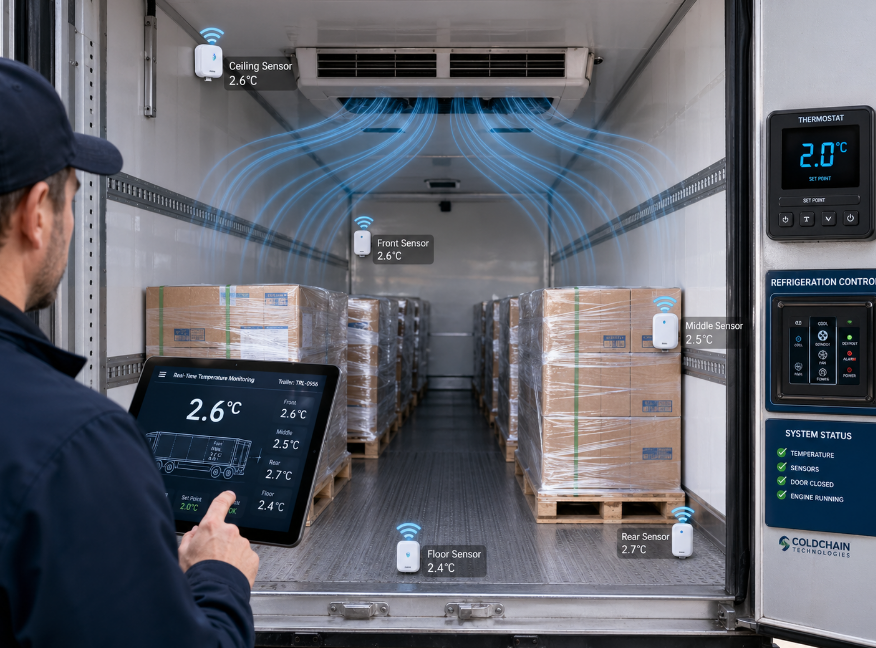
Achieving Temperature Uniformity with IoT Sensors
Modern refrigerated truck fleets rely on layered monitoring for true temperature uniformity:
Sensor Network Design
Secure wireless communication to central gateway
Front, middle, rear of cargo box
Near ceiling and floor zones
Strategic sensor placement
Wireless nodes
Data Intelligence
Continuous real-time monitoring
Automated data logging for compliance
Alerts tied to predictive maintenance rules
Cold Chain Assurance
Live dashboards for fleet managers
Historical trend tracking for the cold chain
Quick intervention before cargo loss
Reefertruckpro integrates these IoT sensors directly into each refrigeration truck platform, helping operators keep every refrigerated load tight, even on long hauls.
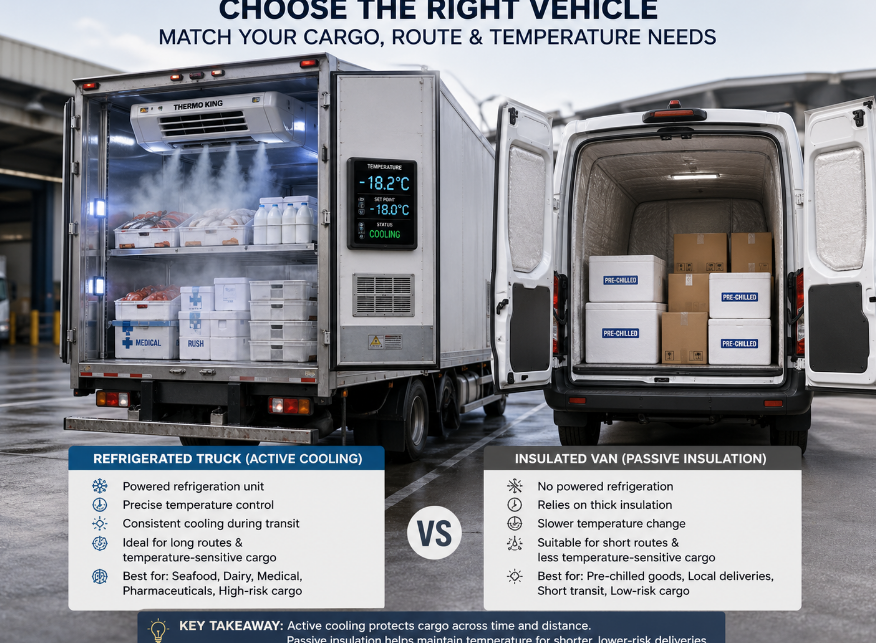
Refrigerated Truck Vs. Insulated Van
Moving food, pharma, or flowers isn’t just about wheels and fuel. It’s about temperature, timing, and trust. From a full refrigerated truck with active cooling to a simpler insulated setup, the right choice keeps your cargo safe and your reputation solid.
Refrigerated Truck
A refrigerated truck is built for strict cold chain work. It runs on an active refrigeration unit with a powered cooling system, not just thick walls.
Core system
Even airflow around cargo
Reduced hot spots inside the box
Compressor-driven cooling
Precise temperature control across frozen and chilled ranges
Refrigeration unit
Air circulation
Compliance and safety
Real-time temperature logs
Alarm alerts for cold chain breaks
ATP-certified builds
Food-grade interior finishes
Regulatory alignment
Monitoring
Operational scale
Larger cubic capacity
Long-haul transportation of perishable goods
Suitable for seafood, dairy, biotech shipments
A modern refrigerated truck, or reefer truck, keeps goods steady mile after mile. As noted in the 2025 Global Cold Chain Report by the International Institute of Refrigeration:
“Demand for certified refrigerated transport continues to rise as food safety enforcement tightens and cross-border cold logistics expand.”
For operators who can’t risk fluctuation, Reefertruckpro offers refrigerated truck solutions engineered for stable temperature control and reliable cold chain performance. If uptime matters, a cold truck like this is the real deal.
Insulated Van
An insulated van works differently. No powered refrigeration unit. Just smart insulation and a solid thermal barrier.
Here’s how it stacks up:
Materials
Extruded polystyrene panels
Fiberglass interior lining
Function
Slows heat transfer
Supports short-term temperature maintenance
Best use
Pre-chilled goods
Short urban routes
Low-risk cargo protection jobs
This setup relies on passive cooling. Once internal temperature shifts, there’s no active recovery. That’s fine for bakery runs or beverage drops across town. Not so great for cross-country seafood.
In daily logistics talk, the difference is simple: a refrigerated truck controls temperature; an insulated van only slows change. Reefertruckpro helps fleets weigh upfront cost against risk, transit distance, and product sensitivity, making sure every refrigerated truck investment matches real-world pressure.
Cold Chain Compliance: Refrigerated Truck Requirements
Running a refrigerated truck isn’t just about keeping things cold. It’s about rules, records, and real accountability. From food safety audits to emissions checks, every refrigerated truck on the road has to prove it can protect cargo and the brand behind it.
ATP Certification and Food Safety Regulations
A refrigerated truck moving Perishable Goods across borders must meet layered requirements:
ATP Certification
Verifies insulation and cooling capacity
Confirms Temperature Control under test conditions
Supports International Transport approvals
Food Safety compliance
Alignment with national Compliance Standards
Oversight from Regulatory Bodies
Clean loading zones and documented sanitation
Operational safeguards
Continuous temp checks inside the refrigerated trailer
Cargo logs tied to each truck refrigeration cycle
Miss one detail, and the whole shipment is at risk. A certified refrigerated truck protects both freight and reputation.
HACCP Compliance for Temperature Mapping
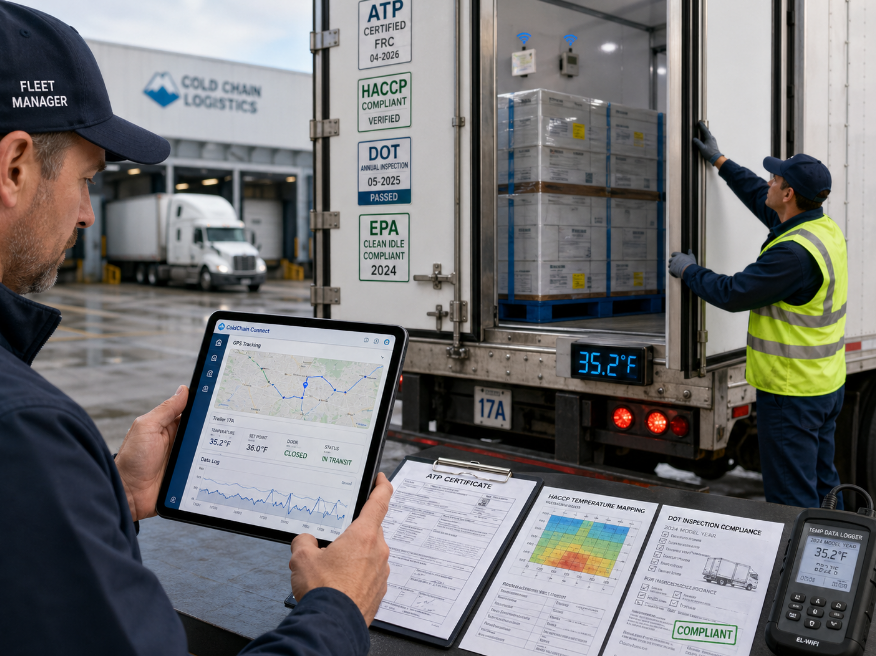
For any refrigerated truck fleet, HACCP isn’t red tape—it’s survival.
Identify Critical Control Points inside the truck box
Conduct Temperature Mapping during empty and loaded runs
Maintain strict Monitoring Procedures
Then comes calibration. Sensors must pass scheduled Calibration checks, backed by written Risk Assessment files under a formal Food Safety Management plan.
“Cold chain visibility is now a baseline expectation, not a premium feature,” notes the 2025 cold chain outlook from Deloitte’s food logistics report.
A refrigerated truck without mapped airflow zones can create warm pockets. That’s how spoilage sneaks in.
Meeting DOT Regulations and EPA Emissions Standards
Compliance stacks up in layers for every refrigerated truck:
DOT Regulations
Driver logs
Brake and Vehicle Safety inspections
Roadside Inspection readiness
EPA Standards
Verified Emissions Control systems
Certified refrigeration unit engines
Documented Environmental Compliance
Legal alignment
Up-to-date Transportation Laws adherence
Service records tied to each refrigerated vehicle
A truck refrigeration unit that fails emissions can sideline the entire refrigerated truck operation overnight.
Implementing Telematics System and Data Logging
Modern refrigerated truck fleets rely on layered tech:
Core hardware
Sensor Technology for Temperature Data
Backup probes inside the refrigerated trailer
Connectivity stack
Secure Connectivity
Cloud-based Data Logging
Control layer
Telematics System dashboards
Real-time Monitoring alerts
GPS Tracking within Fleet Management software
With Reefertruckpro, operators track every refrigerated truck in motion, review audit-ready logs, and catch issues before cargo spoils. Reefertruckpro keeps each refrigerated truck compliant, connected, and ready for inspection—no guesswork, no scrambling.
FAQ
What core components make a refrigerated truck reliable for cold chain transport?
A refrigerated truck lives or dies by its refrigeration system and body build:
1) Refrigeration cycle
Compressor pressurizes the refrigerant.
Condenser releases heat outside the cargo box.
Expansion valve meters flow.
Evaporator absorbs heat to reach the target temperature range.
Thermostat and control panel keep settings stable during transit.
2) Body integrity
Insulated panels, floor assembly, and side walls limit heat gain.
Rear doors with tight door seals stop air leakage.
Drainage system prevents moisture buildup.
When these parts work in harmony, cool-down time shortens and temperature uniformity improves—protecting both cargo value and driver peace of mind.
Why is polyurethane foam preferred for refrigerated truck insulation?
Short answer: it protects temperature like a shield under pressure.
Polyurethane foam: high thermal efficiency, low energy consumption, stable temperature uniformity.
Extruded polystyrene / Fiberglass: lower cost, but weaker thermal barriers.
Vacuum insulated panels / Polyisocyanurate: strong insulation, higher material expense.
In daily routes, polyurethane foam inside insulated panels and side walls keeps the cargo space steady, reduces strain on the compressor, and preserves payload capacity without excessive wall thickness.
What power options are available for a refrigerated truck?
Different routes demand different power sources:
Diesel engine with dedicated fuel tank — strong cooling for long-distance hauling.
Electric motor with battery pack — quiet city deliveries, lower EPA emissions.
Generator unit or auxiliary power unit — supports standby cooling.
Shore power — maintains temperature during warehouse loading.
Choosing the right setup balances cubic volume, energy consumption, and operating cost, especially when drivers face traffic, loading delays, and strict delivery windows.
How do regulations and smart technologies improve refrigerated truck performance?
Compliance and technology now walk side by side.
Standards that matter:
ATP certification for thermal performance.
HACCP compliance and food safety regulations for cargo traceability.
DOT regulations and EPA emissions for road and environmental safety.
ISO standards and CE marking for manufacturing credibility.
Smart control in motion:
IoT sensors track temperature mapping inside insulated panels.
Data logging feeds a telematics system.
Remote monitoring and fleet management software alert managers before a compressor fault becomes cargo loss.
Predictive maintenance reduces downtime and protects thermal efficiency across the fleet.
In high-stakes cold chain transport, control is not a luxury—it is insurance.