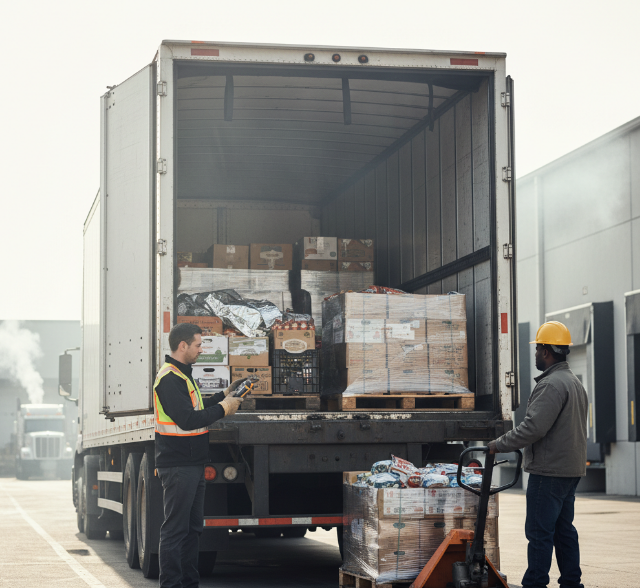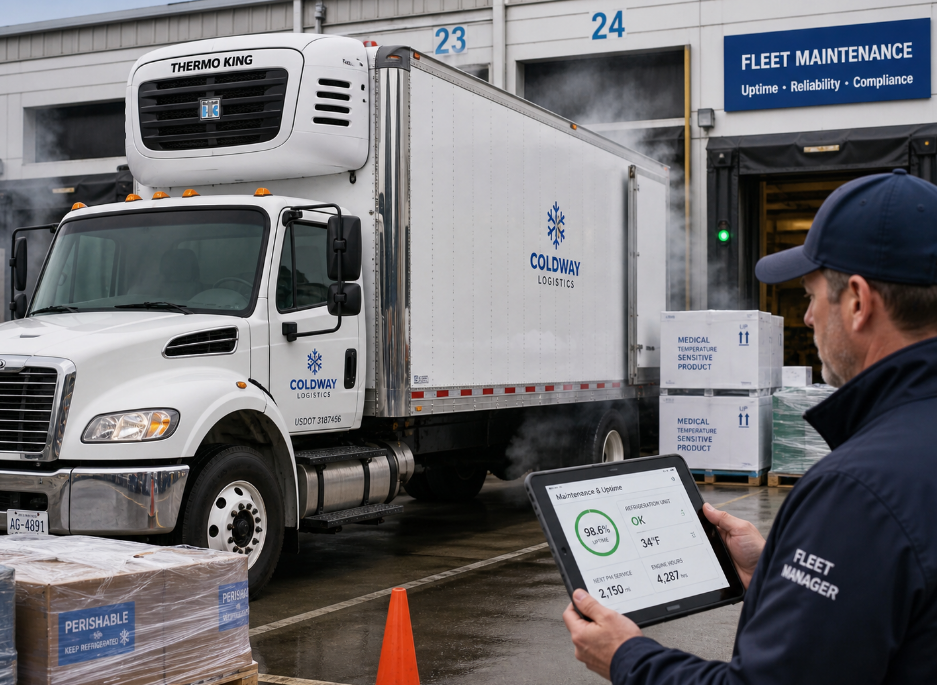
Pick wrong and watch profits melt—choose the right reefer truck to keep your cold chain chill, clients happy, and margins frostbitten-proof.
A reefer truck can make or break your cold chain, and picking the wrong type is like hauling ice cream in a pizza oven. The stakes are real: spoiled loads, angry clients, money leaking out the back door.
Different builds serve different routes, temperatures, and tempers. Pick smart, and your fleet runs cool and calm. Pick wrong, and you pay for it daily.
Body Configurations
Choosing the right reefer truck body protects cooling, airflow, and payload performance.
Cooling Method
A reefer truck uses active refrigeration, while an insulated van depends on passive thermal retention.
Chassis Selection
Engine, transmission, suspension, axles, and fuel planning shape daily cold-chain reliability.
4 Common Reefer Truck Body Configurations
Choosing the right reefer truck body isn’t just tech talk—it’s about keeping cargo fresh and your business stress-free. From urban drops to long-haul refrigerated transport, each reefer setup handles cooling, airflow, and payload a bit differently.
Straight Truck with Steel Frame and Polyurethane Foam Insulation
A classic straight truck built for steady refrigerated transport relies on:
Structural Core
Supports the truck body under heavy load
Resists torsion during uneven road conditions
Steel frame
Thermal Barrier
Reduces heat transfer
Stabilizes internal temperature control
Polyurethane foam as primary insulation material
Cooling System
Integrated compressor
Evaporator and condenser tuned for mid-size reefer truck routes
This type of reefer truck works great for city food distribution. Simple, tough, and cost-friendly. Reefertruckpro often recommends it for operators entering the refrigerated truck market.
Multi-Temperature Van Featuring Aluminum Panels and Composite Panels
Need flexibility? A multi-temperature van handles mixed cargo in one reefer truck.
Aluminum panels cut weight.
Composite panels strengthen the insulated body.
Separate temperature zones divide cargo compartments.
Each zone links to a dedicated refrigeration unit.
Digital thermostats adjust independently.
Drivers monitor cooling from a single control display.
Fresh produce up front, frozen goods in back—one reefer, zero drama. For operators scaling up, Reefertruckpro customizes these reefer trucks to match HACCP standards without overcomplicating maintenance.
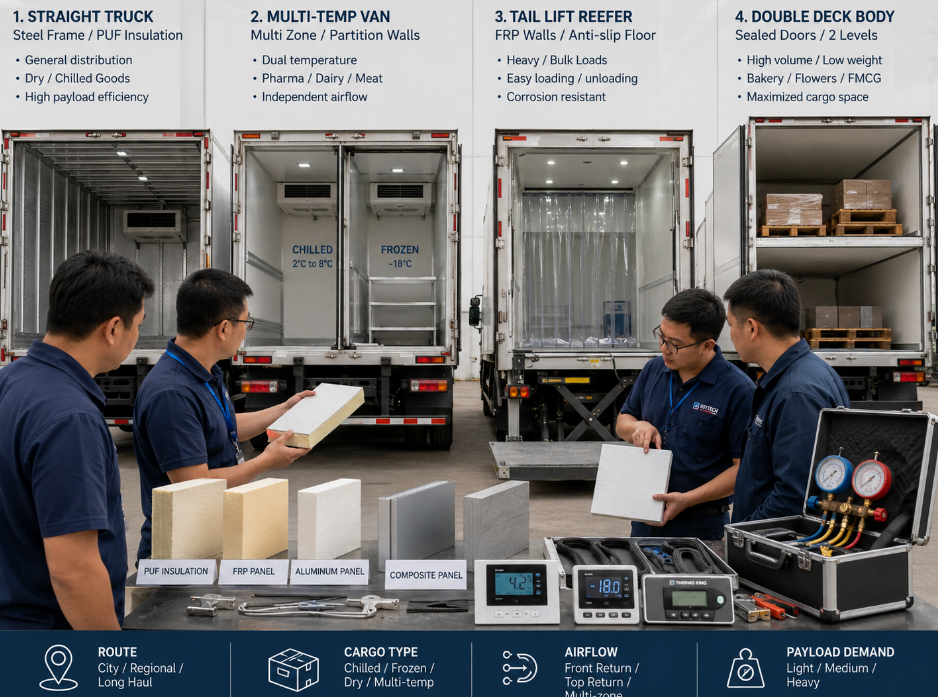
Tail-Lift Truck Incorporating Fiberglass Reinforced Plastic Walls
For tight delivery schedules, a tail-lift truck shines.
Body Construction
Moisture-resistant FRP walls
Long-term durability in humid climates
Fiberglass reinforced plastic
Loading System
Speeds pallet handling
Cuts labor strain
Hydraulic loading equipment
Cold Chain Stability
Tight door seals
Optimized airflow for refrigerated cargo
Frequent door openings test any reefer truck. This setup keeps temps steady and drivers happy.
Double-Deck Body with Advanced Sealants and Door Gaskets
When cargo volume climbs, a double-deck body boosts cargo capacity inside a single reefer truck.
Upper and lower storage improve load optimization.
Advanced sealants reduce air leakage.
Heavy-duty door gaskets guard temperature integrity.
It’s built for operators who want more from every reefer mile. With the right configuration from Reefertruckpro, a reefer truck like this turns space into profit while keeping every pallet chilled and secure.
Reefer Truck vs. Insulated Van Comparison
Choosing between a reefer truck and an insulated van can feel like picking tools for totally different jobs. Both move perishables, yet the way a reefer, a truck body, and cooling gear work together changes everything.
Reefer Truck
A reefer truck runs on an active refrigeration system, and that changes the game for serious perishable transport.
Core System Components
Engine-driven or independent diesel unit
Backup battery for monitoring
Compressor unit
Refrigerant circulation lines
Digital temperature control panel
Active cooling setup
Power Source
Operational Capabilities
Heavy payload handling
Stable airflow across pallets
Long distance freight
Cross-border cold chain
Frozen goods
Meat, seafood, pharma loads
Cargo Type
Route Profile
Load Strength
A refrigerated truck keeps tight temperature bands even when outside heat spikes. That’s why many fleets trust a reefer truck from Reefertruckpro when compliance and uptime really matter.
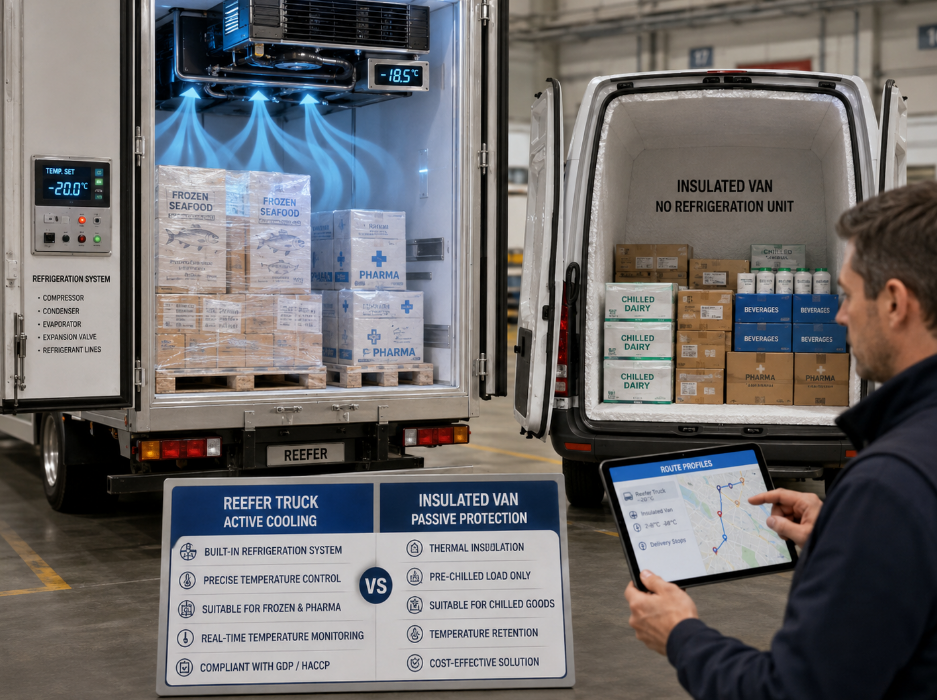
Insulated Van
An insulated van skips the compressor and depends on thermal insulation instead.
Structural Design
Thermal lining with polyurethane foam
Sealed door frames to reduce air leaks
Temperature Performance
Pre-chilled cargo required
Gradual temperature rise over time
Passive temperature retention
Best for short haul city routes
Cargo Fit
Chilled products like dairy or drinks
Smaller volume distribution
No built-in no refrigeration machinery
For quick urban drops, a reefer isn’t always needed. Still, when loads stretch hours longer than planned, only a true reefer truck keeps frozen goods locked in safely.
Which Chassis Suits Your Reefer Needs?
Choosing the right chassis for a reefer truck isn’t just spec talk—it’s about keeping cargo cold, costs steady, and your refrigerated truck running without drama day after day.
Assessing Engine, Transmission, and Reliability Metrics
When a reefer truck rolls out, the powertrain quietly carries the whole cold chain.
Engine Performance Core
engine type: Diesel remains king for heavy reefer truck loads.
horsepower: Match output to cargo weight and refrigeration draw.
torque: Low-end pull keeps the refrigerated truck smooth in city starts.
engine efficiency: Higher combustion efficiency reduces strain on cooling units.
Transmission Matching
Tight ratios support steady RPM.
Balanced spacing protects compressor-driven systems.
Automatic for urban food delivery routes.
Automated manual for long-haul refrigerated truck fleets.
transmission type
gear ratios
Reliability Metrics
durability under stop-and-go reefer truck routes.
Predictable maintenance cycles.
Maximized uptime for cold chain consistency.
“Fleet operators are prioritizing powertrain reliability to reduce cold-chain disruption costs,” notes McKinsey’s 2025 global logistics outlook.
At Reefertruckpro, chassis pairing always centers on real-world reefer truck uptime, not brochure numbers.
Suspension System & Axles for Smooth Temperature Stability
A refrigerated truck isn’t just hauling pallets; it’s protecting temperature-sensitive freight. Vibration is the enemy.
suspension type matters:
air suspension improves ride quality and stabilizes evaporator lines.
leaf springs suit heavier load capacity needs at lower upfront cost.
axle configuration
Single axle for urban reefer truck routes.
Tandem for extended-range refrigerated truck hauling.
Vibration control isn’t fancy talk. Better shock absorption reduces stress on coils, fittings, and insulation panels. Less shaking means steadier airflow, which keeps the reefer truck cargo zone consistent mile after mile.
Short city runs? Go lighter. Long interstate hauls? Invest in smoother suspension. Your truck—and your freight—feel the difference.
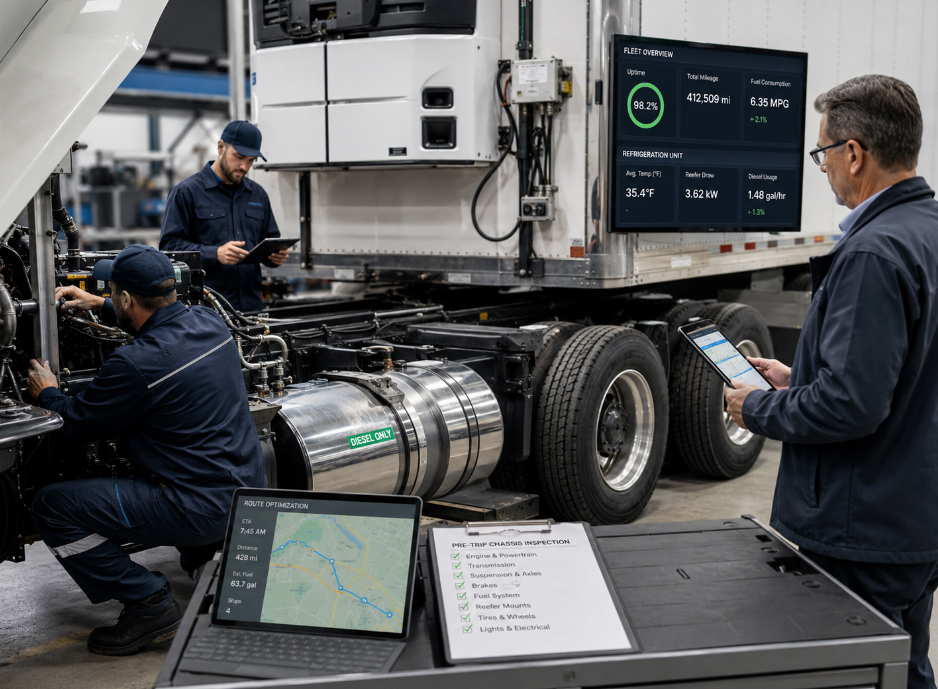
Fuel Tank Capacity and Fuel Efficiency Optimization
Fuel planning shapes reefer truck profitability.
Fuel Storage Strategy
Adequate fuel tank capacity extends operational range.
Oversizing adds weight; balance is key.
Efficiency Drivers
Lower fuel consumption through tuned engine efficiency.
Smart aerodynamic design cuts drag on highway reefer truck routes.
Monitor mileage trends per refrigerated truck unit.
Operational Control
Align fuel type with regional supply stability.
Apply digital route optimization to reduce idle cooling time.
Track dual usage: propulsion plus refrigeration draw.
A reefer truck that runs farther on less fuel keeps margins healthier. Reefertruckpro supports chassis builds that sync tank size, engine output, and route data—so your truck works smarter, not harder.
FAQ
How does a reefer truck keep cargo cold during long hauls?
A reefer truck protects temperature stability through tight coordination between insulation and refrigeration:
Refrigeration system components
Compressor circulates refrigerant
Condenser releases heat outward
Evaporator absorbs heat inside the cargo box
Thermostat and control unit adjust cooling capacity
Fan motors distribute air evenly
Body insulation structure
Polyurethane foam reduces heat transfer
Fiberglass reinforced plastic or aluminum panels shield the cargo area
Sealants and door gaskets block air leakage
Chassis support
Stable chassis frame and suspension system limit vibration that could damage refrigerant lines
When these elements work in sync, cooling capacity remains steady and energy consumption stays controlled—even across long-distance routes.
What certifications and compliance checks should buyers confirm before ordering a reefer truck?
Commercial buyers look beyond price; compliance protects both cargo and business.
Thermal & food safety
ATP certification for international temperature standards
HACCP standards for food transport safety
Environmental & engine rules
F-gas regulations for refrigerant handling
EPA emissions compliance for the engine and fuel system
Road & manufacturing compliance
DOT regulations and safety certifications
ISO standards applied during assembly line production
Before delivery, manufacturers perform temperature mapping, leak detection, and thermal efficiency tests. A strict pre-delivery inspection ensures the reefer truck meets performance validation targets and reliability metrics.
How do manufacturers ensure quality and durability in reefer truck production?
Quality begins long before the vehicle reaches the road.
A. Production stage
Production planning aligned with supplier management
Welding robots secure the steel frame
Automation systems guide composite panels into place
Painting booth treatment protects aluminum panels from corrosion
B. System integration
Compressor, evaporator, condenser, and control unit installed with calibrated tooling equipment
Refrigerant lines tested for pressure stability
C. Final validation
Durability testing on chassis frame, axles, braking system, and suspension system
Performance validation of cooling capacity and fuel efficiency
Quality control checks focused on temperature stability and maintenance intervals
The result is a reefer truck built for heavy payload capacity, stable operation, and long-term reliability under daily logistics pressure.