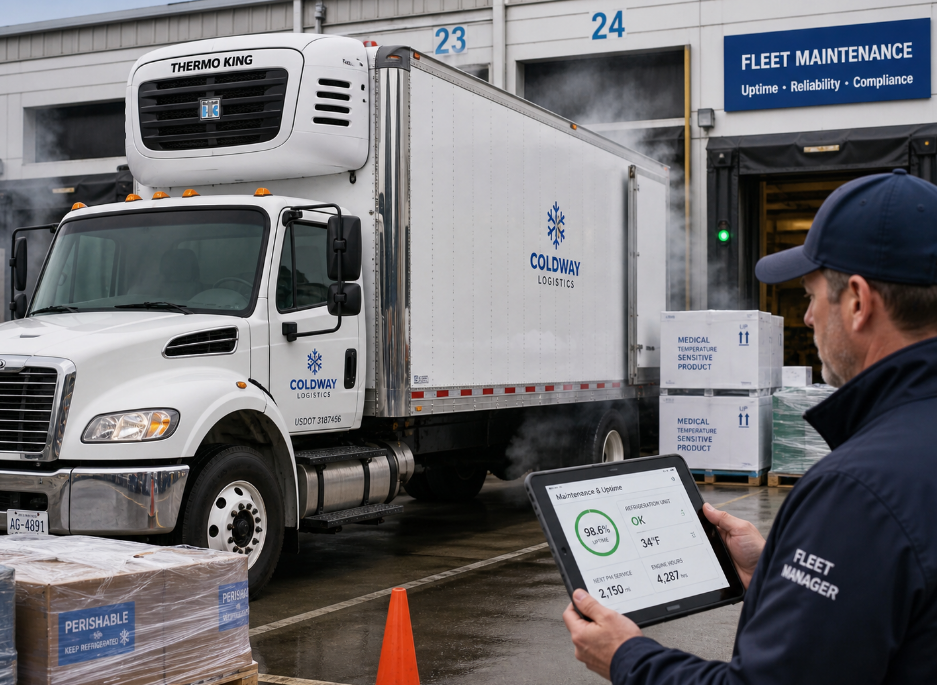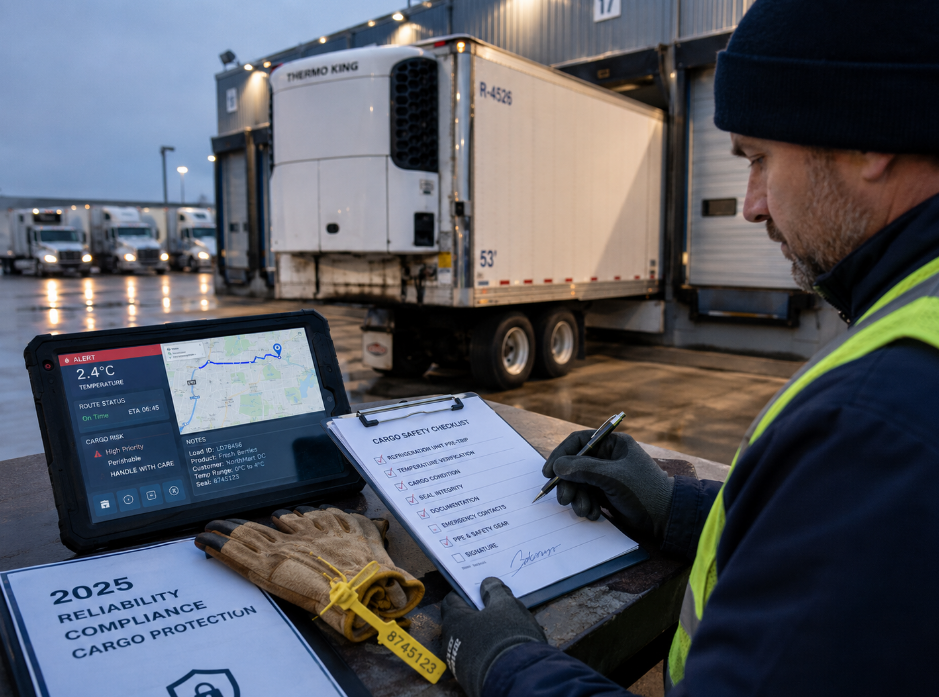
When profits turn icy, a reefer truck built for 2025 reliability keeps your cargo—and your reputation—from melting under pressure.
A reefer truck isn’t just a box on wheels; it’s your last line of defense against spoiled cargo and angry clients.
One temperature slip, one missed inspection, and profits melt fast, putting contracts and reputations on thin ice.
Reefertruckpro engineers and executives stress safety-driven design in 2025 materials for reliability and compliance.
Pre-trip Inspection
Why Is Pre-trip Inspection Vital For Reefer Trucks
Loading Dock
Loading Dock: Safe Practices For Reefer Trucks
Refrigerant Handling
4 Key Steps For Proper Refrigerant Handling
Why Is Pre-trip Inspection Vital For Reefer Trucks
A reefer truck isn’t just a truck with a cold box. It’s a moving fridge on wheels, and one small miss can spoil a full load. Before any reefer truck hits the road, smart operators run tight checks to keep every reefer, refrigerated truck, and reefer trailer safe and compliant.
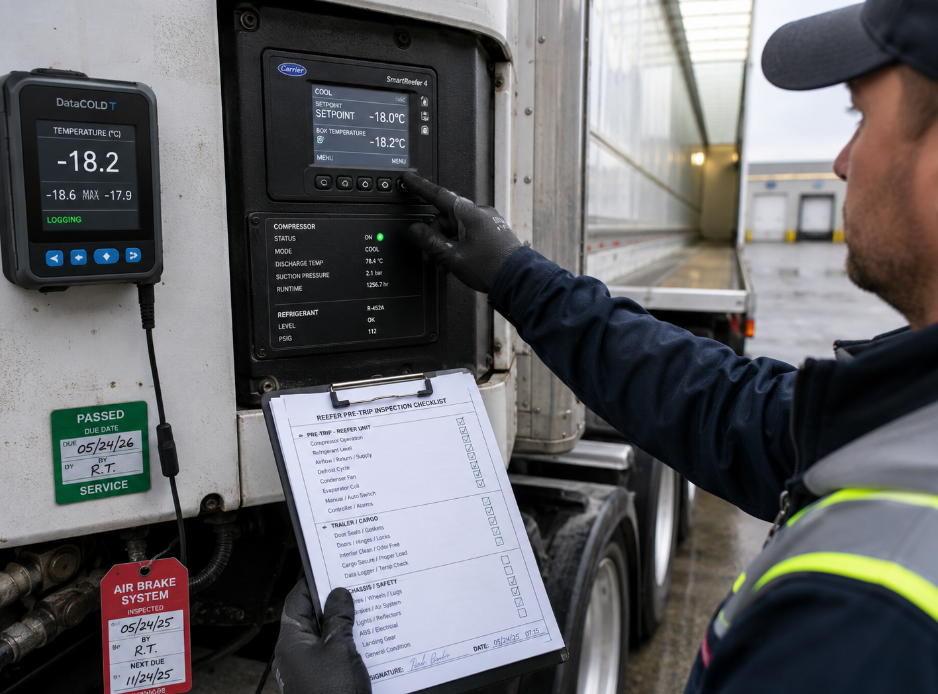
Checking Refrigeration Unit Performance
A solid refrigeration unit check on a reefer truck should cover:
1) Core cooling system
Compressor output stability
Correct refrigerant level
Rated cooling capacity
2) Air management
Even airflow across cargo zone
Functional defrost cycle
Accurate temperature control
3) Performance validation
| Test Item | Standard Value | Measured Value | Status |
|---|---|---|---|
| Cooling capacity (kW) | ≥ 18 | 18.6 | Pass |
| Temp deviation (°C) | ±1.0 | 0.6 | Pass |
| Defrost interval (min) | 45–60 | 52 | Pass |
| Compressor amp (A) | ≤ 32 | 30 | Pass |
For any reefer truck, skipping this performance check risks cargo loss. Brands like Reefertruckpro stress routine diagnostics to keep every reefer unit dialed in.
Verifying Insulation Thickness and Temperature Range
A reefer truck relies on insulation material and proper wall thickness to hold the line. Check:
Intact door seals
Continuous vapor barrier
Sound structural integrity
Then confirm the declared temperature range matches cargo needs. Thin panels kill thermal efficiency, and even a strong refrigeration system can’t save a leaking refrigerated truck.
Inspecting Chassis Type and Axle Configuration
Under every reefer truck body sits the working base:
1) Chassis frame
No cracks or corrosion
Proper coupling mechanism
2) Axle type and load match
Balanced weight spread
Legal compliance
3) Road safety
Healthy suspension system
Correct wheel alignment
Strong brake system
Safe tire condition
A stable reefer trailer keeps the cold chain steady.
Reviewing Telematics System and Data Logger Health
Modern reefer truck fleets run on data.
1) Device hardware
Active telematics device
Calibrated temperature sensor
2) Connectivity
Reliable GPS tracking
Good connectivity status
3) Records & alerts
Accurate data logger
Verified data integrity
Functional alarm system
Overall system health
Reefertruckpro integrates remote diagnostics so operators can spot issues fast. For any reefer truck on long haul, clean data isn’t fancy tech—it’s proof the load stayed cold and safe.
Loading Dock: Safe Practices For Reefer Trucks
Running a reefer truck at a busy dock isn’t just about backing in and rolling out. Every reefer truck, refrigerated truck, or reefer trailer needs tight coordination to protect cargo, control temperature, and keep drivers safe and on schedule.
Secure Cargo Capacity Alignment
When a reefer truck arrives loaded, smart teams look at cargo, load, and weight before anything moves.
Capacity Planning
Check rated capacity against actual pallet count.
Confirm axle weight distribution for road compliance.
Load Distribution
Front-to-back alignment keeps stability steady.
Side balance protects airflow inside the reefer trailer.
Securement Controls
Inspect straps and bars for proper securement.
Validate distribution plans against delivery sequence.
A cold chain study from IBISWorld (2024) notes:
“Temperature-controlled freight demand continues to rise alongside stricter compliance expectations across North America.”
That’s why operators trust Reefertruckpro for matching the right reefer truck specs to route demand. No guesswork. Just clean math and safer hauls.
Ensuring Loading Dock Compatibility
Dock drama usually starts with poor compatibility between the vehicle and the dock setup.
Measure bay height against trailer chassis.
Confirm ramp angle won’t stress the frame.
Test the leveler and restraint before unloading.
A quick checklist helps:
Proper safety locks engaged
Wheel chocks in place
Dock lights aligned inside the reefer truck
Reefertruckpro units are built to sync smoothly with standard dock specs, cutting idle time for every refrigerated truck in rotation.
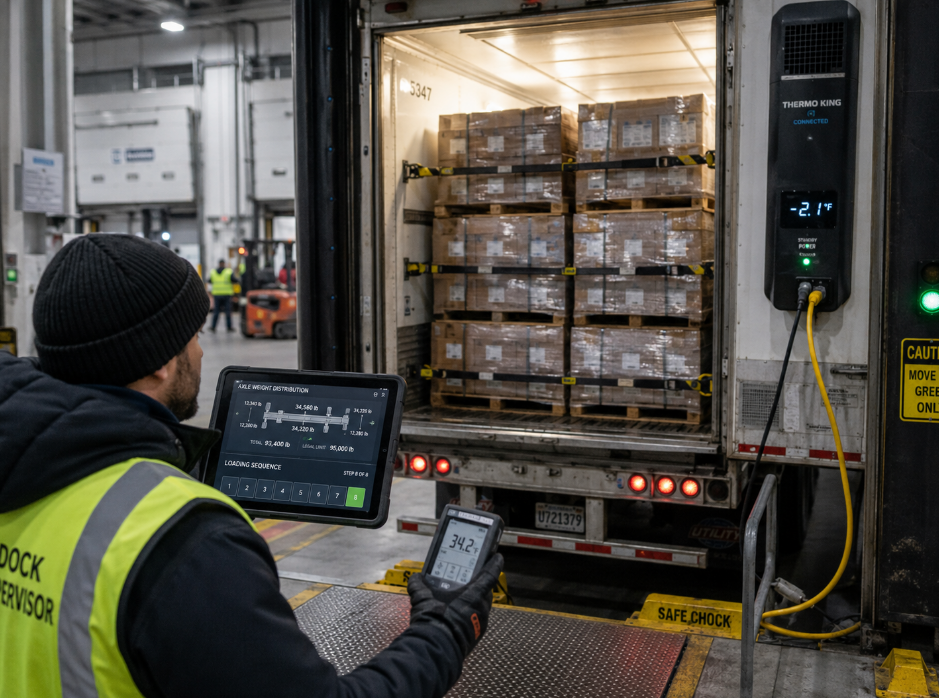
Maintaining Perishable Goods Temperature During Transfer
Cold chain integrity isn’t luck. It’s routine.
Step 1: Keep refrigeration running on standby power during transfer.
Step 2: Monitor temperature readings in real time.
Step 3: Limit door-open minutes to protect insulation and product integrity.
Step 4: Log data for monitoring and compliance records.
For perishables, even a short spike can wreck a shipment. A well-prepped reefer truck, fridge truck, or reefer trailer keeps refrigeration steady and the cold chain unbroken. That’s how Reefertruckpro helps fleets move food without sweating the small stuff.
4 Key Steps For Proper Refrigerant Handling
Keeping a reefer truck in top shape isn’t just tech talk—it’s what keeps cargo cool and customers calm. From pressure checks to standby power, smart refrigerant handling keeps every refrigerated truck rolling steady and stress-free.
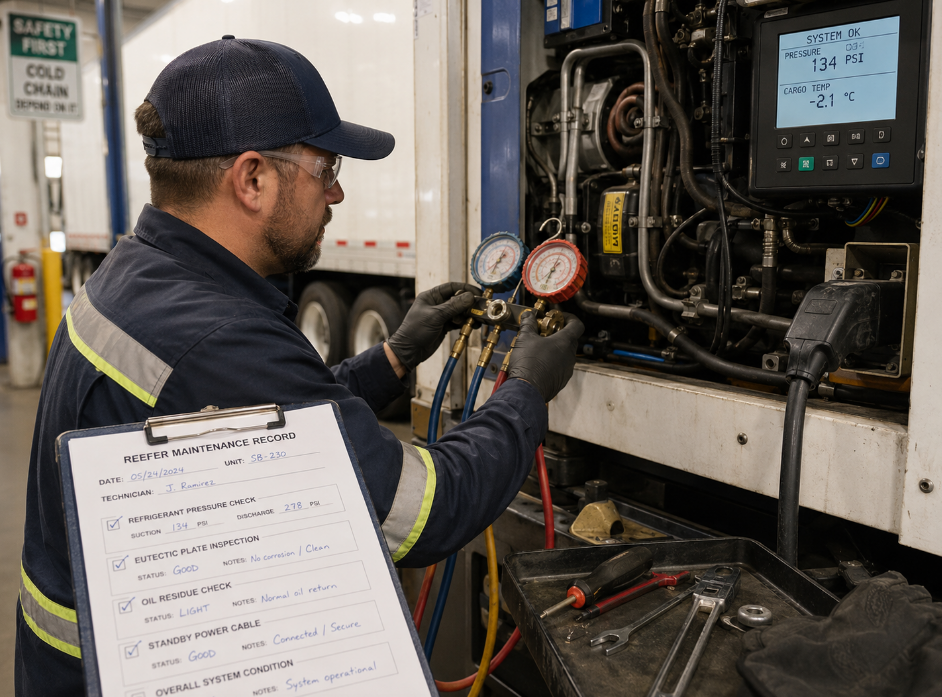
Step 1: Assessing Refrigerant Levels
A healthy reefer unit starts with balanced refrigerant levels. Low charge means weak cooling. Overcharge strains the compressor. Neither is good news for a working reefer truck.
Inspect hoses, valves, and evaporator coils for oil residue.
Use calibrated pressure gauges.
Log readings in your maintenance record.
Step 2: Handling Eutectic Plates Safely
Eutectic plates store cooling energy, but rough handling cracks internal channels.
Check mounting brackets inside the insulated cargo box.
Confirm plate surface integrity.
Monitor phase-change response during pull-down.
Inside a busy reefer truck, even small dents affect thermal stability. A steady cold chain keeps food safe and margins intact.
Step 3: Monitoring Pressure and Temperature
Consistent tracking of system pressure, temperature sensors, and control panels keeps your refrigerated truck dependable.
Real-time data reduces compressor failure risk.
Cross-check ambient vs. cargo readings.
Adjust airflow through evaporator fans.
Many operators trust Reefertruckpro monitoring tools to keep reefer truck performance predictable, even on long hauls.
Step 4: Enabling Standby Power for Emergencies
When loading delays hit, plug into standby power fast. Stable voltage protects the condensing unit and keeps cargo in spec.
A reefer truck without backup cooling is just a warm box on wheels. Keep power ready, and your cold chain stays solid.
| Parameter | Normal Range | Risk if Outside Range |
|---|---|---|
| Suction Pressure | 25–45 psi | Coil freeze or low cooling |
| Discharge Pressure | 200–350 psi | Compressor overload |
| Superheat | 8–12°C | Liquid floodback |
| Subcooling | 5–10°C | Inefficient cycle |
| Leak Rate | 0% | Environmental violation |
Brands like Reefertruckpro design systems that simplify diagnostics for any truck reefer fleet.
Why IoT Sensors Are Shaping Truck Safety
Smart sensors are changing how every reefer truck runs day to day. From cargo checks to driver habits, IoT keeps each reefer, refrigerated truck, and reefer trucks fleet safer, sharper, and easier to manage.
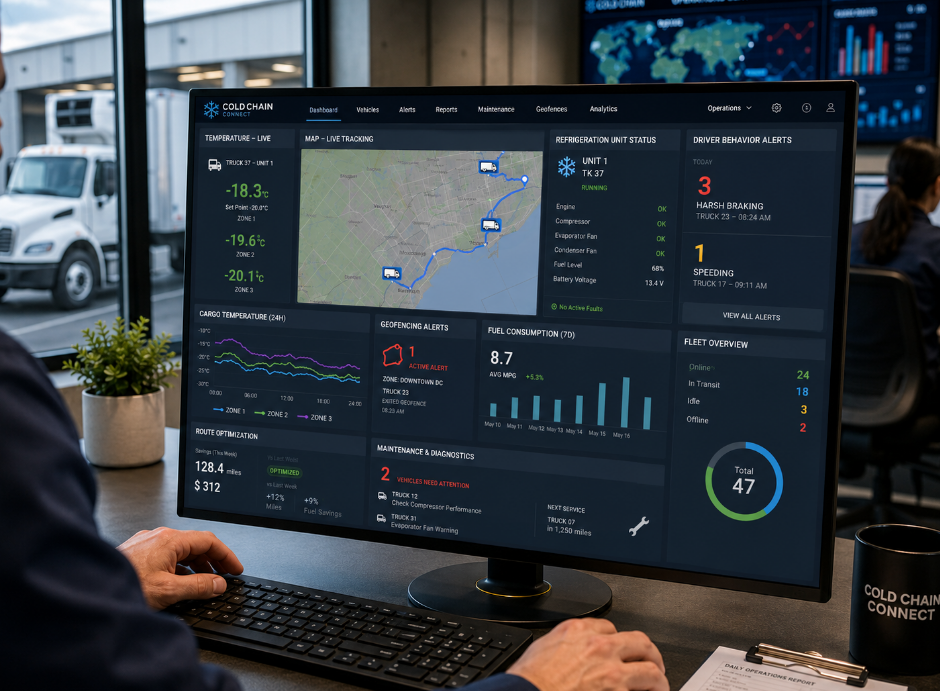
Real-time Temperature Monitoring with GPS Tracking
Core Control Layer
Alerts flag swings that could damage cargo.
Stored data supports compliance reviews.
Temperature and monitoring tools collect real-time cargo readings.
Built-in GPS and tracking confirm exact location during transit.
On-the-Road Visibility
Fleet managers track every reefer truck without calling the driver.
Geo-fencing protects high-value loads in each reefer truck route.
Business Impact
Cold chain trust rises.
Spoilage risk drops.
Customers stay calm.
Remote Diagnostics for Refrigeration Unit Health
Equipment Insight
Sensor-driven health checks catch wear early.
Performance logs measure cooling performance.
Remote diagnostics scan the refrigeration unit nonstop.
Maintenance Flow
Automated alerts trigger scheduled maintenance.
Service teams act before a reefer truck breaks down roadside.
Reefertruckpro integrates these sensors so each reefer truck stays reliable and road-ready.
Driver Behavior Monitoring to Prevent Accidents
Behavior Tracking
Patterns linked to accidents guide prevention plans.
Real-time telematics boosts overall safety.
Driver behavior monitoring tools review harsh braking and speeding.
Practical Results
Lower risk.
Cleaner CSA records.
Safer reefer truck operations.
Fleet Optimization through Telematics System Data
Data Intelligence
Route analysis improves efficiency.
Smarter routes cut fuel consumption.
Better asset utilization keeps each reefer truck productive.
Fleet optimization starts with telematics data.
With Reefertruckpro guiding strategy, every reefer truck, reefer, and refrigerated truck works harder without burning extra miles.
FAQ
Why is a pre-trip inspection critical for a reefer truck?
A reefer truck carries more than cargo capacity—it carries risk. A careful inspection protects perishable goods and your reputation.
Refrigeration Unit & Temperature Range: Confirm stable cooling across required temperature monitoring points, check the cryogenic system or eutectic plates for pressure balance and leaks, and validate data logger accuracy for HACCP compliance.
Vehicle Specifications: Inspect insulation thickness for thermal loss, review chassis type and axle configuration for DOT regulations, and ensure engine horsepower supports long haul transport loads.
Compliance & Safety: Verify Food Safety Standards and ATP certification documents, then test standby power before loading dock delays.
A 30-minute inspection can prevent a rejected shipment at the distribution network.
How do telematics and IoT features improve reefer truck fleet performance?
Modern fleet management turns a reefer truck into a moving control room.
Telematics System + GPS Tracking: Real-time delivery routes visibility, fewer detours, and tighter urban delivery schedules.
Remote Diagnostics: Alerts on refrigeration unit faults before cargo temperature drifts.
Driver Behavior Monitoring: Smooth driving protects multi-temperature zones and reduces fuel waste.
Data Logger Integration: Automatic records for food audits and HACCP compliance.
The result is clear: stronger fleet optimization, lower spoilage risk, and dependable supply chain reliability across every mile.
What defines a dependable reefer truck manufacturer for bulk orders?
Bulk investment demands more than a low quote. It demands certainty.
| Key Area | What to Confirm | Why It Matters |
|---|---|---|
| Production Capacity | Stable output & controlled lead time | Keeps fleet expansion on schedule |
| Quality Control | Verified insulation thickness & refrigeration unit testing | Protects temperature range stability |
| Customization Options | Cargo capacity, multi-temperature zones, axle configuration | Matches delivery routes and loading dock compatibility |
| Service Network | Technical support, warranty coverage, parts availability | Reduces downtime during long haul transport |
| Compliance | Emissions standards, ATP certification | Avoids regulatory penalties |
A strong supplier supports preventative maintenance, ensures parts availability, and stands behind every reefer truck long after delivery.