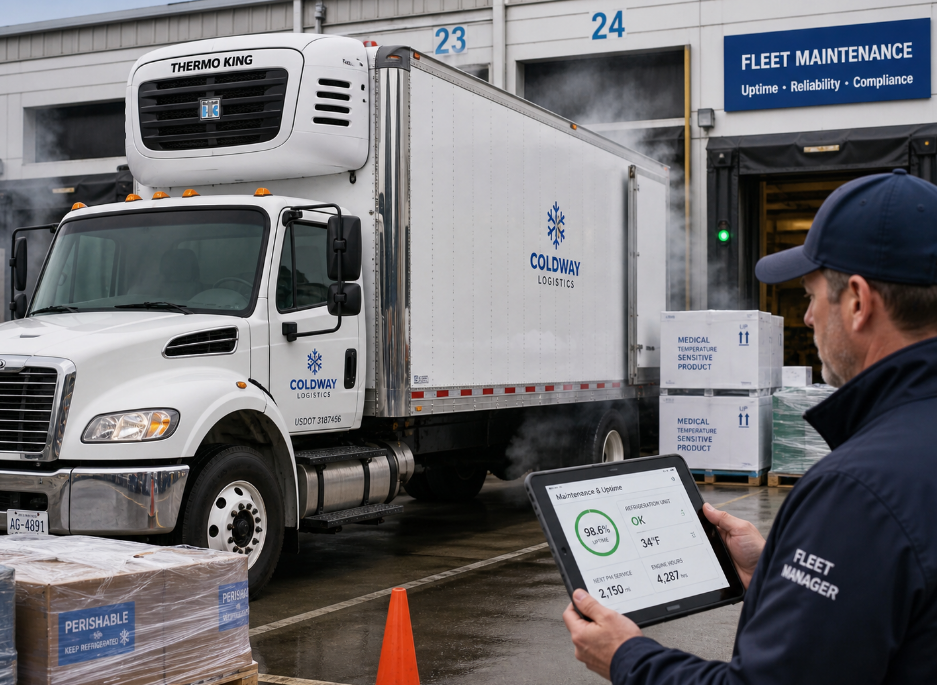
When temperature swings can torch profits, the right reefer truck keeps your cool—and your reputation—from melting faster than ice cream.
A reefer truck is the make-or-break heartbeat of cold-chain logistics, and if your fleet gets it wrong, profits melt fast. This rolling icebox keeps produce crisp, pharma safe, and contracts intact.
For fleet buyers, downtime stings, fuel bills bite, and spoiled loads wreck reputations overnight. The right build means tight temperature control, smart sensors, easy maintenance, and fewer 2 a.m. panic calls. That’s the bottom line. Today.
Temperature Control
Tight temperature control, smart sensors, easy maintenance, and fewer 2 a.m. panic calls.
Refrigeration Unit
Cooling capacity, evaporator, condenser, insulation thickness, and temperature control shape performance.
Telematics
Real-time GPS tracking, continuous temperature monitoring, automated data logging, and compliance reporting.
What Exactly Is A Reefer For A Truck?
A reefer truck is more than a cold box on wheels. It’s a purpose-built truck fitted with refrigeration so food, pharma, and fresh goods survive the haul. From light-duty city routes to cross-country runs, the reefer setup keeps cargo steady, safe, and compliant.
Defining a Reefer Truck: Chassis Type and Engine Displacement
At its core, a reefer truck starts with the right chassis and vehicle type.
Chassis Configuration
Higher GVWR
Built for long-haul refrigerated truck lanes
Suited for urban delivery
Tighter wheelbase, easier turns
Medium-duty truck chassis (Class 5–6)
Heavy-duty chassis (Class 7–8)
Axle and Structural Components
Reinforced structural components to handle insulation weight
Tandem axles for improved load balance
Engine and Displacement
6–7L for regional reefer truck routes
11–13L for heavy freight
Diesel engine platforms dominate
Typical engine displacement ranges:
A solid vehicle type match keeps the refrigerated truck efficient instead of overworked.
Core Refrigeration Unit Specs: Cooling Capacity & Insulation Thickness
The heart of any reefer truck is the refrigeration unit.
1. Cooling Performance
Cooling capacity measured in BTU/hr
Key components:
Evaporator (absorbs heat)
Condenser (releases heat)
2. Insulation Structure
Foam panel build
Defined insulation thickness for stable temperature control
Typical Performance Benchmarks
| Vehicle Type | Cooling Capacity (BTU/hr) | Insulation Thickness (mm) |
|---|---|---|
| Light-duty reefer | 18,000–25,000 | 60–75 |
| Medium reefer truck | 25,000–40,000 | 75–100 |
| Heavy refrigerated truck | 40,000+ | 100–120 |
Thicker walls boost thermal efficiency, cutting fuel burn and keeping cargo chill even in summer heat.
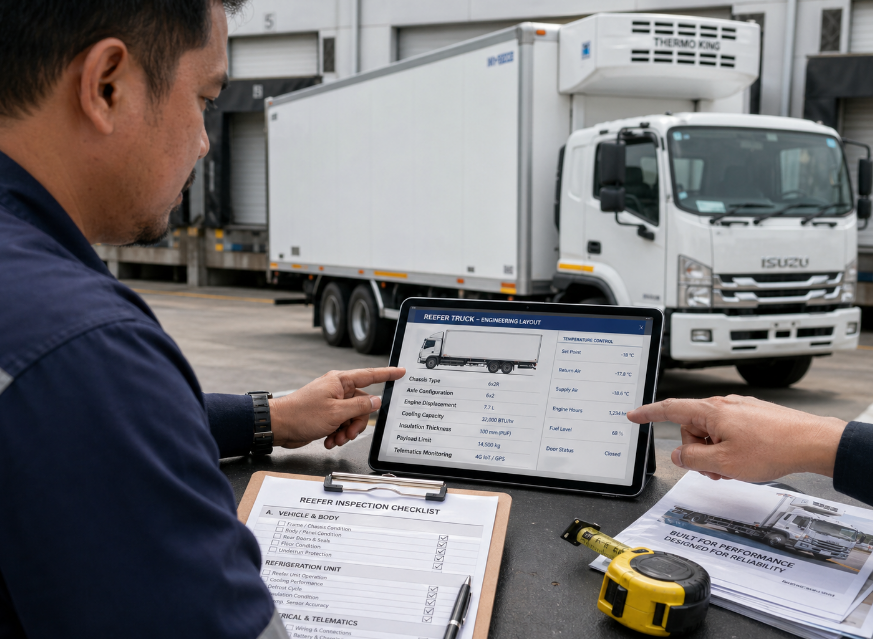
Operational Requirements and Telematics Overview
Running a reefer truck isn’t just about cold air; it’s about smart control.
Operational Requirements
Defined payload limits
Single or multi-temp compartments
Rear and side door configurations
Telematics and Monitoring
Real-time GPS tracking
Continuous temperature monitoring
Automated data logging
System Overview
Alerts for deviation
Remote set-point remote control
Compliance reporting
Central telematics dashboard
A modern reefer, or refrigerated truck, ties hardware and software together so drivers aren’t guessing. The reefer truck becomes a rolling cold chain hub—steady, trackable, and ready for whatever the road throws at it.
5 Core Components Of A Truck Refrigeration Unit
A reefer truck isn’t just a cold box on wheels. It’s a tight system where air, fuel, insulation, and software all sync up. If you run a truck reefer fleet or manage a refrigerated truck line, knowing these core parts keeps cargo safe and costs in check. Let’s break down what truly powers a dependable reefer truck setup.
Component 1: Compressor Assembly (Power Source & Refrigerant Type)
At the heart of every reefer truck sits the Compressor, driving the full Compression cycle that keeps freight chilled.
Power configuration
Engine-driven units add flexibility
Electric standby cuts idle emissions
Diesel Engine drive for long-haul independence
Standby Electric motor for warehouse plug-in cooling
Power source options
Fuel impact
Refrigerant management
Emission rules
Refrigerant handling regulations
Low-GWP Refrigerant options meeting updated standards
Approved Refrigerant gas types
Compliance focus
For operators working with reefertruckpro systems, choosing the right compressor setup means better uptime and smoother cold-chain performance.
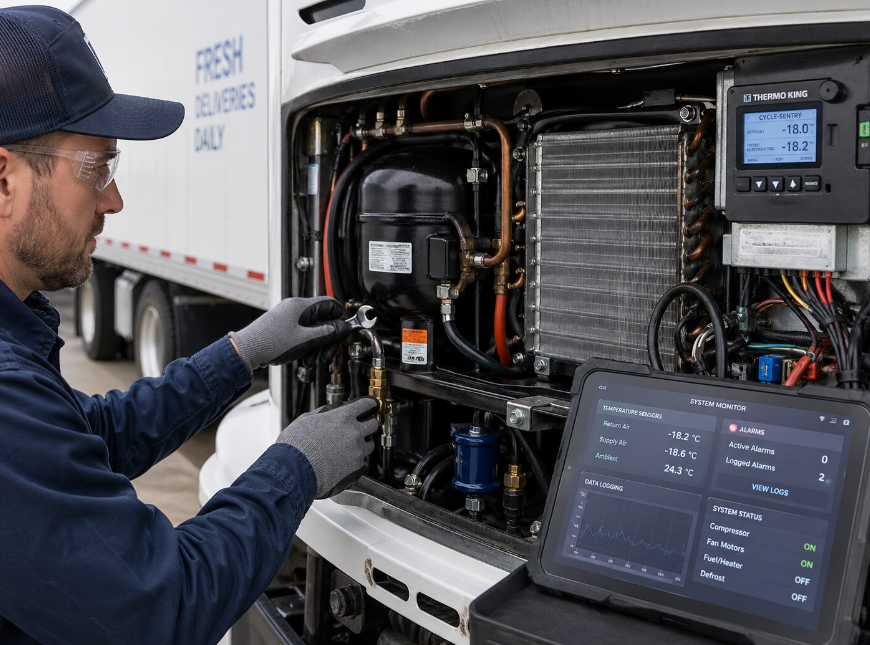
Component 2: Evaporator Coil (Evaporator Type & Temperature Range)
Inside the cargo area, the Evaporator coil handles Heat exchange and stabilizes Cargo temperature.
Core operating flow
Absorption of internal heat
Direct impact on Cooling capacity
Forced Air circulation across fins
Balanced airflow for even pallet coverage
Air movement
Cooling action
Temperature control range
Automatic sensor-triggered melt
Reduced frost buildup
Deep freeze holding levels
0–5°C produce stability
Fresh goods
Frozen freight
Managed Defrost cycle
A properly sized evaporator keeps a refrigerated truck steady even during frequent door openings.
Component 3: Condenser Unit (Cooling Capacity Explained)
Outside airflow meets the Condenser coil, where Heat rejection takes place.
Heat removal structure
High Ambient temperature reduces margin
Road dust affects airflow
Pulls ambient air across coils
Supports rapid Heat dissipation
Condenser fan operation
External factors
Performance influence
Faster Refrigerant cooling
Stable Cooling performance in city traffic
Improved fuel balance
For fleets running a reefer truck daily, condenser efficiency directly shapes operating cost.
Component 4: Insulation Panels (Insulation Thickness & Cargo Securing)
Cold air means nothing without strong Insulation material forming a reliable Thermal barrier.
Structural layers
Optimized Panel thickness
Sealed Trailer walls
High-density foam core
Performance outcomes
Extended Temperature retention
Improved Thermal efficiency
Reduced compressor cycling
Cargo stability
Interior rails
Load locks for Cargo protection
On any reefer truck, insulation quietly saves fuel every mile.
Component 5: Control System (Remote Diagnostics & Data Logging)
Modern truck reefer units rely on a smart Microprocessor that keeps everything talking.
Monitoring framework
Embedded Temperature sensor network
Real-time System monitoring
Visible User interface in-cab
Data handling
Built-in Data recorder
Stored trip history
Remote Remote access through fleet portals
Service response
Automatic Diagnostic codes
Active Alarm system alerts
Preventive maintenance scheduling
Brands like reefertruckpro integrate these digital tools so a reefer truck doesn’t just cool—it reports, tracks, and protects every load. In today’s reefer truck market, smart controls are no longer optional; they’re expected.
How Does A Reefer Truck Keep Goods Fresh?
A reefer truck isn’t just a cold box on wheels. It’s a moving climate system built to guard food, pharma, and frozen freight mile after mile. From tight temperature control to live tracking, every refrigerated truck works hard to keep cargo fresh and stress-free.
Precise Temperature Control: Defrost Method and Refrigeration Cycle
A reefer truck manages temperature through a tightly controlled refrigeration cycle built around core components:
Cooling Core
Compressor pressurizes refrigerant.
Condenser releases heat outside the truck body.
Evaporator absorbs interior heat to lower trailer temperature.
Smart Control System
Sensors read return-air conditions.
Microprocessors adjust compressor speed.
Setpoints stay steady even during long hauls.
Automatic Defrost Function
Detects frost buildup on the evaporator.
Activates timed or demand-based defrost cycles.
Restores airflow without damaging sensitive cargo.
This loop keeps the reefer truck stable in summer heat or winter freeze.
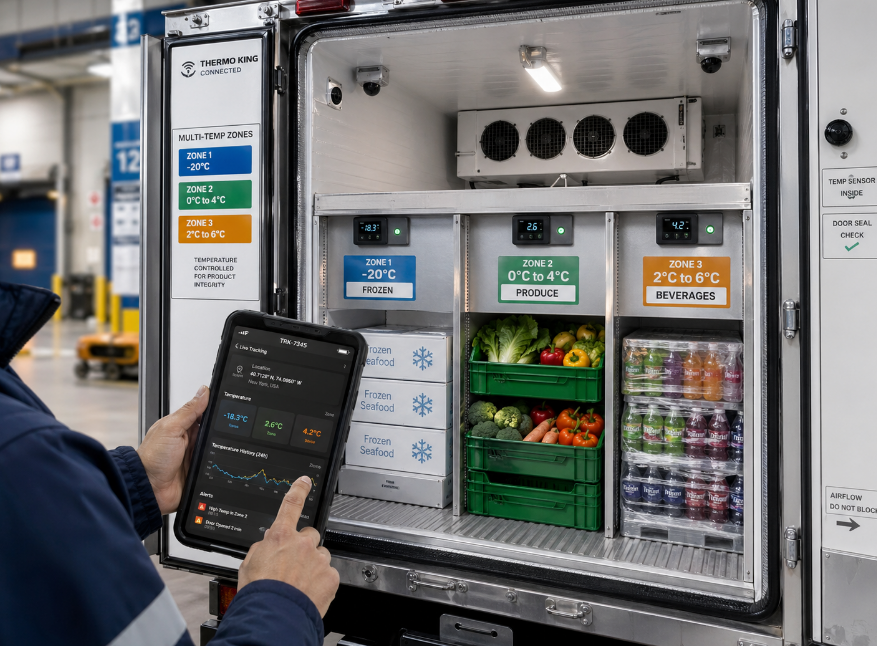
Cargo Integrity through Multi-Temperature Zones and Door Configuration
Not all freight likes the same chill. A refrigerated truck can split cargo space using multi-temperature zones and insulated bulkhead systems.
Front zone: deep frozen goods
Mid zone: chilled produce
Rear zone: cool beverages
Proper door configuration matters too:
Swing doors for full dock access
Roll-up doors for urban stops
Sealed gaskets to protect integrity
Tight seals cut warm air leaks. Smart layouts prevent cross-contamination. A good reefer truck keeps payload balanced without sacrificing space.
Real-Time Monitoring with GPS Tracking and Temperature Sensors
Modern reefer truck fleets rely on layered monitoring tools:
Data Capture
Sensors log temperature in real-time.
Airflow readings detect uneven cooling.
Connectivity
GPS enables live tracking.
Cloud-linked telematics store historical data.
Alerts & Action
Instant warnings for deviations.
Remote unit adjustments.
Maintenance scheduling before breakdowns.
Cold chain managers using reefertruckpro often say this visibility feels like having eyes inside every truck reefer on the road.
Compliance Assurance: Food Safety Regulations & DOT Standards
Every reefer truck operates under strict compliance rules.
Food safety alignment
FSMA sanitary transport practices.
Documented temperature logs.
DOT oversight
Vehicle inspection routines.
Brake and trailer safety checks.
Refrigerant & emissions standards
Approved refrigerant handling.
Environmental reporting guidelines.
Staying within these regulations protects drivers, shippers, and customers. A dependable reefer truck backed by reefertruckpro support keeps freight legal, clean, and consistently cold.
Reefer Vs. Dry Van: Choosing Right Transport Type
Picking between a reefer truck and a dry van can feel like choosing between a fridge and a toolbox. Both haul freight, yet the job changes everything. If you run a reefer, truck specs, cost, and cargo rules matter big time.
Reefer
A reefer truck is built around Refrigeration and tight Temperature control. That’s the heart of it.
Core System
Insulated trailer walls reduce heat exchange
Integrated Cooling unit powered independently
Digital sensors for real-time monitoring
Cargo Fit
Frozen products
Dairy, meat, seafood
Perishable goods
Multi-zone Climate-controlled loads
Cost & Maintenance
Higher fuel burn
Scheduled unit servicing
Lifecycle parts replacement
Typical operating comparison:
| Factor | Reefer Truck | Dry Van |
|---|---|---|
| Temp Range | -20°F to 70°F | Ambient only |
| Avg. Fuel Use (gal/hr idle) | 0.8–1.2 | 0 |
| Annual Maintenance ($ est.) | 8,000–12,000 | 3,000–5,000 |
A refrigerated truck protects cargo when margins are tight. Many fleets turn to reefertruckpro for spec guidance, especially when scaling a reefer fleet without guesswork. A well-matched reefer truck keeps claims low and contracts steady.
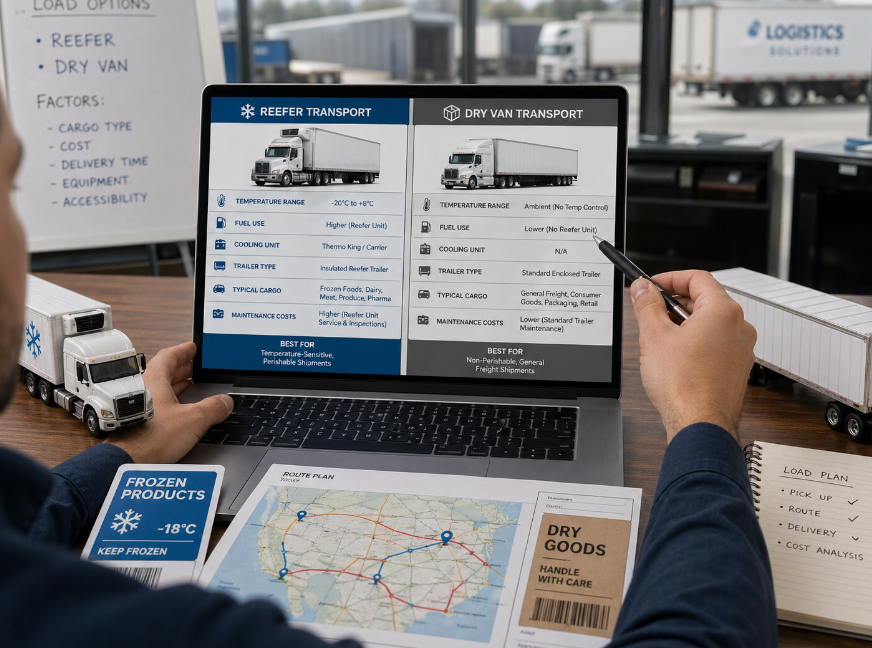
Dry Van
A dry van is the workhorse of General freight. No Cooling unit, no cold chain drama.
Best for Non-perishable loads
Fits Palletized freight fast
Handles Dry goods with solid Weather protection
Structure:
Standard Enclosed trailer
Simple air flow
Weight-focused planning
Operating Style:
Lower upfront cost
Fewer breakdown risks
Easier driver onboarding
Freight Examples:
Retail stock
Electronics
Packaged supplies
For mixed fleets running both a reefer truck and dry van, reefertruckpro often recommends balancing Standard cargo lanes with cold-chain contracts. A smart mix keeps revenue steady when seasonal frozen demand dips.
In short, if your freight sweats, freeze it with a reefer truck. If not, keep it simple and roll dry.
FAQ
What defines a reefer truck compared to other commercial vehicles?
A reefer truck blends vehicle engineering with cold-chain precision:
Chassis type & axle configuration: Medium or heavy-duty frames built for stable load balance.
Engine displacement & transmission type: Tuned to handle refrigeration power draw without harming fuel efficiency.
Gross Vehicle Weight Rating & wheelbase: Matched to payload capacity and loading dock compatibility.
Unlike a dry van, every specification—from fuel efficiency to cargo securing—supports temperature-controlled transport under strict weight restrictions and vehicle safety standards.
How does a reefer truck keep cargo at a stable temperature during transit?
Temperature control relies on a coordinated refrigeration cycle:
Compressor (power source driven) pressurizes the refrigerant type.
Condenser unit releases heat based on required cooling capacity.
Evaporator type absorbs interior heat within the defined temperature range.
Defrost method prevents ice buildup that would weaken airflow.
Insulation thickness slows thermal transfer, while sensor integration and temperature monitoring maintain steady conditions even in harsh operating environments.
Which refrigeration unit specifications matter most before purchase?
Buyers usually compare performance under real pressure, not on paper alone.
| Component | Why It Matters | Operational Impact |
|---|---|---|
| Temperature range | Supports fresh & frozen loads | Enables multi-temperature zones |
| Cooling capacity | Handles high ambient heat | Protects payload quality |
| Insulation thickness | Reduces thermal loss | Improves fuel efficiency |
| Refrigerant type | Meets refrigerant regulations | Avoids compliance risk |
| Power source | Engine-driven or independent | Affects lifecycle cost |
Choosing correctly protects uptime metrics and ensures compatibility with food safety regulations and emissions standards.
How do telematics systems improve reefer truck uptime?
A modern reefer truck speaks constantly through data:
GPS tracking for route visibility
Temperature monitoring with instant deviation alerts
Remote diagnostics linked to diagnostic tools
Data logging for audit trails under DOT regulations
Predictive maintenance analytics adjusting service intervals
Connected to a fleet telematics system, these tools reduce downtime, strengthen fleet integration, and protect warranty coverage.
How does lifecycle cost compare between reefer trucks and dry vans?
Ownership tells the real story.
Reefers demand:
Regular preventative maintenance on compressor and evaporator systems
Tighter service level agreements
Access to a strong repair network and technical support
Dry vans carry lower total cost of ownership due to simpler structure and fewer service intervals.
Yet a well-maintained reefer truck can sustain resale value, supported by parts availability and parts commonality across fleets—turning higher upfront cost into controlled long-term performance.