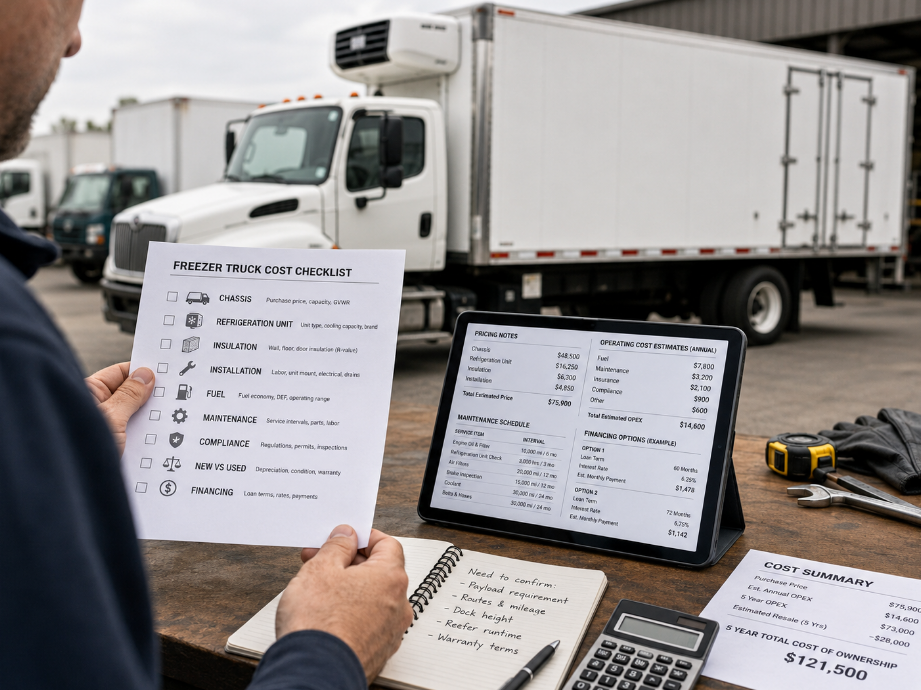
Hidden rules bite before fleets roll—licenses, weight limits, hiring chaos—and the true freezer truck cost. Choose a smarter manufacturer.
The freezer truck cost question hits harder than expected, because licensing, weight limits, and hiring headaches sneak in long before engines even start humming.
Here is catch: no special reefer license exists, yet truck size dictates who can drive and how fast your business grows.
Key Points of Freezer Truck Cost Overview
Licensing & Fees
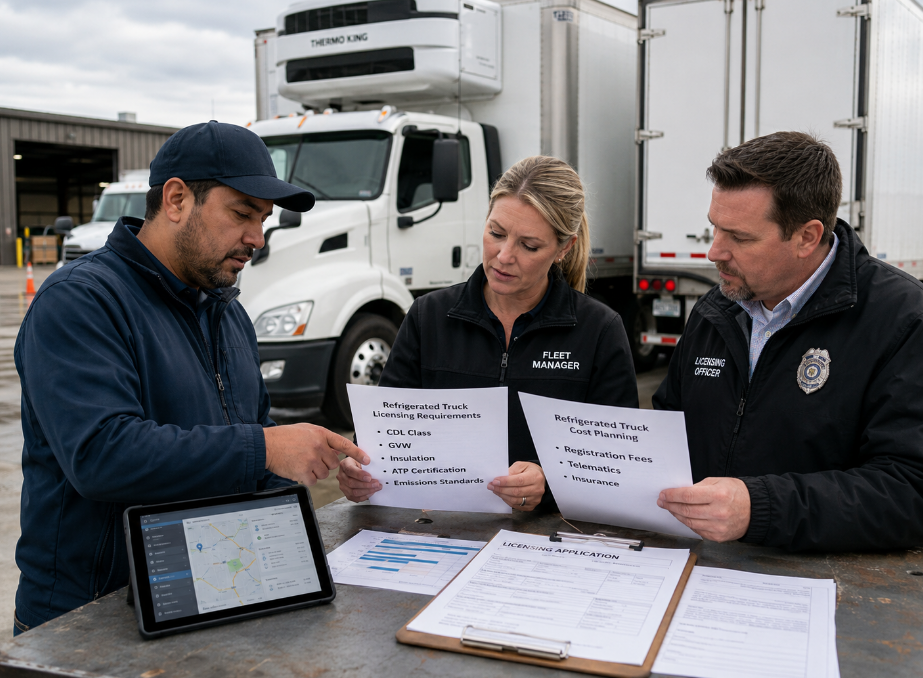
Factor in CDL class, ATP certification, registration by GVW and axle count, plus permit and insurance premiums.
Vehicle Specs & Design
Evaluate chassis type, insulation thickness, body material, wheelbase, and payload capacity for cost accuracy.
Refrigeration & Compliance
Account for refrigeration unit training, temperature‐control equipment, emissions standards, noise regulations, and telematics integration.
5 Steps to Get Your Refrigerated Truck License
Getting licensed for a refrigerated rig feels like paperwork overload at first. The trick is breaking it down without losing sight of real-world costs, like freezer truck cost, freezer truck running cost, and long-term truck cost control. This walkthrough keeps it plainspoken, practical, and tied to what operators using Reefertruckpro actually face on the road.
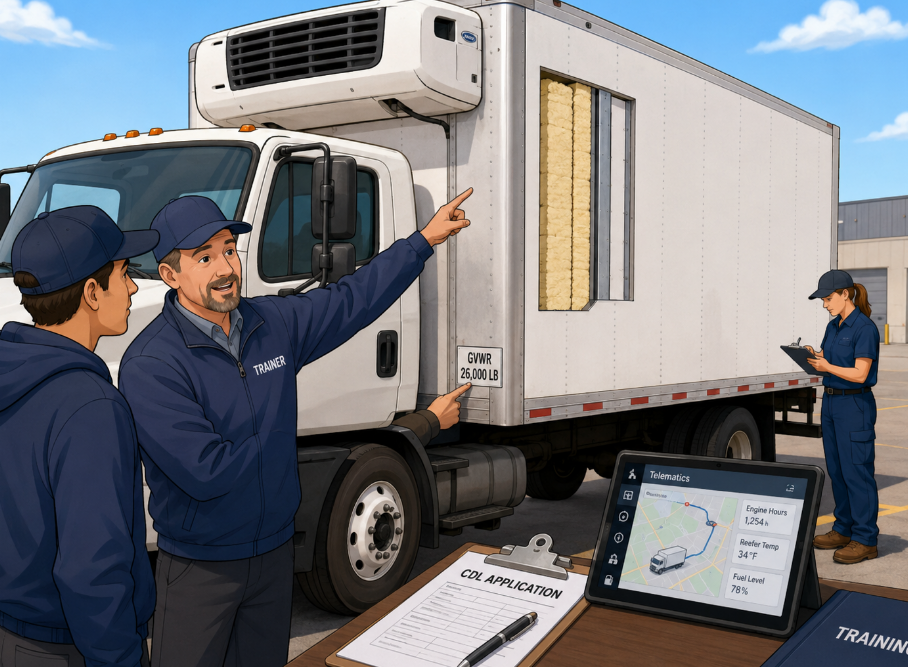
Step 1: Verify Your Gross Vehicle Weight and Insulation Thickness
Most folks start by checking Gross Vehicle Weight, but licensing officers look deeper.
Vehicle Weight sets your Vehicle Classification
Insulation Thickness affects food safety approval
Truck Specifications decide permit scope
Key checks usually fall into layers:
Verification
Weight plate vs scale ticket
Body tag vs build sheet
Insulation
Panel density
Seam integrity
All this feeds back into freezer truck cost, since thicker Insulation raises upfront cost but cuts fuel burn later.
Step 2: Enroll in Refrigeration Unit and Temperature Control Training
Training goes beyond button-pushing on a Refrigeration Unit.
You’ll touch:
Temperature Control logic
Refrigeration System airflow balance
Unit Operation during stops
Short sessions, hands-on labs, and a Training Program certificate all help rein in freezer truck cost mistakes tied to spoiled loads. Reefertruckpro often points drivers toward courses that focus on real Temperature Management, not theory.
Step 3: Study Regulatory Compliance—ATP Certification & Emissions Standards
Compliance hits both paperwork and wallet.
Core areas include:
ATP Certification
Box insulation rating
Door seal performance
Emissions Standards
Engine tier
Idle limits
Here’s a quick snapshot tying rules to cost:
Ignoring Regulatory Compliance often spikes freezer truck cost later.
Step 4: Submit CDL Application with Chassis Type and Axle Configuration Details
Paper errors slow everything.
Applications usually nest details like:
CDL Application
Chassis Type
Box length
Frame rating
Axle Configuration
Single
Tandem
Accurate Axle Details protect payload math and long-term truck cost planning.
Step 5: Pass the Practical Test Featuring Telematics System and Temperature Monitoring
The test blends driving with data sense.
Expect checks on:
Telematics System
GPS logs
Alerts
Temperature Monitoring
Sensor response
Record accuracy
Strong Vehicle Telematics habits keep freezer truck cost predictable and performance clean. Many operators lean on Reefertruckpro tools here, since stable data usually means fewer surprises and better margins.
What Class of CDL Covers Refrigerated Trucks?
Refrigerated trucks come with rules that hit drivers, buyers, and budgets all at once. From license class to freezer truck cost, small choices change long-term expenses. This breakdown keeps the tone real and the details clear, so the paperwork never outweighs the payload.
CDL Class A Requirements: Payload Capacity and Engine Displacement Limits
Running a big rig reefer usually lands under CDL Class A, especially once a combination vehicle enters the mix.
Vehicle setup
tractor-trailer with a refrigerated box
built as a heavy duty truck for long hauls
Weight reality
higher gross combination weight drives licensing
more weight often pushes freezer truck cost upward
Power matters
larger engine displacement handles hills and idle time
fuel burn ties back to freezer truck cost fast
More axles mean steadier loads.
Steadier loads protect perishables.
Fewer claims help control freezer truck cost.
Reefer fleets tracking total ownership often say the license choice shapes freezer truck cost as much as fuel or maintenance.
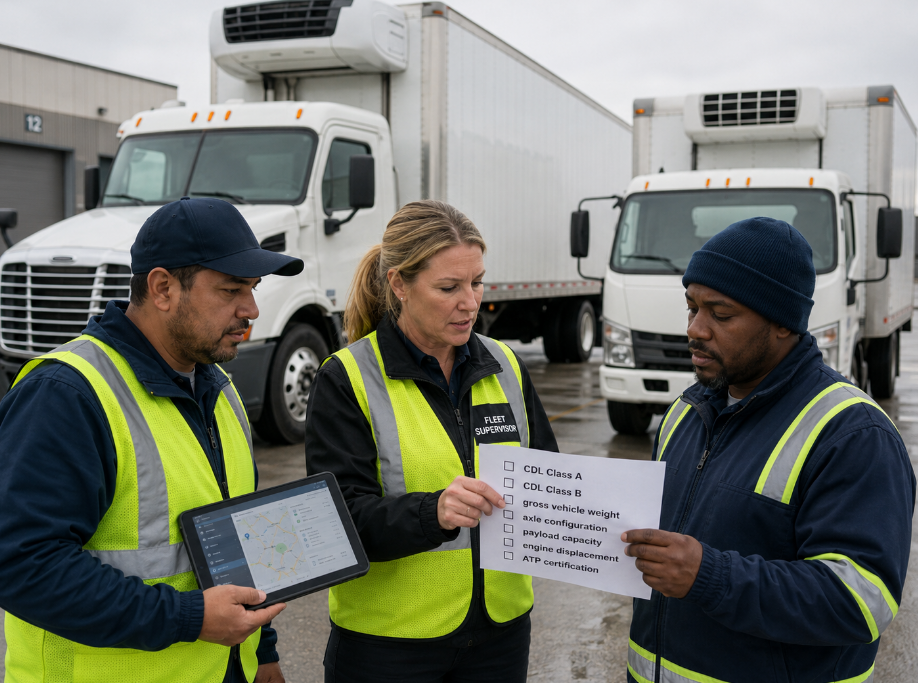
CDL Class B Criteria: Gross Vehicle Weight and Axle Configuration
For city routes, CDL Class B keeps life simpler.
A single vehicle setup
Typically a straight truck
Lower gross vehicle weight
Cleaner axle configuration
★ Short hops save fuel
★ Parking stays manageable
Local operators talk about freezer truck cost like it’s rent: predictable, monthly, and easier to plan. A lighter commercial truck also trims refrigerated truck cost over time.
The American Transportation Research Institute noted in a 2024 update that urban fleets favor lighter equipment to keep operating costs stable as compliance expenses rise.
Many buyers loop in Reefertruckpro when comparing freezer truck cost against route length and daily stops.
Tonnage Thresholds: When You Need ATP Certification
Once loads cross tonnage thresholds, ATP certification enters the picture for refrigerated transport of perishable goods.
Compliance layers
insulation checks
calibrated temperature control
Oversight scope
tied to an international agreement
aligned with food safety regulations
More tonnage raises freezer truck cost.
Certification protects cargo quality.
Fewer rejections balance the freezer truck cost long-term.
Operators who ignore ATP often feel the freezer truck cost spike later, not sooner.
How to Prepare for the CDL Exam
Getting ready for the CDL exam isn’t just book work. It’s about knowing how real trucks behave on real roads, how cold cargo stays safe, and how rules show up during inspections. This guide keeps it practical, relaxed, and focused on what actually sticks when test day hits.
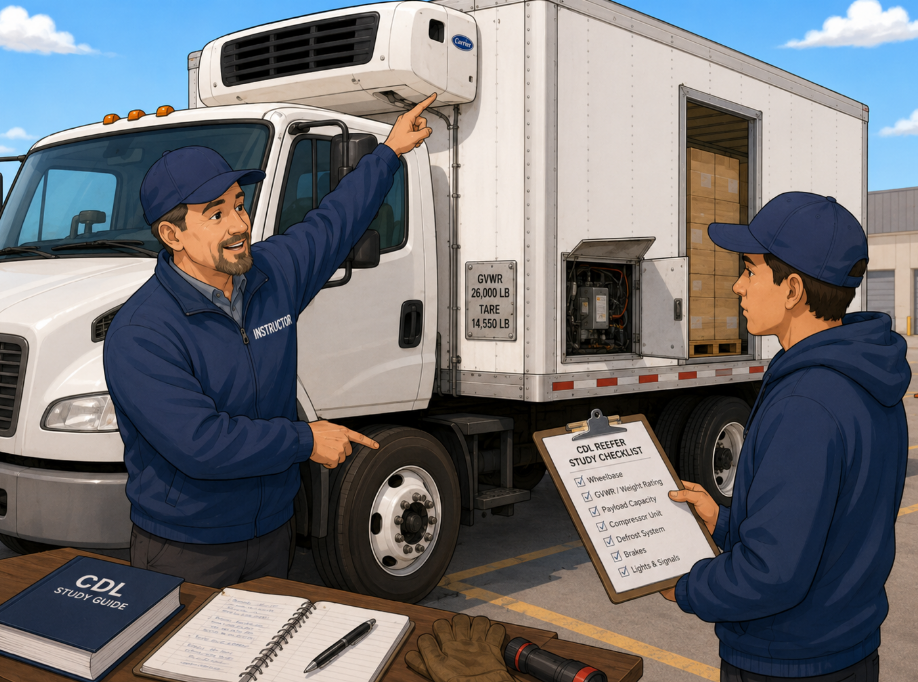
Master Vehicle Specs: Wheelbase, Gross Vehicle Weight, and Payload Capacity
wheelbase affects turning radius and trailer swing
gross vehicle weight sets legal limits
payload capacity decides how much earns money
vehicle dimensions tie directly to lane control
axle weight influences stopping distance
tare weight defines empty truck baseline
Key spec snapshot
Short bursts to remember: longer frames ride smoother. Heavier loads brake slower. More cargo volume doesn’t erase weight laws. When thinking about freezer truck cost, remember weight ratings often drive pricing. Reefertruckpro often reminds trainees that spec mistakes cost more than repairs.
Learn Refrigeration System Basics: Compressor Type and Defrost System
refrigeration system health keeps freight alive
compressor type controls efficiency
defrost system prevents ice choke
→ evaporator pulls heat
→ condenser dumps heat
→ refrigerant moves it
Multi-step flow that sticks:
Power up
Compress gas
Cool and condense
Expand and chill
Cycle repeats
Quick hits: tight insulation saves fuel. Smart temperature control avoids claims. Rising freezer truck cost often links to inefficient units, not fuel alone. The cost of a freezer truck drops over time when systems are understood and maintained.
Regulatory and Safety Review: Food Safety Regulations & Vehicle Safety Standards
Nested rules show up everywhere:
food safety regulations
HACCP logs
cold chain management
vehicle safety standards
brakes
lights
CDL requirements
endorsements
medical cards
“Temperature abuse remains a leading cause of refrigerated food loss,” noted a 2024 USDA cold-chain compliance update.
Inspections follow patterns.
✔ DOT regulations paperwork
✔ Physical inspection walk-around
✔ Ongoing compliance records
Freezer truck cost questions pop up here too. Fines, downtime, and rejected loads raise freezer truck pricing fast. One clean inspection often saves more money than any upgrade, a point Reefertruckpro stresses during safety reviews.
Freezer Truck Cost Breakdown in Licensing Fees
Running cold-chain logistics sounds simple until the bills roll in. This breakdown keeps it real, showing how freezer truck cost builds up through licensing, testing, and permits. The goal is clarity, fewer surprises, and smarter planning for fleets working with Reefertruckpro.
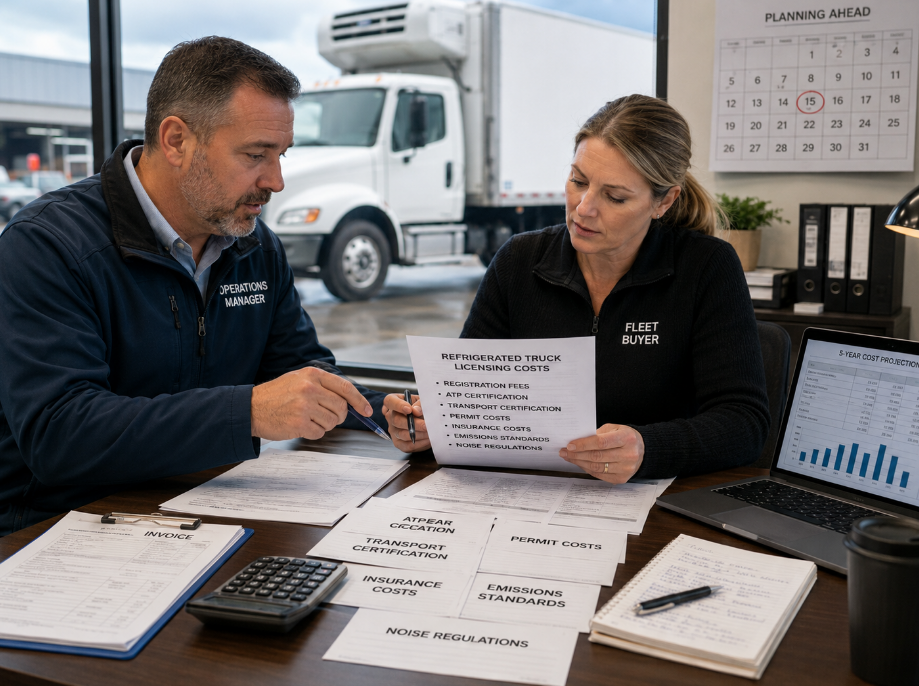
Registration Fees by Gross Vehicle Weight and Axle Configuration
When people ask why freezer truck cost jumps so fast, registration is usually the quiet culprit.
Core fees follow how the vehicle is officially classification-rated
gross weight bands
Light-duty units feel manageable
Heavy rigs spike fast
axle configuration
Single axle stays lean
Multi-axle adds paperwork and cash
A simple snapshot helps frame the numbers:
Reefertruckpro often flags this early because ignoring vehicle weight math is how refrigerated truck pricing gets out of hand.
ATP Certification and Transport Certification Charges
ATP certification isn’t optional for perishable goods. It’s proof your cooling setup works, day after day.
Short version:
Inspection of insulation and seals
Testing refrigeration output
Issuance of transport certification
Costs shift with performance. Thicker insulation lowers fuel burn but raises upfront charges. Over time, that balance steadies overall freezer truck cost, especially for cross-border lanes.
Permit and Insurance Costs: Noise Regulations and Emissions Standards Impact
This part blends permit paperwork with ongoing insurance costs tied to regulations.
Local noise rules limit night deliveries
emissions standards push cleaner engines
environmental compliance trims long-term risk
The 2024 International Energy Agency transport outlook notes that fleets meeting stricter emissions rules saw lower insurance volatility within two years.
That insight matters. With Reefertruckpro guidance, operators often spot savings here, keeping total freezer truck cost from drifting while staying legal and insured.
Special License vs. Regular Truck Permit
Choosing the right permit shapes daily operations, insurance talks, and even freezer truck cost planning. This breakdown keeps it plainspoken, mixing rules with real-road impacts, so operators can budget smarter and stay legal without headaches.
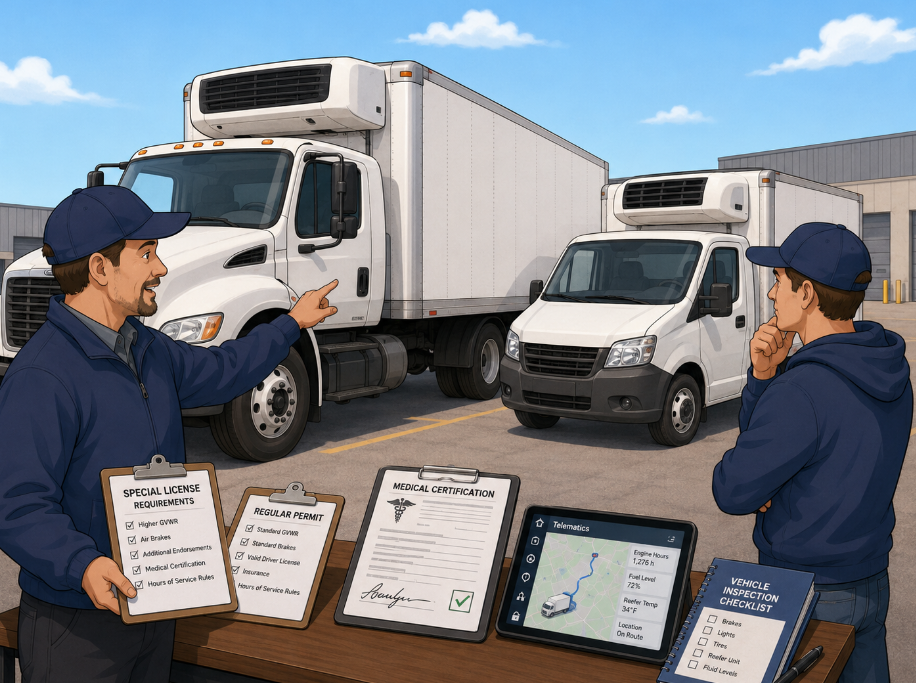
Special License
Core purpose
Built for heavy-duty refrigerated transport, where CDL holders manage complex rigs.
Common with long-haul Refrigerated transport moving Perishable goods under tight DOT regulations.
What the license actually demands
Driver credentials
Medical certification cleared by approved examiners.
A tougher Driving test, often paired with a refrigeration Endorsement.
Vehicle compliance
ATP-certified insulation.
Telematics tracking temperature drift in real time.
Cost and planning layers
Upfront
Higher licensing fees.
Training hours that push freezer truck cost upward early on.
Ongoing
Audits, renewals, and system calibration.
These ripple into freezer truck cost per mile, not just purchase price.
Reefertruckpro often guides fleets through these layers, especially when freezer, truck, and cost projections collide.
Regular Truck Permit
Where it fits
Designed for lighter commercial use with a Basic CDL.
Common in regional Commercial vehicle operation hauling mixed loads.
Licensing scope
Regulatory side
Standard Driving regulations and clear Licensing requirements.
Simpler Vehicle classification with fewer inspections.
Safety focus
Core Road safety checks.
No advanced refrigeration audits.
Budget reality
Lower entry fees keep freezer truck cost predictable.
Maintenance stays basic, helping freezer truck cost stay flat month to month.
Synonymous expenses like cold truck pricing or reefer vehicle expense rarely spike.
Practical takeaway
Ideal for General cargo with mild cooling needs.
Reefertruckpro clients often pick this route when freezer truck cost control matters more than maximum payload.